

2026 Best Silicone Hose Manufacturers for Global Buyers?
Choosing a silicone hose manufacturer in 2026 takes more than comparing prices and polished product photos. Buyers need to check material grades, temperature ranges, pressure limits, and test records. A hose may look identical to another on a desk. Under heat, vibration, or repeated bending, the difference can become obvious.
Quality-management expert W. Edwards Deming is often associated with the principle, “Quality is everyone’s responsibility.” For silicone hoses, that idea reaches from compound selection to curing, inspection, and packaging. Ask manufacturers how they verify dimensions, inspect hose walls, and handle batch traceability. Request samples and technical data before approving a supplier. Small details matter: a clean cut end, consistent wall thickness, and clear labeling can reveal more than a brochure.
This guide compares manufacturers for global buyers, including their product focus, customization options, and evidence of quality control. It also considers communication and delivery—not just catalog breadth. No ranking can replace testing a hose in its intended application. That takes time, and buyers sometimes skip it. A careful shortlist is a useful start, but it is not proof.
Understanding Silicone Hoses and Their Industrial Applications
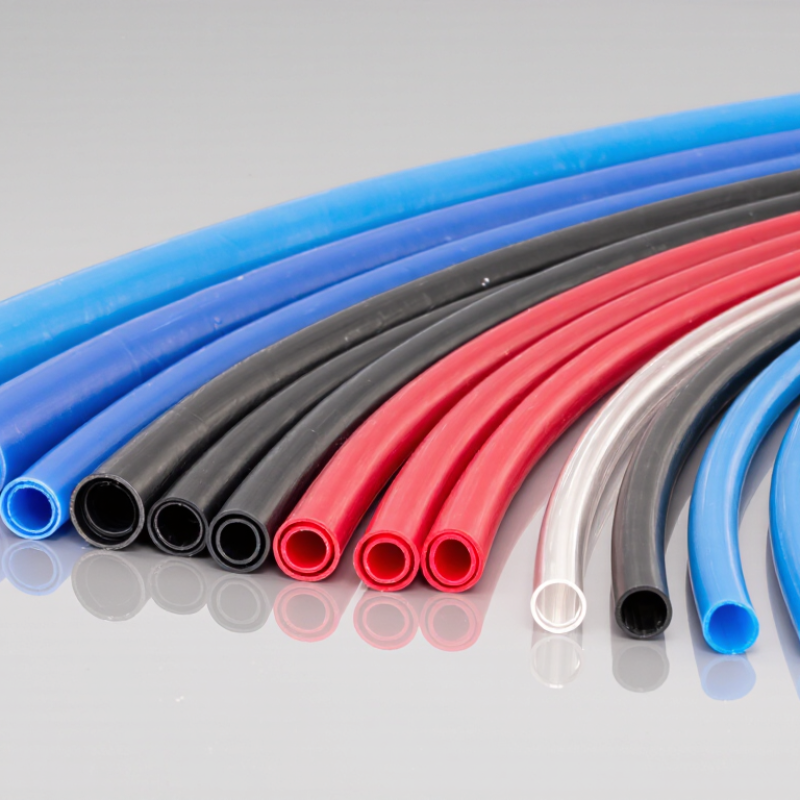
Silicone hoses move coolant, hot air, and selected fluids through systems exposed to heat, vibration, or repeated movement. In industrial machinery, they can connect engines, compressors, and heat exchangers. Their flexibility helps absorb vibration and simplify routing around tight corners. Small details matter: a hose rubbing against a metal bracket can wear through, even when its temperature rating is suitable.
Grand View Research valued the global silicone market at USD 18.2 billion in 2022 and projected a 6.3% compound annual growth rate from 2023 to 2030. This figure covers silicone products broadly, not silicone hoses alone, so it signals material demand rather than hose sales. For buyers, the practical question is whether a specific hose construction fits the operating conditions. Reinforcement, wall thickness, bend radius, fluid compatibility, and connection design all affect performance. There is no one-size-fits-all grade.
A temperature rating is not a complete selection guide. Check the manufacturer’s test conditions and confirm compatibility with the actual fluid, pressure, and cleaning routine. Some silicone compounds resist heat well but may not suit petroleum-based fluids. That distinction is easy to miss. Also inspect hose routing during maintenance; a sharp bend or loose clamp can create problems before the material reaches its rated service life.

Key Criteria for Evaluating Silicone Hose Manufacturers
2026 Best silicone hose manufacturers for Global Buyers?
Key Criteria for Evaluating Silicone Hose Manufacturers
For global buyers, a silicone hose’s appearance tells only part of the story. Ask manufacturers for material specifications, operating temperature limits, pressure ratings, and fluid compatibility data. These details should match your actual application, not just a general product category. The datasheet should also identify test methods and tolerances. Small differences matter.
Check how consistently a manufacturer controls production. Request recent inspection records, batch identification details, and sample test results for dimensions, hardness, and burst performance. Then compare those results with the stated specifications. A neat certificate folder can still leave unanswered questions about how often tests are performed. Traceability matters when a shipment does not match an approved sample.
Evaluate communication and delivery capability, too. Ask how the manufacturer handles specification changes, nonconforming products, and delays. Clear, specific answers are more useful than broad promises. An audit can help. Still, no checklist catches every risk, and a sample cannot represent every production run. If possible, review repeat orders and ongoing quality records before committing to large volumes.
Comparing Manufacturing Capabilities, Quality, and Customization
Choosing a silicone hose manufacturer for global supply requires more than comparing catalog dimensions. Buyers should examine the production process, available tooling, and experience with similar applications. Ask how the supplier controls tube thickness, reinforcement placement, and curing conditions. Useful evidence includes process records, inspection criteria, and samples tested against agreed specifications. Capacity matters, but so does clear communication when schedules change.
Quality checks should match the hose’s actual working conditions. Request data on temperature range, pressure rating, and resistance to relevant fluids, rather than relying on broad claims. Dimensional checks, visual inspection, and documented batch traceability can help reveal inconsistencies. Ask how defects are handled and whether corrective actions are recorded. Details matter. One easy mistake is treating a polished sample as proof of stable production.
Customization may involve inner diameter, wall thickness, color, length, bends, or textile and wire reinforcement. Share drawings and operating conditions early, then confirm tolerances and connection details in writing. A capable manufacturer should explain what can be produced reliably and where a design may need adjustment. Keep sample approval separate from final production approval. Not every fit is perfect. That gap deserves a practical conversation before an order is placed.
Checking Certifications, Export Readiness, and Global Support
2026 Best Silicone Hose Manufacturers for Global Buyers?
Checking Certifications, Export Readiness, and Global Support
A certificate matters only when it covers the product and process you are buying. Request current documents, then check their scope, issuing body, and expiry date. Ask how production lots are identified and whether material records can be linked to each shipment. For silicone hose, details such as temperature range, dimensions, and reinforcement should match the application. Small details matter. A polished certificate alone cannot show how consistently a hose performs.
Export readiness shows up in practical steps. Can the supplier prepare clear product specifications, packing lists, and shipping documents on schedule? Check packaging too: hoses should arrive clean, protected from crushing, and labeled for easy identification. Confirm typical production and transit lead times before placing a large order. A sample can pass inspection while later batches vary. That risk deserves a direct conversation.
Global support is more than replying quickly to an inquiry. Ask who handles technical questions, what time zones they cover, and how they manage claims or specification changes. Request a written response to a realistic issue, such as a dimensional mismatch discovered at receiving. The answer may reveal gaps. No supplier handles every detail perfectly, so assess how openly they document mistakes and corrective actions. Keep agreed specifications and approvals in writing.
Building a Manufacturer Shortlist for Your 2026 Sourcing Needs
Building a 2026 shortlist means testing a supplier’s process, not just comparing catalog prices. Grand View Research estimated the global silicone market at USD 18.5 billion in 2023 and projected 6.3% annual growth from 2024 to 2030. That expansion makes capacity and material traceability worth checking early. Ask for compound specifications, production-site details, and batch-level records. A polished brochure is not evidence.
For each candidate, request hose drawings, operating-temperature limits, pressure ratings, and test methods. Check whether samples match the intended fluid, vibration, and heat exposure. Then compare lead times, minimum order quantities, tooling ownership, and change-control procedures. Ask how rejected batches are handled. Small details matter: a clear label on a sample can save hours when engineers review dimensions. Not glamorous, but useful.
The ISO Survey of Management System Standard Certifications provides a broader signal: its 2023 results recorded more than one million valid ISO 9001 certificates worldwide. Certification can support a quality-system review, but it does not prove that a particular hose will perform in your application. Request recent inspection records and independent test reports where appropriate. I would also leave room for an awkward question: what happens when a production run misses specification? The answer may reveal more than a sales presentation.
2026 Best Silicone Hose Manufacturers for Global Buyers? - Building a Manufacturer Shortlist for Your 2026 Sourcing Needs
Manufacturer-neutral screening matrix. The figures below are general buying benchmarks, not claims about any specific supplier; confirm the finished hose assembly’s ratings and compliance for your application.
| Evaluation dimension | Practical benchmark or consideration | Evidence to request from each manufacturer | Suggested weight |
|---|---|---|---|
| Application and temperature range | Many silicone hose compounds are designed for service around −50°C to +200°C, but the usable range depends on compound, construction, pressure, and exposure conditions. | A datasheet stating continuous and intermittent temperature limits for the proposed hose construction, plus any restrictions for oil, fuel, steam, or chemicals. | 15% |
| Pressure and reinforcement design | Pressure capability varies with inside diameter, wall thickness, reinforcement layers, temperature, and bend geometry; avoid relying on a generic pressure figure. | Working-pressure and burst-test data for the exact size and construction, along with reinforcement material and test conditions. | 15% |
| Size and construction range | Check availability of straight, reducer, elbow, formed, and multi-ply hoses; confirm dimensions, tolerances, and minimum bend radius for each design. | A current size and shape catalog, dimensioned drawings, tolerance table, and sample approval process. | 10% |
| Compound and hardness options | Silicone compounds are available in different hardnesses; Shore A values around 30–80 are common across many product applications. Hardness alone does not establish suitability. | Compound identification, stated Shore A tolerance, cure information where relevant, and application-specific compatibility data. | 10% |
| Quality management and traceability | Assess documented production controls, lot identification, nonconformance handling, and change notification. Certification scope should cover the relevant manufacturing site and process. | Current quality-system certificates, sample inspection records, lot-traceability example, and written change-control procedure. | 15% |
| Testing and validation | Testing should match the application and the agreed specification. Hose test methods and acceptance criteria depend on construction and end use. | Test reports for dimensions, pressure or burst performance, adhesion where applicable, aging, and any customer-required validation. | 15% |
| Regulatory and material compliance | Requirements depend on the market and intended use. Food-contact, medical, automotive, and general industrial applications have different documentation and validation needs. | Application-specific declarations and supporting test documents. Verify that any cited regulation or standard applies to the exact compound and finished product. | 10% |
| Customization and tooling | Custom bends, reducers, colors, markings, and end configurations may require dedicated tooling or process validation. | Tooling quotation, ownership terms, drawing approval workflow, prototype lead time, and repeat-order controls. | 5% |
| Commercial and delivery capability | Compare quoted minimum order quantities, sample and production lead times, capacity commitments, packaging, and export terms using the same requested specification. | A comparable quotation, lead-time assumptions, packaging details, Incoterms, and escalation contacts for supply interruptions. | 5% |
Shortlist method: Apply the weights to evidence-backed scores for each candidate. First define the media, operating temperature, pressure, dimensions, service life, and destination-market requirements; then compare like-for-like samples and documentation. Do not treat a supplier’s general catalog rating as approval for a specific assembly.









