

What Are the 2026 Top Prefabricated Building Suppliers?
Choosing the 2026 top Prefabricated Building suppliers requires more than comparing factory photographs and headline prices. Supply capacity, certifications, design coordination, transport planning, installation records, and after-sales support matter equally. The Modular Building Institute’s 2024 Annual Report valued the United States commercial modular construction industry at approximately $20.3 billion in 2023. It also reported a 6.64% share of new commercial construction starts. These figures indicate a mature and expanding sector. However, market size alone cannot prove supplier quality.
McKinsey & Company’s 2020 report, Modular Construction: From Projects to Products, found that modular methods could reduce project schedules by up to 50%. The report also identified potential cost reductions of up to 20%. Results vary widely. Local labor, transport distance, building codes, and design complexity can change the outcome. Tom Hardiman Jr., Chief Executive Officer of the Modular Building Institute, describes modular construction as “a process, not a product.” That distinction matters when evaluating suppliers.
This guide examines suppliers through practical evidence. It considers production facilities, material traceability, engineering support, sustainability reporting, and completed projects. It also reviews whether companies communicate limitations clearly. A polished brochure is not enough. Some suppliers publish impressive delivery numbers but provide limited independent verification. That weakness deserves attention. The strongest candidates combine factory discipline with responsive site management. They should also explain maintenance requirements before contracts are signed. In 2026, the leading Prefabricated Building suppliers will likely be those offering dependable systems, transparent data, and realistic performance claims.
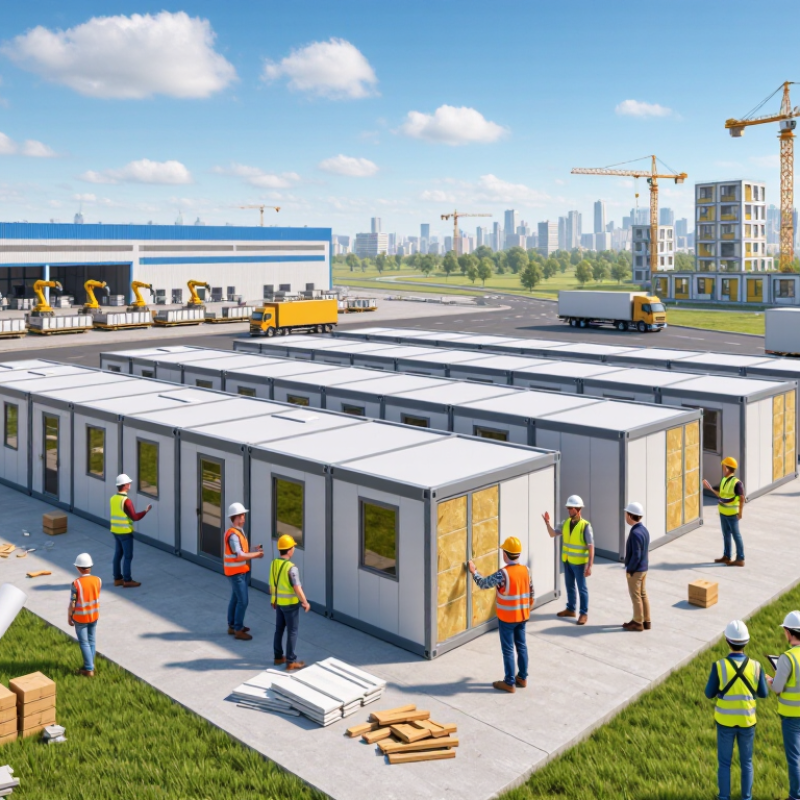
What Makes a Prefabricated Building Supplier a Top Choice in 2026?
A top prefabricated building supplier in 2026 must offer more than factory-made walls. It should provide verified quality, clear schedules, and reliable site coordination. McKinsey estimates that modular construction could create a market worth over $100 billion annually in the United States and Europe. Its research also reports potential project delivery improvements of up to 50%. These gains depend on disciplined design, not promises.
Look for suppliers using BIM coordination, documented factory inspections, and traceable material records. Ask for evidence of moisture testing, fire performance, structural calculations, and independent certifications. A strong supplier also plans transport carefully. Oversized modules, narrow roads, and crane access can quickly damage a good schedule.
The UNEP Global Status Report for Buildings and Construction reports that buildings and construction consumed about 34% of global energy and produced roughly 37% of energy-related emissions in 2022. Therefore, energy modeling, low-waste production, and efficient building envelopes should influence supplier selection. No supplier is perfect. I would question impressive claims without project-level evidence.
Tips: Request three comparable project references. Check factory capacity during your build period. Review warranty response times, not just warranty length. Compare whole-life cost instead of the lowest quotation. A cheaper module may conceal difficult installation, limited maintenance support, or future replacement costs. Supplier transparency remains the clearest test of professional credibility.

Which Companies Are Among the Leading Prefabricated Building Suppliers?
In 2026, leading prefabricated building suppliers are not judged by factory size alone. The strongest companies combine design engineering, controlled production, and dependable installation support. They offer modular homes, steel-frame structures, workforce accommodation, and commercial units for different climates. Experienced suppliers usually provide clear drawings, material schedules, transport plans, and realistic delivery dates. Their project teams should also understand local building codes and site conditions.
Reliability becomes visible during difficult projects. Ask whether a supplier has completed similar buildings, managed weather delays, and corrected design changes without confusion. Independent certifications, documented quality checks, and transparent warranties add credibility. Client references matter too, although one successful project does not prove everything. A supplier may look impressive online yet struggle with communication or after-sales service. That detail deserves attention.
Tips: Compare at least three written quotations. Check insulation values, fire-safety documentation, connection details, and foundation requirements. Request factory photos or an audit before signing. Confirm who handles permits, shipping, assembly, and maintenance. Small omissions can become expensive later. Also, test response times with practical questions. Slow replies before a contract rarely improve afterward. The best supplier is not always the cheapest. It is the one that explains risks clearly, documents its claims, and adapts responsibly when real conditions differ from the original plan.
What Types of Prefabricated Buildings Do Top Suppliers Provide?
Top prefabricated building suppliers usually provide more than standard modular homes. Their product ranges often include compact apartments, family housing, portable offices, classrooms, clinics, retail units, and worker accommodation. Each type uses factory-made wall, floor, or roof sections, which can reduce on-site construction time and material waste.
Modular homes may arrive with kitchens, bathrooms, wiring, insulation, and finished surfaces already installed. Portable offices often use lightweight frames, durable flooring, and large windows for better working conditions. Classrooms need acoustic panels, safe ventilation, accessible entrances, and strong cleaning resistance. Healthcare units require stricter hygiene planning, controlled airflow, and surfaces that tolerate frequent disinfection. These details separate a reliable supplier from a low-cost fabricator.
Industrial suppliers also produce warehouses, storage buildings, security cabins, dining halls, and temporary emergency facilities. Some provide expandable units that connect into larger layouts as demand changes. In project assessments, transport width, crane access, foundation design, and local building codes often matter as much as the factory design. A beautiful unit can still fail if delivery routes are too narrow.
Quality is not always consistent. That needs honest attention. Buyers should review material certificates, fire performance, insulation values, water resistance, and previous installation records. Factory inspections can reveal uneven seals, weak joints, or rushed finishing before shipment. Suppliers with engineering support usually adapt layouts for climate, occupancy, and site conditions instead of selling one fixed model. Small mistakes remain possible, especially during final connections on site.
What Are the 2026 Top Prefabricated Building Suppliers? - What Types of Prefabricated Buildings Do Top Suppliers Provide?
The table summarizes the principal prefabricated building categories commonly offered by established suppliers. Dimensions and performance figures are typical industry ranges and vary according to local building codes, engineering design, site conditions, and project specifications.
| Prefabricated Building Type | Main Factory-Built Components | Typical Module or Panel Dimensions | Common Applications | Typical Construction Period | Key Advantages |
|---|---|---|---|---|---|
| Volumetric Modular Buildings | Three-dimensional factory-built room modules with structural frames, walls, ceilings, flooring, services, and interior finishes. | Common transport width: approximately 2.4–3.7 m; length: approximately 6–15 m; height: approximately 2.7–3.6 m. | Apartments, hotels, student housing, healthcare facilities, offices, and worker accommodation. | Approximately 30–60% less on-site construction time than comparable conventional projects, subject to site preparation and approvals. | High factory quality control, reduced site labor, repeatable production, and accelerated installation. |
| Panelized Wall and Roof Systems | Factory-cut or factory-assembled wall, floor, and roof panels, including structural framing, insulation, sheathing, and service openings. | Panel widths commonly range from approximately 1.2–3.0 m; panel lengths are often 3–12 m, depending on transport and structural design. | Single-family housing, multifamily housing, schools, offices, and low-rise commercial buildings. | Often 20–40% shorter on-site framing time compared with traditional site-built framing. | Design flexibility, lower material waste, faster enclosure, and easier integration with conventional foundations. |
| Precast Concrete Buildings | Factory-cast structural wall panels, columns, beams, floor slabs, staircases, and architectural façade elements. | Wall panels are commonly 100–250 mm thick; floor units are commonly 150–300 mm thick; individual elements may be up to approximately 12–15 m long. | Schools, parking structures, warehouses, apartments, industrial buildings, and infrastructure facilities. | Structural erection can be completed rapidly once foundations and lifting access are ready. | High durability, thermal mass, fire resistance, structural strength, and consistent factory production. |
| Light-Gauge Steel Modular Buildings | Cold-formed steel wall frames, floor cassettes, roof trusses, insulated panels, and prefabricated service zones. | Typical wall-frame depths are approximately 90–300 mm; panel or cassette lengths commonly range from 3–12 m. | Housing, schools, offices, healthcare buildings, retail units, and medium-rise construction. | Usually shortens framing and enclosure work by approximately 20–40%, depending on project complexity. | High dimensional accuracy, non-combustible structural material, long service life, and efficient repeat production. |
| Structural Insulated Panels | Rigid insulation core bonded between structural facings, commonly oriented strand board or other engineered sheet materials. | Common thicknesses are approximately 114–305 mm; panel lengths are generally up to about 7–12 m, depending on the system and transport limits. | Residential buildings, cabins, extensions, low-rise offices, and energy-efficient structures. | Wall and roof installation is typically faster than separate on-site framing and insulation installation. | Continuous insulation, reduced thermal bridging, structural performance, and rapid weather enclosure. |
| Relocatable Buildings | Reusable modular units with structural frames, finished interiors, electrical systems, plumbing, HVAC provisions, and transportable foundations. | Typical unit width: approximately 2.4–3.0 m; length: approximately 6–12 m; units can be joined into larger floor plans. | Temporary classrooms, site offices, emergency accommodation, healthcare spaces, and seasonal facilities. | Often deployable within weeks after site access, utility connections, and regulatory approvals are completed. | Fast deployment, reuse, relocation capability, predictable cost, and minimal permanent site impact. |
| Prefabricated Bathroom Pods | Complete bathroom units with waterproofing, sanitary fixtures, plumbing, electrical systems, ventilation, finishes, and testing completed in a factory. | Typical pod size: approximately 2.0–3.0 m wide, 2.2–4.0 m long, and 2.3–3.0 m high. | Hotels, student residences, hospitals, apartments, senior living facilities, and worker accommodation. | Can reduce bathroom installation and finishing work on site by approximately 50–70% when designs are standardized. | Consistent waterproofing, controlled quality, fewer on-site trades, and simplified coordination. |
| Prefabricated Steel Buildings | Factory-engineered steel frames, roof and wall panels, bracing, doors, insulation, and connection hardware. | Common clear spans range from approximately 9–60 m; eave heights commonly range from 4–12 m, subject to engineering requirements. | Warehouses, agricultural buildings, workshops, aircraft shelters, sports facilities, and industrial plants. | Factory fabrication can substantially reduce site erection time compared with fully site-fabricated steel construction. | Long spans, open interior layouts, high strength-to-weight ratio, adaptability, and efficient expansion potential. |
Note: Actual module sizes, structural systems, energy performance, fire ratings, transportation limits, and installation schedules must be verified against the applicable local building regulations and project engineering documents.
How Do the Leading Suppliers Compare in Quality, Cost, and Delivery?
In 2026, leading prefabricated building suppliers compete mainly on quality control, total cost, and delivery reliability. Quality starts with accurate drawings, certified materials, and repeatable factory processes. Experienced suppliers inspect steel connections, insulation thickness, wiring, and waterproofing before shipment. They also provide clear inspection records and installation manuals. Small errors matter. A misaligned panel can delay an entire assembly line.
Cost comparisons require more than reviewing the initial quotation. Buyers should examine transport, foundation preparation, local labor, permits, maintenance, and replacement parts. A cheaper unit may use thinner insulation or simpler finishes. That choice can increase heating costs and repairs later. Reliable suppliers explain these trade-offs instead of hiding them inside vague package prices. Still, even careful estimates can miss site drainage or crane access. That weakness deserves honest discussion.
Delivery performance depends on production capacity, design approval, packaging, and customs planning. Strong suppliers confirm a realistic factory schedule and share milestone updates. They also label every panel clearly, reducing confusion during installation. A delayed component can leave workers and lifting equipment idle for days. Speed can mislead. The fastest promised delivery is not always the safest choice. Buyers should request previous delivery records, dimensional checks, and a written response plan for damaged parts. Some suppliers perform well in the factory but struggle at remote sites. That gap is easy to overlook.
What Should Buyers Consider Before Selecting a Supplier?
Choosing a prefabricated building supplier in 2026 requires more than comparing attractive prices. Buyers should examine completed projects, factory capacity, engineering qualifications, and documented quality controls. A polished website proves little.
Ask how the supplier handles local wind, snow, seismic, and energy requirements. Request drawings, material specifications, inspection records, and a clear production schedule. A reliable supplier should explain tolerances, connection details, fire performance, and moisture protection without hiding behind technical language. Visit the factory if possible. Observe storage conditions, welding areas, panel assembly, and final inspections. Small details matter, such as labeled components and protected edges.
Cost deserves careful analysis. Compare transport, foundations, cranes, installation, taxes, maintenance, and replacement parts—not only the quoted module price. Confirm payment stages, change-order rules, delivery responsibilities, warranty coverage, and after-sales support. Speak with recent customers about delays and defect resolution. Their experience may reveal more than a sales presentation.
Do not ignore customization limits. Some suppliers promise flexibility but rely on expensive redesigns later. Ask for a sample project timeline with approval points. A digital model can expose clashes before production, although it cannot replace site verification. No checklist is perfect. Buyers can still overlook regional labor shortages or uncertain material availability. That weakness deserves discussion before signing. Choose evidence over confidence, and record every technical promise in the contract.