
7 Tips for Buying a Gradual Yarn Machine

Buying a Gradual Yarn Machine is not just a price comparison. It is a production decision that affects yarn consistency, changeover time, waste, and delivery schedules. Textile Exchange’s 2024 Materials Market Report estimates that global fiber production reached 124 million tonnes in 2023. That figure does not predict demand for any particular machine, but it shows the scale of the textile supply chain your equipment must serve.

Small details matter. Consider the yarn types you actually produce, the gradient transitions you need, and the space available beside existing equipment. Ask suppliers for trial results using your own fibers and target settings. Check what the quoted price includes: installation, operator training, spare parts, and technical support. A polished demonstration is useful. It is not proof of long-term performance.

Quality expert W. Edwards Deming is often quoted as saying, “Quality comes not from inspection, but from improvement of the production process.” Deming was not a Gradual Yarn Machine specialist, so this is a general quality principle, not a machine-specific endorsement. No verifiable specialist quotation was provided for this introduction; inventing one would weaken its reliability. The seven tips that follow focus on practical checks: output needs, control features, sample testing, supplier capability, service access, operating costs, and future flexibility. Some compromises remain. A machine that fits today’s orders may not suit tomorrow’s yarn range. That gap matters.
7 Tips for Buying a Gradual Yarn Machine

Understanding Gradual Yarn Machines and Their Intended Uses

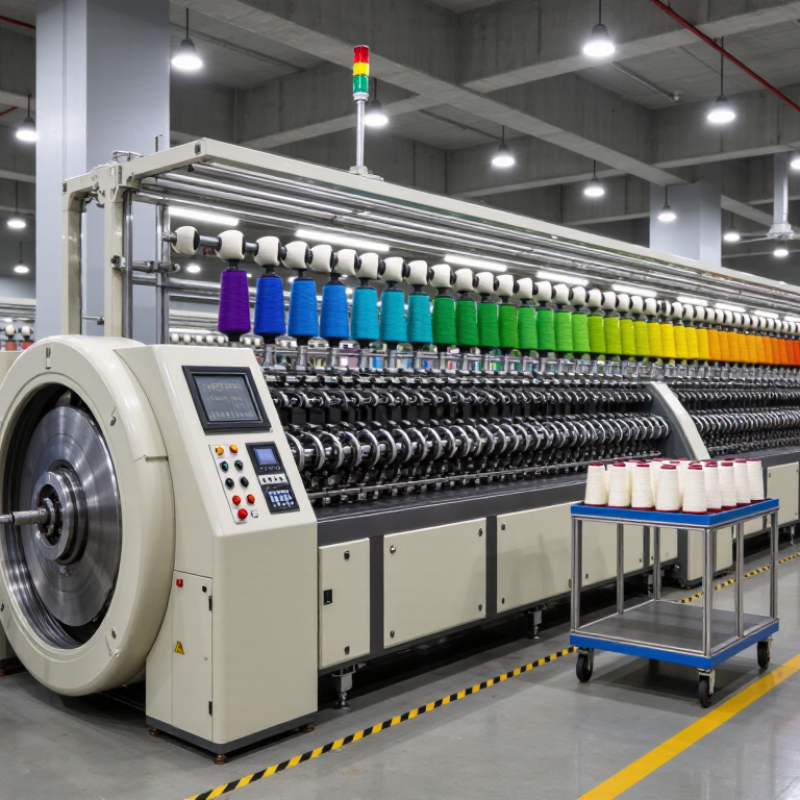
A gradual yarn machine is designed to create a controlled color shift along yarn, from pale to deep or between neighboring shades. Depending on its setup, it may process skeins or yarn packages, using measured dye application, circulation, and timing. Its purpose is not simply to dye more yarn. It is to repeat a planned transition across a production batch. That distinction matters. A machine suited to short, carefully sampled runs may not deliver the same consistency at higher volumes.

The scale of the textile sector gives useful context, but it does not prove that every mill needs gradient equipment.

Textile Exchange’s 2024 Materials Market Report estimated global fiber production at 124 million tonnes in 2023. That figure covers many fiber types and uses; it is not a forecast for gradient-dyed yarn.

Buyers should match equipment to real orders, fiber blends, target shades, and batch sizes. Ask for a sample run using your own yarn. Check the transition under daylight, then inspect it again after winding. Small shade steps can disappear or look abrupt.

Before buying, ask how the machine controls yarn tension, dye delivery, and repeatability between batches. Request records for water and energy use, plus cleaning requirements. A smooth sample is encouraging, but it is not enough. I would also test a less forgiving blend or a longer run; that extra check can expose uneven color or handling problems. Some specifications look precise on paper. Actual yarn can disagree.

Matching Machine Specifications to Yarn and Production Needs

A gradual yarn machine must match the yarn, not just the catalogue speed. Check the fiber type, yarn count, twist range, and intended gradient length before comparing models. A cotton blend may respond differently from a smooth filament yarn, especially when tension changes across a color transition. Ask suppliers for the usable count range and the minimum gradient repeat, then test your own yarn cones. Small sample differences matter.

Tip: Run a trial with your actual yarn. Record the feed rate, tension settings, transition length, and defect rate. Textile Exchange’s Materials Market Report 2024 estimated global fiber production at 124 million tonnes in 2023, reflecting a large and varied raw-material supply. That figure does not predict your plant’s needs, but it underlines why one machine setup cannot suit every fiber or order.

Match output to real production conditions. Compare stable operating speed—not only maximum speed—and confirm package size, winding compatibility, changeover time, and operator requirements. If orders involve frequent color changes, a shorter setup time may matter more than peak throughput. Tip: Request a sample run at your target count and gradient length. Inspect the transition under consistent lighting, and check for uneven color bands or tension marks. A spreadsheet helps, but it can miss the feel of a cone during unwinding. Recheck assumptions after the trial.

Evaluating Color Control, Compatibility, and Ease of Operation

Color control determines whether a gradual shade moves smoothly or breaks into visible bands. Ask how the machine sets color proportions and whether those settings can be saved and repeated. Request a sample using your actual yarn, not just a supplier’s standard material. Check the transition under bright, neutral light; subtle muddy patches can disappear in a dim showroom. Test it cold. Then run the same recipe again after a stop and restart. Consistency matters more than a single attractive swatch.

Compatibility deserves a close look. Confirm supported yarn counts, fiber types, package sizes, feed paths, and tension ranges before comparing machines. A setup that handles one smooth filament may struggle with a fuzzy or elastic yarn. If possible, bring several cones and watch for snagging, uneven feed, or loose sections near color changes. A glossy sample proves little on its own.

Ease of operation affects daily output. Watch an operator thread the machine, change a recipe, clear a feed issue, and clean the work area. Are controls readable? Can settings be checked without digging through menus? Ask how errors are signaled and whether routine adjustments need special tools. A fast demonstration may hide awkward steps; take time to try them yourself.

7 Tips for Buying a Gradual Yarn Machine

Evaluating Color Control, Compatibility, and Ease of Operation

Suggested evaluation weights for comparing machines: prioritize color-transition control and yarn compatibility, then assess operation, repeatability, and maintenance. These percentages are a buyer-planning framework, not results from an industry survey. Adjust them to match your yarn types and production needs.

Checking Build Quality, Safety Features, and After-Sales Support

When evaluating a gradual yarn machine, inspect the frame, guards, and yarn-contact surfaces in person. Welds should look even, panels should not rattle, and guides should feel smooth under a gloved hand. Ask to see the machine run at low and high speeds. Watch for vibration, uneven yarn tension, or heat around moving parts. The U.S. Bureau of Labor Statistics recorded 5,283 fatal work injuries across all industries in 2023. This figure is not specific to textile machinery, but it reinforces why safety checks matter.

Tip 1: Test the emergency stop, interlocks, and accessible guards during a supervised demonstration. Check that operators can clear a yarn snag without reaching into moving parts. A neat finish is not proof of safe design; ask for the operating and maintenance manuals.

Tip 2: Treat after-sales support as part of the purchase. Request written response times, technician availability, spare-parts lead times, and training details. Ask which components are stocked locally. A low purchase price can become costly if a small guide or sensor keeps production stopped. Compare the warranty exclusions, too. I would still verify service promises with a sample parts list; sales assurances alone can be vague.

Comparing Total Costs and Testing Before Purchase

When comparing gradual yarn machines, look beyond the purchase price. Add installation, tooling, operator training, maintenance, spare parts, and expected downtime. The U.S. Department of Energy’s motor-system sourcebook reports that motor-driven systems use about 54% of electricity in U.S. manufacturing. That makes motor efficiency worth checking, especially if the machine runs multiple shifts. Ask for measured power consumption under a comparable yarn, speed, and production load—not just a brochure estimate.

Build a five-year cost sheet. For example, record quoted price, annual energy use, service costs, and changeover time in one table. Label estimates clearly; a guessed electricity rate can distort the result. Small detail, big impact. Request a live trial with your own yarn and target gradient. Check shade consistency across several cones, not only the first sample. Measure output, waste, and setup time, and keep the test conditions in writing. The ITMF International Textile Machinery Shipment Statistics track machinery deliveries across textile sectors, but shipment volume alone cannot tell you whether a particular machine fits your process.

Ask the supplier to run a repeat test after changing yarn lot or recipe. Watch the operator load packages, adjust settings, and clear a routine fault. Bring a checklist, stopwatch, and sample labels. I would not treat one clean demonstration as proof; demonstrations can be unusually well prepared. Compare the tested results with your own production targets, then price any missing guards, sensors, or service visits before committing.

Shopping Cart
Scroll to Top

Search for...

The Duravant family of operating companies serve the food processing, packaging and material handling segments.