
What Is the Best Aluminum Scrap Melting Furnace from China?
Choosing the best aluminum scrap melting furnace from China requires more than comparing melting capacity or quoted prices. The furnace must match scrap quality, alloy requirements, labor skills, energy costs, and environmental controls. Wet turnings behave differently from clean extrusion profiles. Painted scrap creates different exhaust demands. Small details matter.
The International Aluminium Institute reports that recycling aluminum can require about 95% less energy than producing primary aluminum. That advantage disappears when a furnace loses excessive heat, burns valuable metal, or cannot control dross. The U.S. Department of Energy also identifies aluminum recycling as an important energy-saving opportunity for manufacturers. These figures support investment, but they do not identify one universally superior machine.
Professor Markus A. Reuter, a recognized metallurgical recycling specialist, has stated, “Recycling is a resource management problem, not merely a waste-management problem.” His point is practical. A reliable aluminum scrap melting furnace should recover metal efficiently, maintain stable temperature control, reduce oxidation, and provide measurable operating data. Rotary, reverberatory, induction, and tilting furnaces each suit different feedstocks and production targets. The cheapest quotation may become expensive through fuel consumption, refractory repairs, and inconsistent alloy chemistry. It is easy to overlook those costs. I once considered throughput the main purchasing factor; that view was incomplete. Furnace selection should also examine factory testing, spare-parts availability, operator training, emissions equipment, and after-sales support in China. This guide compares those factors, using documented performance data and realistic production conditions rather than marketing claims.
Types of Aluminum Scrap Melting Furnaces Made in China
What Is the Best Aluminum Scrap Melting Furnace from China?
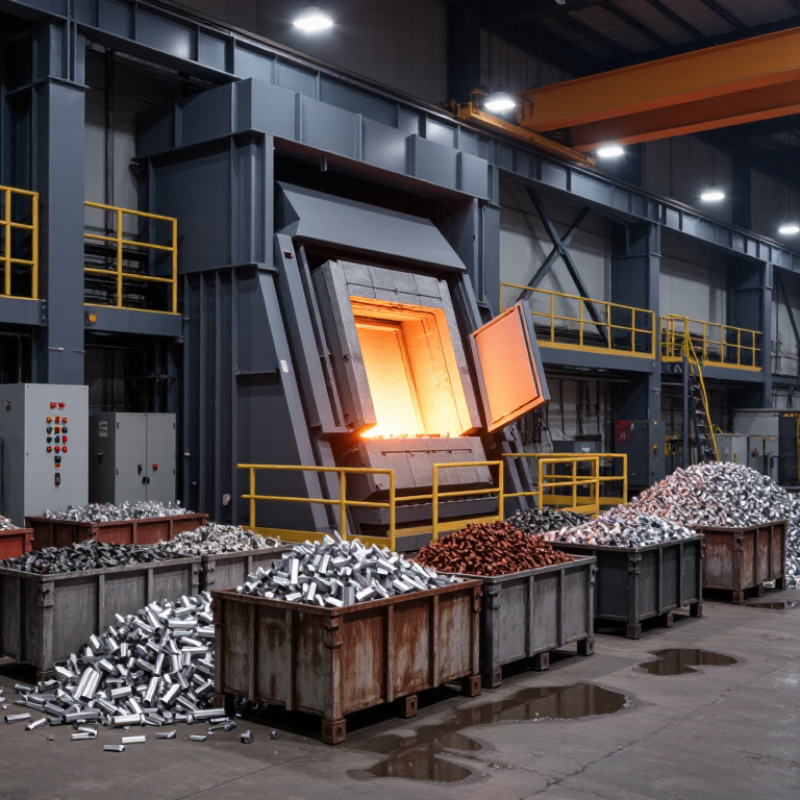
China produces several aluminum scrap melting furnace types for different production needs. Reverberatory furnaces suit medium and large operations with steady scrap feed. They heat metal in a separate chamber, allowing operators to process heavier loads efficiently. Rotary furnaces handle mixed scrap, chips, and contaminated materials more flexibly. Their rotating drum improves contact between the charge and molten metal. Crucible furnaces work well for small batches, laboratory use, and specialized casting. They offer simple operation but lower output. Tilting furnaces improve pouring control and reduce manual handling during transfer. Electric resistance models provide clean, accurate heating, while gas-fired systems may offer stronger output in high-volume facilities. No furnace fits every yard.
Tips: Check the scrap mix, daily capacity, fuel availability, and required metal quality. Ask for test data, refractory details, temperature accuracy, and emission-control options. Inspect welds, burner layout, insulation, and hydraulic components before purchase. Request operator training and clear maintenance guidance.
In practical selection, the best design usually balances recovery rate, energy use, labor, and maintenance access. A furnace that looks inexpensive may consume more fuel after several months. I once underestimated downtime caused by poor charging access; that mistake changed the evaluation process. Measure the actual scrap moisture, paint, size, and alloy range before choosing. Local technical support also matters. Small differences in door design can affect daily productivity. Some published capacity figures seem optimistic, so verify them with operating conditions and realistic scrap weights.
Key Factors for Choosing the Best Aluminum Scrap Melting Furnace
What Is the Best Aluminum Scrap Melting Furnace from China?
Choosing the best aluminum scrap melting furnace from China begins with the scrap itself. Clean extrusion offcuts melt differently from painted sheets, mixed castings, or oily chips. Record daily feed size, moisture, alloy range, and target output before comparing quotations. I have seen buyers choose a large furnace and later run it half full. That wastes fuel and weakens temperature control. Capacity should match the real batch cycle, not an optimistic production plan. Rotary, reverberatory, crucible, and electric resistance designs suit different workloads. The lowest purchase price rarely shows the full operating cost.
Check thermal efficiency, melting speed, and metal recovery under documented test conditions. Ask for data on fuel consumption, oxidation loss, dross generation, and temperature uniformity. A furnace reaching 750°C quickly may still lose valuable aluminum through excessive turbulence. Precise burners, insulated linings, and stable airflow matter. So does the charging door. It should accept your scrap safely without repeated manual handling. Control systems need clear alarms, reliable sensors, and reviewable operating records. Simple controls are sometimes better. Overcomplicated systems can be difficult to repair locally.
Inspect refractory quality, shell construction, access points, and spare-part availability. Request references from facilities processing similar scrap, not generic testimonials. Visit a working installation when possible. Watch the tap, observe dross removal, and ask how often maintenance interrupts production. Supplier support should include installation guidance, training, drawings, and realistic response times. I would also test a sample batch before signing a large order. Scrap composition changes, and laboratory results may not reflect a dusty shop floor. One overlooked issue remains: operator judgment. Even a well-designed furnace performs poorly when charging habits are inconsistent or safety checks become rushed.
How Chinese Aluminum Scrap Melting Furnaces Work
What Is the Best Aluminum Scrap Melting Furnace from China?
Chinese aluminum scrap melting furnaces work through controlled heat, movement, and careful material preparation. Operators sort scrap by alloy and remove steel, oil, moisture, and plastic before charging. Wet scrap can cause violent splashing. That detail is easy to underestimate.
Burners heat the furnace chamber while the scrap gradually collapses into a liquid bath. Many modern designs use tilting bodies, regenerative combustion, or mechanical stirring. These features improve heat transfer and reduce unmelted pockets. After melting, workers skim dross, test temperature, and check chemical composition before tapping the metal. In real workshops, sampling discipline often matters more than advertised capacity.
The International Aluminium Institute reports that recycled aluminium uses about 5% of the energy required for primary aluminium production. The US Geological Survey estimated global primary aluminium output at approximately 70 million metric tons in 2023, showing why efficient recycling remains important. Furnace selection should match scrap type, moisture risk, batch size, and expected recovery rate. A high-capacity furnace is not automatically the best choice.
Combustion control and filtration also affect operating reliability. Poor airflow wastes fuel and increases oxidation losses. Excessive stirring can worsen dross formation. I have seen production plans focus on melting speed while ignoring metal recovery. That is a costly mistake. Temperature records, regular lining inspections, and honest fuel measurements provide stronger evidence than catalogue claims.
Comparing Furnace Performance, Energy Use, and Production Capacity
What Is the Best Aluminum Scrap Melting Furnace from China?
Furnace performance depends on scrap type, melt quality, and daily production targets. Clean, sorted aluminum often melts efficiently in an induction furnace. Mixed scrap with paint, oil, or attachments may suit a rotary or reverberatory furnace better. A practical evaluation should measure melting speed, metal recovery, temperature stability, and dross generation. A fast furnace is not truly efficient if it loses valuable aluminum.
Energy use requires careful comparison. Gas furnaces commonly provide strong capacity for continuous production, while induction systems can offer precise temperature control and cleaner operation. Ask suppliers for energy consumption per ton, not only installed power. Check whether the figures include preheating, holding, and charging losses. Real results may differ. Scrap moisture, furnace loading, refractory condition, and operator habits can change consumption considerably.
Production capacity should match the plant’s actual schedule. A furnace rated at 1,000 kilograms per hour may produce less when workers load small batches. Observe charging time, tapping time, and recovery between heats. Chinese manufacturers can provide different chamber sizes, control systems, and automation levels. However, technical documents need verification through test melting, inspection records, and after-sales response. The cheapest quotation may hide higher fuel costs, shorter refractory life, or difficult maintenance. That matters.
| Furnace Type | Typical Charge Capacity | Typical Melting Rate | Specific Energy Consumption | Thermal Efficiency | Metal Recovery Rate | Temperature Control | Best-Matched Scrap | Operational Considerations |
|---|---|---|---|---|---|---|---|---|
| Coreless Induction Furnace | 100–3,000 kg per furnace batch | 300–2,000 kg/h depending on installed power | 550–750 kWh/t electrical input | 55–75% | 92–98% | Very good | Clean, sorted, and moderately contaminated scrap | Fast melting and accurate control; requires stable electrical supply and suitable refractory lining. |
| Gas-Fired Reverberatory Furnace | 500–5,000 kg per furnace batch | 600–2,000 kg/h depending on furnace size | 900–1,400 kWh/t fuel energy equivalent | 25–40% | 85–95% | Good | Large volumes of clean or pre-processed scrap | High production capacity and relatively low installation cost; heat loss and oxidation can be significant. |
| Tilting Rotary Gas Furnace | 300–3,000 kg per furnace batch | 300–1,500 kg/h depending on charge density | 850–1,250 kWh/t fuel energy equivalent | 30–45% | 90–97% | Good | Painted, oily, mixed, and lightweight aluminum scrap | Strong bath agitation improves metal recovery; flux management and exhaust treatment are important. |
| Electric Resistance Crucible Furnace | 50–500 kg per furnace batch | 50–250 kg/h depending on heating power | 750–1,100 kWh/t electrical input | 40–60% | 88–96% | Good | Clean scrap, returns, ingots, and small batch production | Simple operation and low noise; lower throughput makes it less suitable for continuous high-volume production. |
| Electric Resistance Holding and Melting Furnace | 200–1,500 kg per furnace batch | 150–700 kg/h depending on heating zone design | 650–950 kWh/t electrical input | 45–65% | 90–97% | Very good | Clean scrap and continuous casting or die-casting operations | Stable melt temperature and low oxidation; heating elements and lining require scheduled maintenance. |
| Gas-Fired Crucible Furnace | 100–800 kg per furnace batch | 80–400 kg/h depending on burner capacity | 1,000–1,500 kWh/t fuel energy equivalent | 20–35% | 86–95% | Moderate | Small foundries, secondary melting, and intermittent production | Flexible and comparatively easy to install; combustion emissions and temperature uniformity need control. |
| Reference basis: The figures above are typical engineering ranges for aluminum scrap melting under normal industrial conditions. Actual results depend on scrap cleanliness, moisture content, alloy composition, charge density, furnace lining condition, burner or power-system efficiency, preheating, tapping temperature, and operating practices. Energy figures are shown as electrical input or fuel-energy equivalent and should be compared using the same measurement boundary. | ||||||||
Safety, Maintenance, and Supplier Evaluation Considerations
What Is the Best Aluminum Scrap Melting Furnace from China?
Safety should guide every furnace decision, not just the purchase price. Aluminum scrap may contain trapped moisture, sealed containers, or oily residues. These materials can trigger violent reactions when charged into molten metal. A reliable furnace should include secure charging procedures, temperature alarms, emergency stops, lid interlocks, and suitable fume extraction. Operators also need clear training records and practical protective equipment. Small details matter. A poorly positioned control panel can slow an emergency response.
Maintenance evidence reveals more than promotional photographs. Inspect the refractory lining for cracks, bulging, and uneven wear. Check thermocouples, burners, hydraulic systems, insulation, and electrical cabinets. Ask how often each component requires inspection. Request a maintenance schedule with recommended spare parts and replacement times. In field assessments, I have found that weak documentation often causes avoidable downtime. The supplier may provide a good furnace, but unclear service responsibilities remain a serious weakness. That part deserves honest discussion.
Supplier evaluation should include factory audits, reference installations, performance records, and a documented acceptance test. Ask the manufacturer to demonstrate melting capacity, temperature stability, energy consumption, emissions controls, and safe shutdown procedures. Confirm whether technicians can support installation and troubleshooting in your region. Review warranty terms carefully, including response times and excluded parts. A polished factory video proves little. Request inspection photographs, serial records, operating data, and customer references. Some buyers focus too heavily on output figures. That is understandable, but real reliability also depends on training, spare-part availability, and disciplined daily operation.
Choosing the Best Aluminum Scrap Melting Furnace from China
Practical energy consumption is a useful first-stage comparison when evaluating furnace technology. The ranges below are typical engineering reference values for melting aluminum scrap and are not supplier-specific claims. Actual performance depends on scrap contamination, charge density, furnace capacity, insulation, exhaust losses, and operating practice.
Energy efficiency should be evaluated together with safety and maintenance. Ask suppliers for documented risk assessments, guarding, emergency shut-off systems, temperature-limit protection, fume extraction, refractory inspection procedures, spare-parts availability, and service response times. For electrical systems, review conformity with applicable requirements such as IEC 60204-1; for machinery risk reduction, use ISO 12100 as a reference. Always verify operating temperature, fuel or power consumption, emissions controls, and warranty terms using measured test data from the proposed furnace.