
Best Commercial Food Processing Equipment from China?
Choosing the best Commercial Food Processing Equipment from China requires more than comparing prices online. A stainless-steel machine may look impressive in photographs, yet its real value appears during daily production. Consider cutting speed, heating accuracy, cleaning access, electrical compatibility, spare parts, and operator safety. A machine that saves labor but stops weekly is not truly economical.
Food engineering specialist Dr. R. Paul Singh has explained, “Food engineering is the application of engineering principles to food processing and food products.” His statement highlights an important point: equipment must match the food, process, and factory environment. A bakery mixer, vegetable washer, meat slicer, or vacuum packing machine needs different materials, controls, and performance standards. Ask suppliers for material certificates, test videos, capacity data, and references from similar businesses. Visit a factory when possible. Touch the welds. Watch the cleaning process.
The cheapest option can become expensive.
Reliable Chinese manufacturers often provide customization, practical automation, and competitive manufacturing costs. However, supplier quality varies widely. Some catalogs promise excellent output without explaining product loss, maintenance time, or testing conditions. That gap deserves attention. Buyers should compare complete ownership costs, not only purchase prices. Installation support, training, warranty response, and replacement parts matter equally.
This guide examines how to evaluate Commercial Food Processing Equipment from China with a realistic, evidence-based approach. There may be no perfect machine. The better choice is the one that performs consistently, meets documented requirements, and fits your actual production goals.
Types of Commercial Food Processing Equipment Made in China
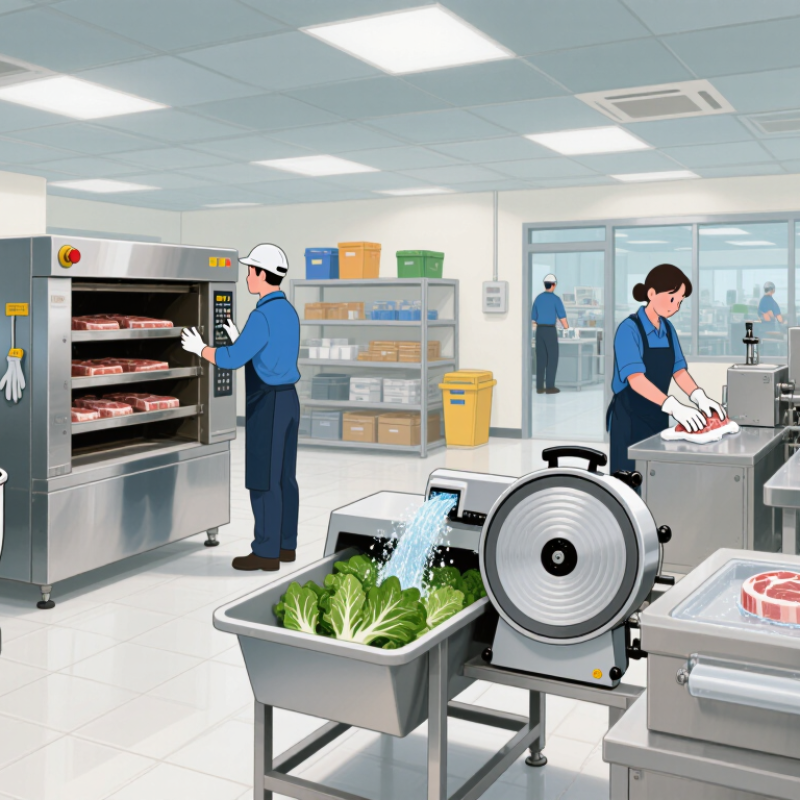
Commercial food processing equipment from China covers a broad range of production needs. Common types include vegetable washers, cutters, peelers, and blanching machines. Meat processors often use grinders, mixers, slicers, and vacuum tumblers. Bakeries may require dough mixers, sheeters, proofing cabinets, and baking ovens. Filling machines also serve sauces, dairy products, beverages, and prepared foods.
Equipment selection should match product texture, output, and cleaning routines. A 304 stainless steel frame supports frequent washdown and helps reduce corrosion risks. For example, a vegetable line may include a bubble washer, conveyor, cutter, and water removal unit. A small factory might need only one integrated machine. Larger facilities usually require connected equipment with stable feeding speeds. I have seen specifications look excellent on paper, yet actual throughput dropped when raw materials varied in size. That detail deserves attention.
Reliable purchasing involves more than comparing prices. Request test videos using similar ingredients, detailed electrical specifications, and clear production data. Check whether safety guards, emergency stops, and accessible cleaning areas are included. Ask for manuals, spare parts lists, and service response procedures. Factory audits can examine welding quality, motor protection, control cabinets, and surface finishing. Independent inspection before shipment adds confidence. Still, inspection is not perfect. Operators may need training, and installation conditions can change performance. Voltage, water pressure, floor drainage, and available space should be confirmed before production begins. A practical supplier should discuss these limitations openly, not promise unrealistic results.
Key Features of High-Quality Chinese Processing Equipment
High-quality Chinese food processing equipment should begin with hygienic construction, not attractive photographs. Food-contact surfaces commonly use 304 stainless steel, while harsher ingredients may require 316 stainless steel. Smooth welds reduce residue buildup and simplify cleaning. Check the welds. Small gaps matter.
During factory evaluations, buyers should inspect removable parts, drainage angles, seals, and access panels. A reliable machine supports clean-in-place procedures when suitable, but manual inspection remains important. Temperature sensors should provide stable readings, and control systems should record operating data. Emergency stops, overload protection, and guarded moving parts also deserve close attention.
Good equipment is easier to trust when the manufacturer provides material certificates, electrical diagrams, testing records, and clear maintenance instructions. Ask for trial production using your actual ingredients. Viscosity, moisture, and particle size can change performance significantly. Energy use and spare-part availability should be checked before purchase, not after installation. A lower price may conceal weaker motors or inconsistent finishing. That risk is easy to underestimate. Even well-built equipment can fail when cleaning routines, operator training, or voltage requirements are ignored. Performance depends on the full production system, not the machine alone.
Best Commercial Food Processing Equipment from China
Key Features of High-Quality Chinese Processing Equipment
The chart compares practical quality indicators commonly specified for commercial food-processing equipment. Hygienic stainless-steel construction, smooth surfaces, washdown protection, and efficient production capacity help improve food safety, durability, and operating performance.
How to Choose Equipment for Different Food Processing Needs
Best Commercial Food Processing Equipment from China?
How to Choose Equipment for Different Food Processing Needs
Choosing commercial food processing equipment from China begins with the process, not catalog photos. A bakery needs uniform heating. A sauce line needs shear, viscosity control, and cleanable transfer paths. Field audits often reveal underestimated changeover times. That mistake becomes expensive.
FAO’s The State of Food and Agriculture 2019 reported that 14% of food is lost between harvest and retail. This makes yield control important.
WHO estimates that contaminated food causes about 600 million illnesses annually. Hygienic design is not optional.
For wet products, compare pump performance at actual viscosity, not water. For meat or ready-to-eat foods, inspect welds, drainage, guards, and washdown access.
Ask for material certificates, factory acceptance testing, electrical documentation, and sanitation procedures.
Match capacity to evidence. A machine rated at 1,000 kilograms per hour may perform under ideal conditions. Your recipe may not. Request trials using your raw materials, target temperature, and packaging rhythm.
PMMI’s 2024 Global Packaging Trends report identifies labor efficiency and automation as major investment drivers. Yet automation can increase maintenance complexity. Simple conveyors may outperform smarter systems when local technicians lack training. That deserves reflection.
Check spare-part lead times, remote support, warranty language, and applicable safety standards before signing. The cheapest quote is rarely the lowest operating cost.
Safety, Hygiene, and Certification Standards to Evaluate
Choosing commercial food processing equipment from China requires more than checking capacity, price, and delivery time. Safety and hygiene should guide every inspection. Look for guarded moving parts, emergency stops, stable wiring, and clear operating instructions. Stainless steel surfaces should resist corrosion and avoid deep seams where food residue can collect. Smooth welds matter. So do accessible drains.
Ask for evidence. Request material certificates for food-contact components, electrical test records, factory quality procedures, and maintenance instructions. HACCP-based controls and ISO 22000 systems can indicate structured food safety management, but certificates must match the actual factory and equipment scope. A CE marking may support access to certain markets, yet it is not a universal food safety certificate. Local requirements still apply.
Inspect the machine as operators will use it. Can workers remove covers without unsafe improvisation? Can every product zone be cleaned without special tools? Check seals, gaskets, filters, and lubrication points. Hygiene claims often sound stronger than the design. Looks can mislead. Ask for cleaning validation data, traceability records, and recent inspection reports. Certification alone cannot replace a site audit. An independent technician should review installation risks, noise, heat, and operator access before payment. Some buyers focus too heavily on polished surfaces and ignore poor drainage. That mistake deserves reflection. Reliability is built through documented testing, honest limitations, and support after delivery.
Top Factors for Comparing Chinese Manufacturers and Suppliers
Best Commercial Food Processing Equipment from China?
Comparing Chinese manufacturers requires more than reviewing catalog photos. Start with the factory’s experience with your product, process temperature, moisture level, and daily output. Ask for clear technical drawings, material specifications, and recent inspection records. Stainless steel grade matters, especially around washdown areas and acidic ingredients. Small details reveal competence.
Request a live video tour or schedule an independent factory audit. Check welding quality, hygienic design, electrical protection, and calibration practices. The supplier should explain capacity using measurable figures, not vague promises. Ask whether the quoted output was tested with ingredients similar to yours. A polished sample can mislead.
Look closely at after-sales support. Confirm spare-parts availability, installation guidance, training, warranty terms, and response times in writing. Communication matters. Misunderstandings about voltage, belt width, or cleaning access can create expensive delays. Compare total ownership cost, not only the purchase price. Include shipping, commissioning, maintenance, and expected downtime.
A useful supplier should welcome difficult questions. If every answer sounds perfect, investigate further. Some manufacturers may outsource key components without saying so. That is not automatically a problem, but it deserves documentation. Ask for references from comparable processing lines and verify them independently. Leave room for a small pilot test; factory confidence should survive real production conditions.
Related Posts
-
What Is the Food Processing Equipment Industry?
-
Leading Global Manufacturers in Industrial Food Processing Equipment Exporting Excellence
-
How to Identify Top Suppliers for Best Food Processing Industry Equipment Globally
-
5 Essential Best Industrial Food Processing Equipment Innovations for Global Buyers
-
Mastering Best Food Processing Plant Equipment for Efficient Production Workflow
-
How to Optimize Your Equipment for Efficient Food Processing