

7 Best Compact Track Loader Track Rollers for Sale
A compact track loader can feel steady on rough ground until a worn track roller begins to squeak, wobble, or leak oil. Rollers help support the track and guide it along the undercarriage, so their condition can affect wear and machine performance. Small details matter. A part that looks right in a product photo may still have the wrong dimensions, bolt pattern, or fitment for your loader.
This guide to the 7 Best Compact Track Loader Track Rollers for Sale focuses on practical buying checks, not just attractive prices. It considers compatibility, construction, sealing, expected working conditions, and the details sellers provide. Fit comes first. Before ordering, compare the roller’s specifications with your machine’s make, model, and serial number, and confirm any measurements with the seller or equipment manual. Mud, gravel, and long workdays can expose weaknesses that a clean listing photo cannot show. A low price may be tempting, but it does not prove that a roller will fit or last. Some product listings leave important details unclear; that deserves a second look. Use the options ahead as a starting point, then verify the facts that matter for your loader and jobsite.
Understanding Compact Track Loader Track Rollers
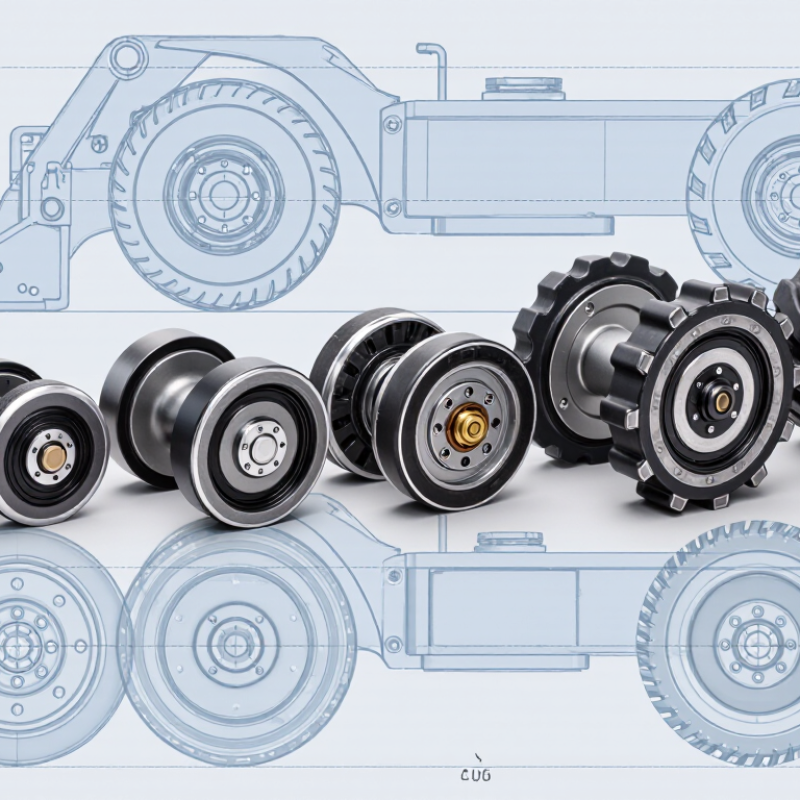
Compact track loader track rollers carry machine weight and help guide the track around the undercarriage. Lower rollers contact the track’s inner surface, transferring load to the frame as the machine moves. Their spacing and condition affect how evenly that load is distributed. The job sounds simple. Wear can be subtle: a roller may feel rough or show side-to-side movement before the track looks badly worn.
Rollers operate in mud, grit, and repeated impact, so seals and smooth rotation matter. During inspection, look for oil leakage, chipped edges, uneven wear, and debris packed around the roller. Compare rollers on both sides; one unusually worn unit may point to alignment or tension concerns, not just a faulty part. Check the service guidance for your machine before measuring or replacing components. A quick visual check helps, but it cannot confirm every internal failure. I have seen clean-looking parts hide damage; that is worth remembering.
Tips: Park on firm, level ground and follow the machine’s safety procedure before inspection. Clear packed debris, then rotate each accessible roller by hand only when safe. Note odd noise, looseness, or leakage, and record which position shows wear.
7 Best Compact Track Loader Track Rollers for Sale – Understanding Compact Track Loader Track Rollers
These are common roller configurations and replacement options, not universal-fit parts. Roller position, dimensions, mounting details, and machine serial number should be checked against the loader’s parts information before ordering.
| Option | Roller Type | Typical Location or Design | Best Suited For | Key Details to Verify | Buying Considerations |
|---|---|---|---|---|---|
| 1 | Standard single-flange bottom roller | Lower undercarriage; a single guiding flange helps keep the track aligned. | Replacing a single-flange roller on a machine designed for that position. | Roller diameter and width, flange profile, shaft or mounting design, and exact position in the undercarriage. | Choose a replacement matching the original specification; flange styles are not interchangeable unless the parts information confirms it. |
| 2 | Standard double-flange bottom roller | Lower undercarriage; two flanges guide the track from either side of the roller tread. | Machines and roller positions that use a double-flange configuration. | Overall width, flange spacing, tread diameter, mounting dimensions, and whether the position requires this configuration. | Compare the complete profile with the removed part or machine parts listing, not just the outside diameter. |
| 3 | Sealed, lubricated bottom roller | Lower undercarriage; internal lubrication and seals are designed to protect working components. | Routine replacement where the loader’s original design specifies a sealed roller. | Seal arrangement, lubrication specification, dimensions, mounting style, and compatibility with the machine model and serial range. | Ask how the roller is sealed and what warranty applies; a sealed design still needs inspection for leakage or damage. |
| 4 | Heavy-duty replacement bottom roller | Lower undercarriage; supplied as a replacement assembly intended for demanding work conditions. | Frequent operation on abrasive, uneven, or debris-covered ground, provided the part matches the loader. | Load rating where published, material and heat-treatment details, dimensions, and approved machine fitment. | “Heavy-duty” is not a fitment standard. Confirm the manufacturer’s application data and warranty rather than relying on the description alone. |
| 5 | Wide-tread bottom roller | Lower undercarriage; has a wider roller tread than a narrower-design counterpart. | A specific undercarriage position designed for a wide-tread roller. | Tread width, total roller width, flange spacing, clearance, and the specified installation position. | Do not select by width alone; an incorrect roller can interfere with track guidance or nearby components. |
| 6 | Upper carrier roller | Upper undercarriage; supports and guides the track along its return path. | Replacing a worn upper roller when the loader’s design includes a carrier roller. | Mounting bracket, roller diameter and width, shaft design, track clearance, and machine-specific fitment. | Carrier rollers and lower track rollers serve different positions and should not be substituted for one another. |
| 7 | Rebuilt bottom roller assembly | Reconditioned lower roller, typically repaired and inspected before resale. | Buyers considering a reconditioned replacement where a correctly matched new assembly is unavailable or not preferred. | Parts replaced, inspection process, dimensional tolerances, fitment listing, and warranty terms. | Request details of the rebuild and check for leakage, rough rotation, excessive play, or visible damage on arrival. |