

What Is the Best Flexible LED Work Light from China?

Choosing the best Flexible Led Work Light from China depends on the job, not a product photo. A mechanic needs steady, broad light beneath a vehicle. A technician working inside a cabinet may prefer a slim, bendable head that reaches tight corners. The right choice should make those tasks easier without adding glare, awkward cables, or frequent charging breaks.

This guide compares practical details that buyers can verify: measured brightness, beam spread, color consistency, battery capacity, and runtime under real use. It also looks at flexible-neck stability, magnet strength, hook design, charging options, and housing quality. Small details matter. A lamp that slowly droops can be frustrating. So can a bright beam that hides scratches or uneven surfaces.

Specifications still need context. Advertised lumen figures may not describe usable light at the work surface, and runtime can change with brightness settings and battery age. Ask suppliers for clear test conditions, product documentation, and samples when possible. Then inspect the light in the environment where it will be used. Check for hot spots, loose joints, uncomfortable heat, and controls that are difficult to reach with gloves. No single model suits every workshop, and a neat specification sheet is not proof of dependable performance. That is worth remembering. By weighing the task, build, support, and verifiable test results together, readers can make a more informed comparison and choose a work light that fits daily use.
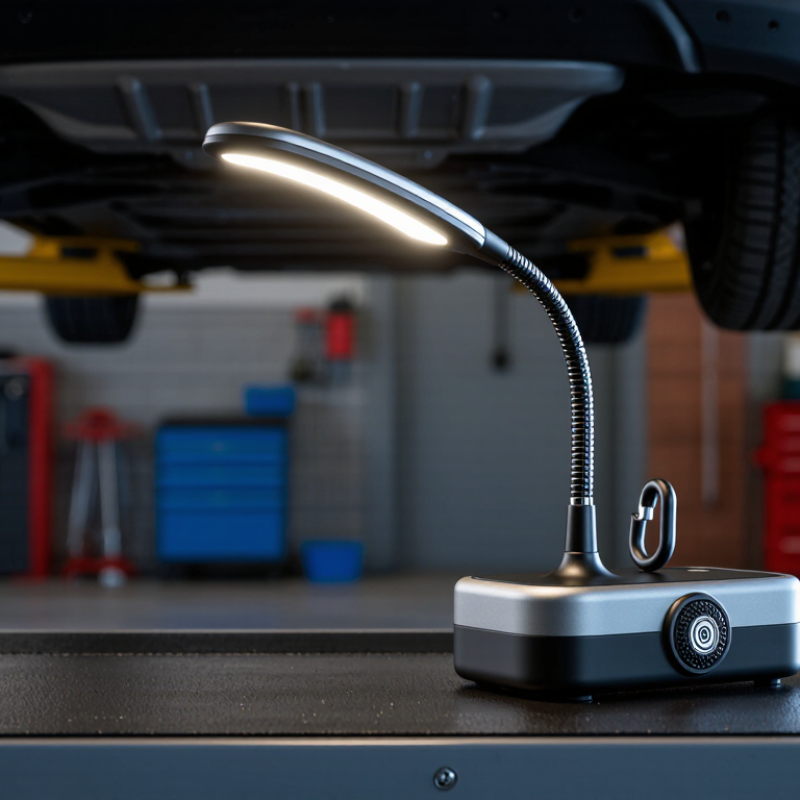
What Is the Best Flexible LED Work Light from China?

What Defines a Flexible LED Work Light?

A flexible LED work light is defined by controlled positioning, not simply a soft or bendable body. Its head, neck, or cable should direct light into a cramped engine bay, behind a panel, or beneath a sink without constant readjustment. A stable magnetic base, hook, or clamp also matters. Small details count.

Useful specifications describe the actual task. Lumens indicate light output, while color rendering index helps reveal wire colors and surface defects accurately. Check beam spread, battery runtime, charging time, and ingress protection for dusty or damp work areas. The U.S. Department of Energy’s 2019 Energy Savings Forecast of Solid-State Lighting projected about 5,700 terawatt-hours in cumulative lighting-energy savings from 2017 through 2035. That broad forecast is not a work-light test, but it shows why efficient LED output matters for portable tools used repeatedly.

Flexibility must survive real handling. A neck that holds its angle is more useful than one that slowly droops; a bright lamp is less useful when it creates hard glare on polished metal. Look for a balanced base, insulated grip, and controls usable with gloves. Test it. Specs can mislead. I would also check whether the battery can be replaced, since a sealed design may shorten the tool’s useful life. DOE’s report models general lighting, not individual portable lamps, so compare product claims with task-based testing where available.

What Defines a Flexible LED Work Light?

Brightness and runtime are key practical measures. A flexible light should also offer an adjustable head or neck, durable construction, and a beam suited to close-up work.

Illustrative runtime estimates for a 20 Wh battery, assuming 90% usable energy and power draw that scales with brightness: runtime = usable battery energy ÷ power draw. Actual results vary by light and operating conditions.

How Flexible LED Work Lights Are Designed and Used

What Is the Best Flexible LED Work Light from China?

A flexible LED work light combines a light source, a movable support, and a stable power system. Many designs use a slim gooseneck or bendable strip, letting users direct light behind pipes or beneath a vehicle. The support should hold its shape without requiring excessive force. Not always. Cheap or poorly balanced designs may droop during use.

The LED board needs a path to release heat, even in a compact housing. A metal core or heat-spreading plate can help, while a diffused cover softens harsh points of light. The outer sleeve should resist workshop dust and occasional splashes, but check its stated protection rating rather than assuming it is waterproof. A magnetic base or clamp helps keep both hands free. Small detail, big help.

At a repair bench, aim the light across a surface to reveal scratches and uneven finishes. For close inspection, avoid placing bright LEDs directly in your line of sight. A flexible neck is useful, though it can feel awkward when repeatedly repositioned. Battery capacity, charging time, and brightness settings also affect daily use. Test the light in the actual workspace; a narrow beam may leave corners dim, even when its central spot looks bright.

Key Features That Determine Light Quality and Durability

A flexible LED work light is only useful when its beam stays steady and easy to aim. Check the stated lumen output, but also consider how evenly the light spreads across a work surface. A bright central hotspot can leave screws and wiring in shadow. For color-sensitive tasks, a higher color rendering index can make insulation colors and fluid stains easier to distinguish.

Color matters. A neutral white setting often feels comfortable in a garage, while adjustable color temperature helps in mixed conditions. Look for a diffuser that softens glare without making the beam dull. Small details matter. A pivoting head should hold its position when angled downward, and its hinge should not loosen after repeated adjustment. Worth checking twice. A metal housing can help manage heat, but sturdy construction alone does not prove long-term reliability.

For durability, inspect the stated ingress protection rating and ask what testing supports it. Sealed switches, covered charging ports, and reinforced cable exits can reduce common failure points. If the light uses a rechargeable battery, check runtime at the brightness you will actually use; maximum-output figures can be optimistic. A textured handle is useful with oily gloves, though grip patterns can trap dirt. These details are easy to miss on a product page.

What Is the Best Flexible LED Work Light from China? - Key Features That Determine Light Quality and Durability

Feature What to Check Practical Selection Guidance Why It Matters
Light output Measured luminous flux in lumens, preferably stated for each brightness mode Choose output suited to the work area; compare tested lumen figures rather than LED count alone More lumens can illuminate a larger area, but beam shape and usable runtime also affect performance
Beam pattern Flood, spot, or adjustable beam; look for even illumination and controlled glare A wide flood beam is useful for close-up tasks, while a focused beam helps illuminate a specific point A well-matched beam can make work easier without requiring unnecessarily high brightness
Color quality Color Rendering Index (CRI) and correlated color temperature (CCT), if specified For color-sensitive inspection, consider a stated CRI of 80 or higher; neutral-white light around 4000–5000 K is a common general-purpose option CRI describes how faithfully colors appear compared with a reference light source; CCT describes whether light appears warmer or cooler
Brightness control Multiple output levels, a clearly accessible switch, and a low-output mode Look for settings that let users balance illumination and battery life Lower modes can reduce power consumption and limit glare during close work
Flexible positioning Gooseneck or articulated section, stable base, and secure clamps or hooks Check that the light holds its position under its own weight and can reach the intended work area Secure positioning keeps both hands free and helps direct light into confined spaces
Flex-section durability Reinforced joints, strain relief, smooth movement, and published bend-cycle test information Ask how the flexible section was tested; avoid repeated sharp bends or twisting if the instructions prohibit it Repeated movement can fatigue conductors and joints, so construction and correct use affect service life
Ingress protection An IP rating tested to IEC 60529, with the rating applying to the assembled light IP54 means dust-protected and protected against water splashes; IP65 means dust-tight and protected against water jets; IP67 includes temporary immersion under specified test conditions The appropriate rating depends on exposure; an IP rating does not by itself indicate impact resistance
Impact resistance Published IK rating, where relevant, and protection for the lens and housing Under IEC 62262, IK07 corresponds to 2 J impact energy and IK08 to 5 J; confirm the tested rating for the complete product Impact testing helps compare resistance to mechanical impacts, but does not guarantee survival of every drop or accident
Battery capacity and runtime Battery voltage and amp-hour capacity, or watt-hours; runtime figures for each mode Compare runtime at the same brightness setting. Watt-hours can be calculated as volts × amp-hours when both values are provided Runtime varies with output, battery condition, temperature, and operating conditions; a single maximum-runtime figure may refer to a low mode
Charging and power options Charging input, charging time, battery replacement options, and any wired operating mode Check compatibility with the intended power source and whether charging can take place safely during use Convenient charging and serviceable batteries can reduce downtime over the product’s working life
Thermal management Heat-dissipating housing, output regulation, and stated operating-temperature limits Review the manufacturer’s instructions for continuous operation and ambient-temperature limits LED output and battery performance can be affected by heat; suitable thermal design supports consistent operation
Documentation and support Clear specifications, test reports, safety instructions, warranty terms, and spare-part availability Request documentation that identifies test standards and the exact model configuration Verifiable specifications make it easier to assess quality and resolve service or compliance questions

Selection note: There is no single best configuration for every job. Compare independently verifiable specifications and test documentation, and choose a light whose output, flexibility, protection rating, and runtime match the working environment.

How to Assess Chinese Manufacturers and Product Standards

A flexible LED work light is only useful if its arm holds position and its beam stays steady during a repair. When assessing a Chinese manufacturer, ask for a detailed specification sheet covering brightness, color temperature, battery capacity, runtime, charging method, and ingress protection. Request a production sample, not just a showroom unit. Test it on a metal workbench: bend the neck repeatedly, check whether it droops, and run the light until the battery is low. Small details matter. So does consistency.

Evaluate the factory’s quality process, not only its sales presentation. Ask how incoming LED components are checked, how finished units are tested, and whether inspection records can be shared. Confirm that the manufacturer can provide current test reports for the exact model and configuration. For product safety and electromagnetic compatibility, check which standards and approvals apply in your destination market. Verify certificates and reports with the issuing organization or testing laboratory where possible. A logo on a document proves little by itself.

Packaging and labeling deserve attention too. Confirm that rated voltage, battery information, warnings, and model numbers match across the product, manual, and test documents. Ask how design changes are controlled after approval. Some suppliers may answer quickly but provide vague evidence; that is a reason to pause. I would still leave room for doubt after a good sample, because one unit cannot reveal every production inconsistency.

How to Choose the Best Flexible LED Work Light for Your Needs

What Is the Best Flexible LED Work Light from China?

How to Choose the Best Flexible LED Work Light for Your Needs

The best choice depends on where the light must reach, how long it must run, and how securely it stays in place. A bendable neck can direct light behind an engine or beneath a sink, while a hinged arm may offer better support on a bench. Check the stated lumen output, beam pattern, color rendering, and battery runtime at the brightness you plan to use. I would not choose by lumen claims alone; that is an easy mistake. A bright, narrow beam can still leave nearby work in shadow.

Durability matters in real workspaces. Look for a stable base, a firm clamp or magnet, and a housing suited to dust or occasional splashes. Confirm the product’s IP rating rather than assuming “rugged” means protected. The U.S. Department of Energy’s Energy Saver guidance says LEDs use at least 75% less energy and last up to 25 times longer than incandescent bulbs. That is a broad LED comparison, not a lifetime guarantee for any flexible work light. Check the warranty and charging details, too.

Tips: Test the neck’s reach and stiffness before buying. Grip matters. If possible, compare the beam on a dark work surface, not just in a showroom. Check the details. A few product specifications can be unclear, so ask the supplier to confirm runtime, battery capacity, and protection rating in writing.

Shopping Cart
Scroll to Top

Search for...

The Duravant family of operating companies serve the food processing, packaging and material handling segments.