

10 Best Glass Machinery Manufacturers for Global Buyers
Choosing among the 10 best Glass Machinery manufacturers means looking beyond a polished brochure. A cutting line may run smoothly during a factory visit, yet daily production brings different demands: mixed glass thicknesses, tight delivery windows, operator training, and occasional downtime. Buyers should compare processing capacity, machine accuracy, energy use, safety features, spare-parts availability, and technical support. Ask for measurable details, not just promises. How quickly can service teams respond? Which components are stocked locally? Can the supplier share references from plants with similar products and output?
A reliable comparison also needs context. A compact workshop and a high-volume float-glass processor do not need the same equipment. Consider the full workflow, from loading and cutting to edging, washing, and tempering. Watch a live demonstration if possible. Listen for vibration. Inspect the finished edges. Ask operators how changeovers feel after a full shift. Small observations matter.
Glass industry expert John C. Mauro is a recognized glass scientist, but no verified quotation from him on machinery selection was provided here. To avoid inventing words or implying an endorsement, this introduction does not attribute a direct quote to him. Buyers can still use a practical rule: judge equipment by documented performance, service capability, and fit with the actual production floor. No machine is perfect. Some specifications may look impressive but deserve closer questioning. The manufacturers below offer a starting point for global buyers comparing options, not a substitute for technical checks, reference calls, and a clear assessment of long-term operating needs.
What Glass Machinery Manufacturers Produce and the Processes They Support
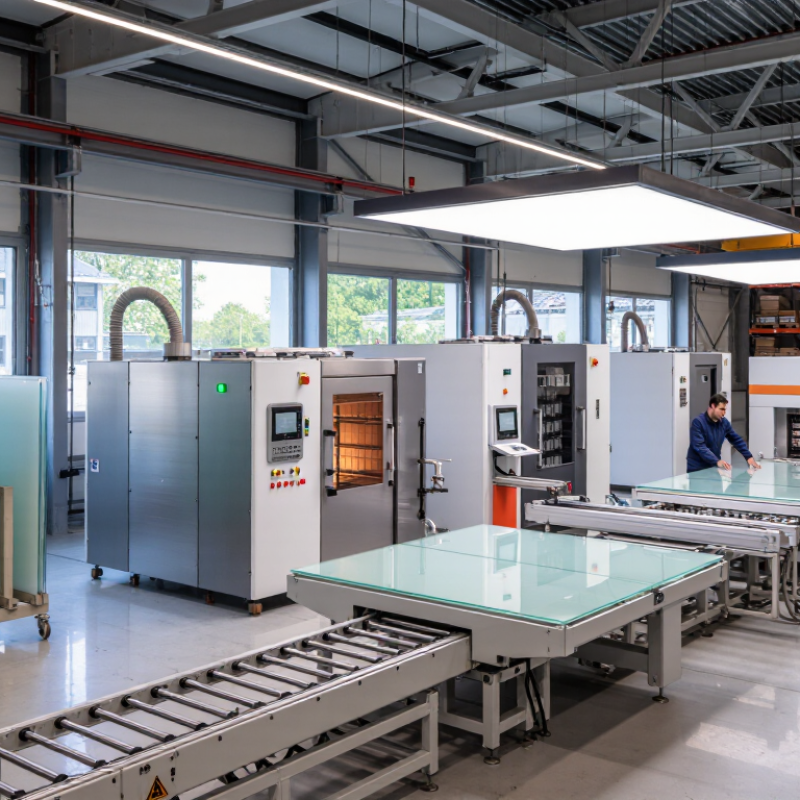
Glass machinery manufacturers produce equipment for different stages of glass processing. A flat-glass line may include cutting tables, edge grinders, drilling machines, washers, tempering furnaces, and laminating systems. Insulating-glass equipment can assemble panes, apply spacers, and seal units. Container-glass production uses forming machines, annealing lehrs, inspection systems, and packing equipment. Not every manufacturer covers every process. Some build complete lines; others focus on specific machines, controls, or technical support.
Choosing equipment starts with the product, not the machine catalogue. Define glass thickness, dimensions, coatings, daily output, and available floor space. Ask how changeovers affect production, and request clear details on installation, operator training, spare parts, and maintenance. A published speed is only one measure. Real output can fall when orders vary or handling slows the line. That detail is easy to overlook.
Tips: Map each production step before comparing suppliers. Use sample glass during testing, and agree on measurable quality checks. Confirm utility needs and maintenance access. A compact machine may save floor space, but leave too little room for safe loading. Test the whole workflow where possible, not just one machine.

Criteria for Evaluating Manufacturers in the Global Market
When comparing glass machinery manufacturers, look beyond the product catalogue. Check whether their equipment suits your glass type, sheet sizes, output targets, and factory layout. Ask for technical specifications, utility requirements, and details about compatible software. A capable supplier should explain these clearly, not rely on broad promises. Request a live demonstration or a video showing a complete production cycle. Small details matter, such as edge quality, cycle time, and how operators access maintenance points.
Tips: Ask for references from buyers with similar production needs. Confirm warranty terms, spare-parts availability, training, and response times in writing. Keep the answers.
Service matters as much as machine performance. A line that stops for days while awaiting a specialist can disrupt delivery schedules. Check where technicians are based and how support works across time zones. Review factory acceptance and installation procedures, and agree on measurable performance tests before purchase. Where possible, inspect a working installation and speak with its operators. Compare total ownership costs, including energy use, consumables, maintenance, and downtime—not just the initial quotation. No evaluation checklist catches everything. Some concerns only appear during installation, so leave room for questions and verify key claims independently.
| No. | Evaluation Criterion | What to Assess | Evidence to Request | Suggested Weight |
|---|---|---|---|---|
| 1 | Application and Product Fit | Whether the equipment is designed for the buyer’s glass type, product dimensions, production volume, and process requirements. | Written scope of supply, process flow, product range limits, and sample production results for comparable products. | 15% |
| 2 | Technical Performance | Rated capacity, operating speed, dimensional tolerances, repeatability, and stated performance conditions. | Technical specifications that define test conditions, measurement methods, and acceptance criteria. | 14% |
| 3 | Quality Management and Build Quality | Documented quality controls, component traceability, inspection procedures, and consistency of machine assembly. | Quality-management documentation, inspection records, component lists, and factory acceptance test procedures. | 12% |
| 4 | Safety and Regulatory Readiness | Machine guarding, emergency stops, electrical safety, risk documentation, and readiness for applicable destination-market requirements. | Risk assessment, safety instructions, electrical schematics, conformity documents where applicable, and a list of required site provisions. | 12% |
| 5 | Installation and Commissioning | Clarity of installation scope, commissioning support, operator training, and responsibility for site preparation. | Installation plan, site-readiness checklist, commissioning schedule, training agenda, and details of travel or service charges. | 10% |
| 6 | After-Sales Service | Availability of remote troubleshooting, technical documentation, service response arrangements, and escalation procedures. | Written service terms, support hours, response targets, service contact process, and examples of troubleshooting documentation. | 10% |
| 7 | Spare Parts and Maintenance | Availability of wear parts and critical components, maintenance intervals, and the practicality of routine servicing. | Recommended spare-parts list, parts lead times, maintenance schedule, and information on component sourcing. | 9% |
| 8 | Energy and Resource Use | Specified electricity, compressed-air, water, or other utility needs, along with opportunities to reduce consumption. | Utility-consumption data with stated operating conditions, connection requirements, and energy-saving options. | 7% |
| 9 | Delivery, Documentation, and Trade Readiness | Realistic manufacturing and shipping schedules, packaging arrangements, export documentation, and clarity of delivery terms. | Project schedule, packing details, shipping-document checklist, and a quotation specifying the agreed delivery term. | 6% |
| 10 | Total Cost and Commercial Clarity | Full lifecycle cost, including the machine, tooling, installation, training, consumables, maintenance, and any exclusions. | Itemized quotation, payment milestones, warranty terms, exclusions, and a documented list of optional items. | 5% |
| Total Suggested Evaluation Weight | 100% | |||
Profiles of 10 Glass Machinery Manufacturers for Global Buyers
A tempering-line specialist typically serves factories producing safety glass for buildings and vehicles. Look for furnace temperature controls, documented output rates, and clear maintenance instructions. A laminated-glass equipment maker focuses on film handling, clean-room conditions, and reliable autoclave cycles. Small process details matter. An insulating-glass supplier may offer spacer application, gas filling, and sealing equipment. Ask how its line handles different glass sizes. A cutting-table manufacturer is judged by cut accuracy, sheet loading, and software support. Request sample results using your own glass.
An edging and polishing equipment maker should explain wheel options and water management. A CNC glass-machinery producer may support drilling, milling, and shaped work, but verify tooling availability. A washing-line maker needs to show how brushes and filters handle coatings and residue. A bending-furnace manufacturer should provide guidance on mold setup and temperature consistency. These are practical questions, not brochure details.
A glass-handling automation supplier can reduce manual lifting through conveyors and robotic systems. Check floor-space needs and operator training. A complete-line integrator coordinates several processes, from cutting to packing. Its installation plan and after-sales response deserve close review. No single profile suits every factory. Some catalog claims sound precise, yet real performance depends on glass thickness, shift patterns, and maintenance habits. A factory visit or production trial can reveal gaps that specifications miss.
How Manufacturing Regions Shape Equipment and Service Availability
Manufacturing regions shape more than a machine’s purchase price. They influence which equipment configurations are common, how quickly parts arrive, and whether technicians can reach a factory without a long wait. In established glass-production clusters, suppliers may have easier access to skilled installers and component workshops. That matters.
A buyer evaluating a cutting table or tempering line should ask where critical parts are stocked, not just where the machine is assembled. A replacement sensor sitting nearby may prevent a production stoppage; a specialist control board shipped across several borders may take longer. Regional power supply, plant layout, and operator training needs can also affect commissioning. These details are easy to overlook in a polished quotation.
Proximity is not a guarantee of strong service. A nearby manufacturer may have limited field technicians, while a distant supplier may maintain regional service teams and spare-parts depots. Not always. Ask for realistic response times, installation references, and a clear list of locally available consumables. A neat regional comparison can still miss important gaps. Buyers should compare the actual support network for their destination, including language, time-zone coverage, and access to remote diagnostics, before choosing equipment.
How Buyers Match Machinery to Production Needs and Facility Requirements
Matching machinery to production needs starts with a clear picture of the products you make. Record glass type, thickness range, sheet size, and daily output targets. A cutting line for standard panes may not suit frequent changes in shape or thickness. Ask suppliers how output is measured, and whether figures assume ideal conditions. Fast on paper is not always fast on the shop floor.
Tips: Measure doorways, ceiling height, and service routes before choosing equipment. Check power, air, water, and exhaust requirements. Leave room for safe loading and routine maintenance.
Facility limits can shape the shortlist as much as production goals. Compare each machine’s footprint with available floor space, then check foundation needs, operator access, and material flow. For example, a furnace placed far from loading may create extra handling and slow a shift. Confirm that technicians can reach wear parts without moving nearby equipment. I would also revisit noise and heat estimates; they can be easy to overlook during planning. Share drawings and utility details with suppliers, and request a layout review before purchase. A careful fit check may feel tedious, but it can prevent costly installation changes.









