

What Is the Best POY Spinning and Winding Machine in 2026?
Choosing the best POY Spinning And Winding machine in 2026 requires more than comparing advertised speeds. A line may run quickly during a short demonstration, yet struggle with package consistency across a full production shift. Buyers should examine yarn quality, winding stability, energy use, changeover time, maintenance access, and support for the polymers and deniers they actually process. Small details matter: a clear view of the winding zone, accessible filters, and stable tension control can affect daily output.
A verified quotation from a named POY industry expert cannot be supplied because no source articles or expert references were included. Rather than invent an attribution, this introduction uses a practical engineering benchmark: “The best machine is the one that holds process stability at the required output, shift after shift.” Treat that as an editorial statement, not a quotation from a named person.
This guide compares the specifications that matter on the factory floor, including take-up speed, package build, automation, operator workload, and serviceability. It also considers the limits of headline performance figures. A machine that suits one plant may not suit another. The right choice depends on feedstock, product range, staffing, utilities, and production targets. Some trade-offs remain unavoidable. Faster operation, for example, does not automatically mean better yarn or lower total cost.
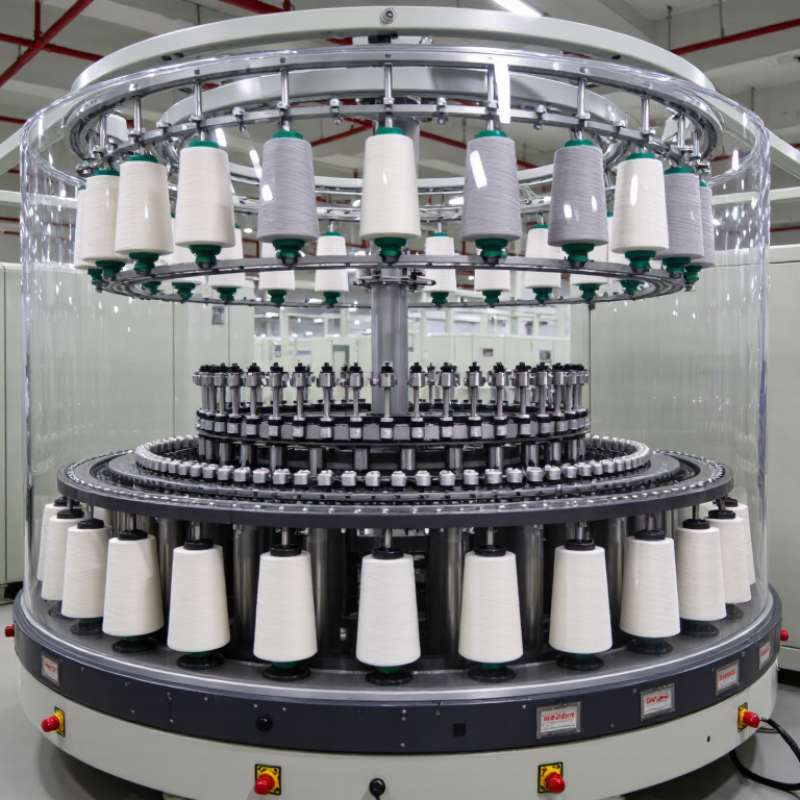
POY Fundamentals: Typical PET Take-Up Speeds of 2,500–3,500 m/min
For PET partially oriented yarn, 2,500–3,500 m/min is a commonly used take-up range. It is a practical process window, not a universal target. The right speed depends on polymer quality, spinning temperature, throughput, quench airflow, and winding stability. Textile Exchange’s Materials Market Report 2024 estimates polyester made up 57% of global fiber production in 2023. That scale helps explain why stable POY production matters, but it does not prescribe a machine speed. Operators still need to validate settings on the actual line.
At the lower end, a line may favor steadier winding and more process tolerance. Near 3,500 m/min, small variations in cooling or tension can show up as uneven packages, yarn breaks, or inconsistent downstream draw performance. Watch the first packages closely. Log denier variation, break frequency, package hardness, and waste during speed trials. A speed increase that raises output but disrupts quality may not improve usable production. Real lines are imperfect; even careful trials can miss a slow shift in raw-material behavior.
Tips: Raise speed in measured steps, not a single jump. Keep polymer moisture and quench conditions consistent, then compare package build and yarn tests at each setting. Record the limits, too—not only the best result.

Machine Process: Melt Spinning, Quenching, Finish Application, and Winding
What Is the Best POY Spinning and Winding Machine in 2026?
The best POY line is not defined by winding speed alone. It must keep melt delivery, cooling, finish application, and take-up consistent across every position. Textile Exchange’s Materials Market Report 2024 estimates polyester made up 57% of global fiber production in 2023. That scale makes stable, repeatable filament quality commercially important. The report describes the market, not machine performance; buyers still need plant-specific trials.
In melt spinning, uniform polymer temperature and pressure help limit denier variation. Quenching air then cools freshly extruded filaments; uneven airflow can create inconsistent solidification. Small details matter. Check cross-flow balance, filter access, and temperature control during a production trial.
Finish application should deliver a measured, even coating, since poor coverage can increase friction or cause filament breaks. Winding completes the process: controlled tension and traverse build packages that unwind reliably downstream.
Ask suppliers for documented package quality, break rates, and energy use under comparable conditions. Look closely at the data. A polished demonstration may not reflect months of operation. There is no universal best machine; maintenance access and operator skill can change the result.
Compare 2026 Models by Ends, dtex Range, and ISO 2060 Linear-Density Testing
The best POY spinning and winding machine in 2026 is not simply the one with the most ends. Compare ends alongside each position’s dtex range, winding stability, and stated operating conditions. More ends can raise output, but only when polymer flow, quenching, and take-up remain consistent across the line. Watch the package edges. Uneven tension can show up there before it becomes obvious in downstream processing.
For linear density, ISO 2060:1994 specifies a skein method for determining yarn mass per unit length. Ask suppliers how they verify dtex, how often they sample, and whether results cover every end or only selected positions. Textile Exchange’s Materials Market Report 2024 estimates global fiber production reached 124 million tonnes in 2023, with polyester accounting for 57 percent. That scale makes repeatable specifications useful, but it does not prove one machine suits every plant. A small caveat. Published ranges may not reflect your polymer, speed, or package size; request trial data under your intended settings. I would still question any comparison that lists ends and dtex but omits test conditions.
Assess Output with kg/h, kWh/kg, Package Build, and End-Break Rate
What Is the Best POY Spinning and Winding Machine in 2026?
The best machine is the one that delivers stable, saleable output at your target yarn specification—not the highest headline speed. Compare kg/h at the same denier, filament count, and operating conditions. Record kWh/kg using a clearly defined meter boundary; include the same equipment and auxiliaries in every trial. Textile Exchange’s Materials Market Report 2024 estimates global fiber production reached 124 million tonnes in 2023, with polyester accounting for 57%. That scale makes efficiency important, but the report does not set POY machine benchmarks. Small differences matter.
Package build needs a physical check. Weigh packages, inspect edge shape and density, and test unwinding under the next process’s actual conditions. A neat package can still unwind poorly. Track end breaks per 1,000 spindle-hours, alongside the cause and location of each break; a raw daily count can hide differences in running time. I would reject comparisons that omit these details, even when the output figure looks impressive. That judgment can be inconvenient. Keep one trial record for yarn quality, waste, speed, energy, and breaks, then repeat it across shifts. No single number tells the whole story.
Choose a Best-Fit Line by Speed Stability, Automation, Changeover, and Service
The best POY spinning and winding machine in 2026 is not automatically the line with the highest listed speed. It is the line that holds yarn quality steady during real production shifts. Ask to review speed trends, package build, yarn breaks, and alarm records from a sustained run. A clean factory trial is useful, but it may not reflect a busy shift with changing operators. Watch the tension readings. Check whether packages remain consistent near the end of a doff, not only at startup.
Automation should reduce routine adjustments without hiding problems from operators. Look for clear alarms, accessible controls, and process data that helps teams trace a fault. Changeover deserves equal attention. Time a real package or product change, including cleaning, recipe entry, and restart checks. Small delays add up. A quick changeover on paper can become slow at the machine. Service is part of the equipment choice, too. Confirm technician availability, spare-parts access, training, and response arrangements for your location. Ask what support includes after installation. One overlooked detail may be how quickly a common sensor or winding component can be replaced. The right choice depends on your product mix, staffing, floor space, and maintenance capacity, so compare complete operating conditions rather than a single speed figure.
What Is the Best POY Spinning and Winding Machine in 2026? — Choose a Best-Fit Line by Speed Stability, Automation, Changeover, and Service
A practical comparison of generic POY line configurations. Select the line that fits the product mix, operating model, and support requirements—not headline speed alone.
| Line configuration | Best fit | Indicative winding-speed planning band | Speed-stability and package-quality checks | Automation profile | Routine package doff | Product / denier changeover | Service requirements to verify | Overall fit |
|---|---|---|---|---|---|---|---|---|
| Standard modular line Conventional spinning positions with automatic winding options | Stable, repeat-volume production with a limited product range and a focus on manageable investment. | Approximately 2,500–3,000 m/min, subject to polymer, filament count, denier, and process design. | Confirm steady-state speed deviation, yarn-break frequency, package build, and lot-to-lot package consistency during a production trial. | Medium: typically supports automated winding functions; material handling and data integration may be optional. | Usually automated at the winder; confirm cycle time, doff reliability, and manual intervention needs by position. | Moderate. Allow for recipe adjustment, quality checks, and stabilization; the actual duration depends on the scope of the change. | Local access to critical spares, documented troubleshooting, operator training, and clear response-time commitments. | Best balanced choice for a stable product mix and conventional operating requirements. |
| High-throughput integrated line Higher-position-count layout with coordinated spinning, winding, and material handling | Large-volume production where utilization, labor efficiency, and consistent operation across positions are priorities. | Approximately 2,800–3,200 m/min as an initial planning range; confirm the approved speed for each product and package specification. | Assess speed variation across positions, package uniformity, end-break trends, and sustained performance during an extended acceptance run. | High: commonly designed for coordinated controls and automated package handling; verify alarms, traceability, and recovery procedures. | Automated systems can reduce routine handling, but actual cycle time and staffing depend on layout and downstream logistics. | Can be less flexible when many products are interleaved. Plan a controlled transition and confirm recipe management and restart procedures. | Require remote diagnostics where appropriate, defined escalation coverage, spare-parts availability, and a documented preventive-maintenance plan. | Best for sustained high output when demand is predictable and commissioning support is strong. |
| Flexible multi-product line Configuration emphasizing recipe control and adaptable process settings | Producers switching among deniers, filament counts, or customer specifications more frequently. | Typically planned around the validated speed window for each product; do not assume one maximum speed applies to every grade. | Validate repeatability after recipe changes, first-package quality, process stabilization time, and consistency between shifts. | Medium to high: recipe storage and electronic process records are useful; check access control and change-history features. | Depends on the winding package and handling system; verify that automated doffing supports the full product range. | Potentially more manageable with prepared recipes and standard work, but mechanical or spinneret-related changes may require additional downtime. | Look for process-engineering assistance, recipe transfer support, operator training, and accessible troubleshooting documentation. | Best for product variety when changeover discipline matters more than maximum line speed. |
| Upgrade or retrofit line Existing spinning assets combined with selected winding, controls, or handling upgrades | Plants seeking improved winding or automation while retaining serviceable upstream equipment. | Limited by the existing spinning process and equipment condition; establish the achievable speed through an engineering audit. | Measure baseline performance first, then compare speed stability, package quality, and downtime after the upgrade. | Variable: can range from targeted winding automation to broader controls and data upgrades. | May improve with a winder upgrade; confirm mechanical interfaces, package transport, and safe access for operators. | Often constrained by legacy controls, interfaces, and available documentation; assess integration risk before scheduling work. | Confirm compatibility responsibility, commissioning scope, software support, spare-part continuity, and post-installation service. | Best for constrained capital budgets when the existing line passes a condition and compatibility assessment. |
How to use these figures: Speed bands are indicative planning ranges, not guaranteed machine specifications or universal industry limits. Actual operating speed, package quality, doff performance, and changeover time depend on polymer, product specification, equipment configuration, plant conditions, and operating practice. Compare suppliers using the same product, acceptance-test method, production duration, and measurement definitions; obtain written performance guarantees and service terms before purchase.









