Best Nickel Alloy Round Bar Manufacturer in China?
Nickel alloy round bars are used where heat, corrosion, or mechanical stress can challenge ordinary steel. Choosing a supplier takes more than comparing prices. Buyers need to check alloy grade, dimensional tolerances, heat treatment, and test documentation. Small differences matter. A bar destined for a machined valve component may need different controls from stock used in a furnace assembly.
Supply-chain scale offers useful context, but it does not prove a manufacturer’s quality. The U.S. Geological Survey’s Mineral Commodity Summaries 2025 estimated global nickel mine production at 3.7 million metric tons in 2024, with Indonesia producing about 2.2 million. These figures describe mined nickel, not finished round-bar capacity. That distinction is easy to overlook. For a practical search for the Best Nickel Alloy Round Bar Manufacturer in China, buyers should ask how material is sourced, processed, inspected, and traced to its test records. Compare sample certificates with purchase specifications, and verify that stated dimensions and grades match the intended application. A polished website is not evidence by itself. This guide examines the questions that help distinguish a capable Nickel Alloy Round Bar Manufacturer from a supplier whose claims still need checking. No single ranking settles the choice; requirements differ, and documentation deserves close review.
What Is a Nickel Alloy Round Bar?
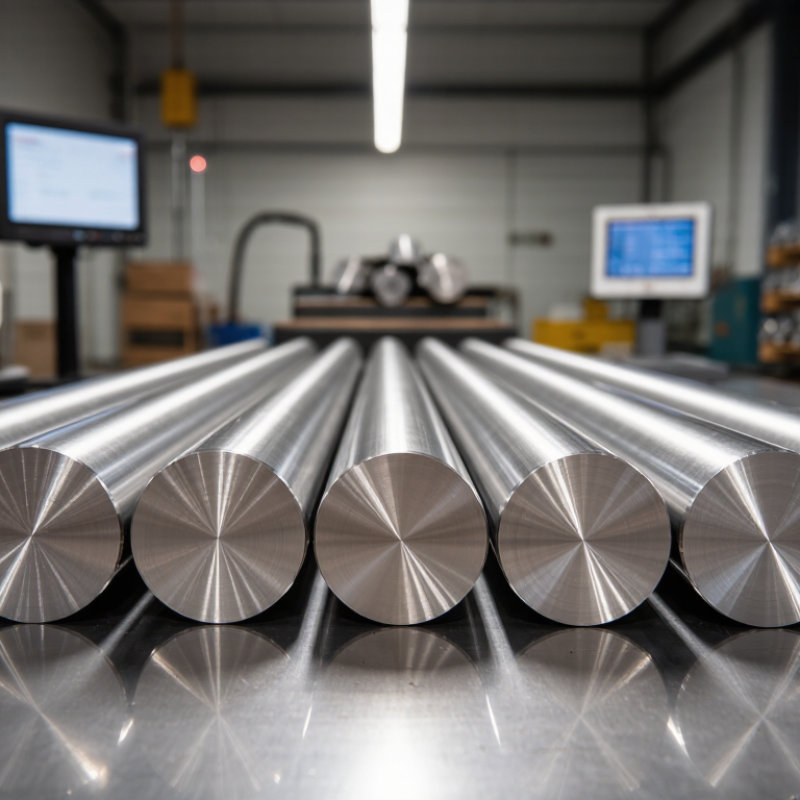
A nickel alloy round bar is solid, cylindrical metal stock made from nickel-based alloys. It is supplied in set diameters and cut to length for machining, fabrication, or component production. Nickel is combined with elements such as chromium, molybdenum, iron, or copper to tailor properties like corrosion resistance, strength, and heat tolerance. The exact performance depends on the grade, processing route, and service conditions. Not every bar behaves alike.
ASTM B160 covers nickel 200 and nickel 201 rod and bar; other alloy grades follow different specifications. Check the grade, product standard, heat-treatment condition, dimensions, and material test certificate before ordering. The USGS Mineral Commodity Summaries 2025 estimated global nickel mine production at about 3.7 million metric tons in 2024. This figure describes mined nickel, not finished round-bar output, so it gives supply context rather than product availability. Paperwork matters. A certificate still cannot replace checking whether the selected alloy suits the actual temperature, chemicals, and loads.
Which Nickel Alloy Grades and Specifications Are Commonly Available?
Common nickel alloy round bars include Nickel 200 and 201 for caustic-service equipment, Alloy 400 for marine fittings, and Alloy 600 for furnace components. Alloy 625 is often selected for corrosion resistance and strength, while 718 suits parts exposed to high stress and temperature. Alloy 800H or 800HT, 825, and C-276 are also available from many suppliers. Availability depends on the mill, diameter, and order quantity. Details matter.
Specifications usually identify the grade, standard, diameter, length, and delivery condition. ASTM requirements may include B160 for Nickel 200/201, B164 for Alloy 400, B446 for Alloy 625, and B637 for certain precipitation-hardening alloys. Round bars may be hot-finished or cold-finished, supplied annealed or heat-treated, and cut to requested lengths. Typical orders specify diameter tolerances, straightness, surface condition, and test documentation. Ask for the exact standard and material test report, not just a grade name. Fit is not automatic. A bright, smooth bar can still have the wrong heat treatment or tolerance; that detail is easy to miss when comparing quotations.
Common Nickel Alloy Round Bar Grades and Specifications
The chart compares minimum nickel content by weight for selected commercial grades. Common round-bar product specifications include ASTM B160 for Nickel 200/201, B164 for Alloy 400, B166 for Alloy 600, B446 for Alloy 625, B637 for Alloy 718, and B574 for Alloy C-276. Confirm the applicable specification, grade, dimensions, and heat-analysis requirements when ordering; exact requirements depend on the product standard.
What Criteria Help Identify a Reliable Manufacturer in China?
Best Nickel Alloy Round Bar Manufacturer in China?
A reliable manufacturer should make its production controls visible, not just describe them. Ask how nickel alloy bars are melted, forged, heat-treated, and inspected. The answers should match the grade and specification you need. Details matter. Request a sample material test certificate and check that its heat number matches the bar’s identification marks. Confirm diameter tolerance, straightness, surface condition, and permitted inspection methods before placing an order.
Tips: Ask for recent test records, production photos, and a clear inspection plan. Check whether the supplier can explain traceability from raw material to finished bar. A quick video call can help, but it cannot replace independent verification.
Experience shows that small gaps in paperwork can become costly delays. Compare lead times with the stated production capacity, and ask how changes or rejected material are handled. If possible, arrange a third-party inspection before shipment. A polished website is not proof of consistent quality; I would still verify claims against documents and physical samples. Communication matters, too. Clear answers about packaging, export preparation, and delivery schedules are useful signs of a supplier that understands real production orders.
Which Industries Use Nickel Alloy Round Bars?
Nickel alloy round bars are used where ordinary steel may lose strength or corrode under heat, pressure, or aggressive chemicals. Chemical processing plants use them for pump shafts, valve stems, fasteners, and reactor fittings exposed to acids, chlorides, and hot fluids. The exact alloy matters. A grade suited to one process may perform poorly in another, so engineers check temperature, chemical concentration, and stress before specifying a bar.
Oil and gas equipment often relies on nickel alloy bars for valve components, drilling tools, and high-pressure fittings. In power generation, they may be machined into turbine parts and heat-resistant fasteners. These components can face repeated thermal cycles, not just high temperatures. That distinction matters. A material’s strength at operating temperature and its resistance to oxidation both need review.
Aerospace manufacturers use selected nickel alloys for engine hardware, while marine equipment makers may choose them for parts exposed to seawater. One detail is easy to underestimate: machining. Nickel alloys can work-harden, so cutting speed, tooling, and heat control affect surface quality and dimensional accuracy. Material certificates and clear traceability also help buyers confirm composition and condition. Still, a certificate alone cannot replace checking whether the chosen grade fits the actual service environment.