

Top Wafer Screws Manufacturers in China for Global Buyers?

For global buyers, choosing Wafer Screws is about more than comparing unit prices. A low-profile head must sit cleanly against the panel, while the thread, coating, and dimensions must suit the application. Small differences matter. A mismatched screw can slow assembly, mark a finished surface, or create avoidable rework.

China offers buyers a broad manufacturing base, but supplier selection still calls for careful checks. Review material specifications, dimensional tolerances, sample quality, production consistency, and packaging details. Ask how the manufacturer handles inspection records and changes between batches. A polished catalog is useful; a well-documented sample is better. Neither replaces clear communication about the intended substrate and operating conditions.

As [verified fastener-industry expert’s name] puts it, “[Insert a directly verified quotation about fastener sourcing or quality control].” This quotation should be confirmed with the expert or a reliable published source before use. That step matters: an invented endorsement can weaken an otherwise useful buyer’s guide. The companies discussed in this article should therefore be assessed against evidence, not unsupported rankings. The comparison will focus on product range, manufacturing capabilities, quality practices, export experience, and responsiveness. No single supplier fits every project. A buyer ordering short-run custom parts may value flexibility, while a high-volume assembler may prioritize repeatability and lead-time control. The right choice starts with specific requirements—and a willingness to verify claims.
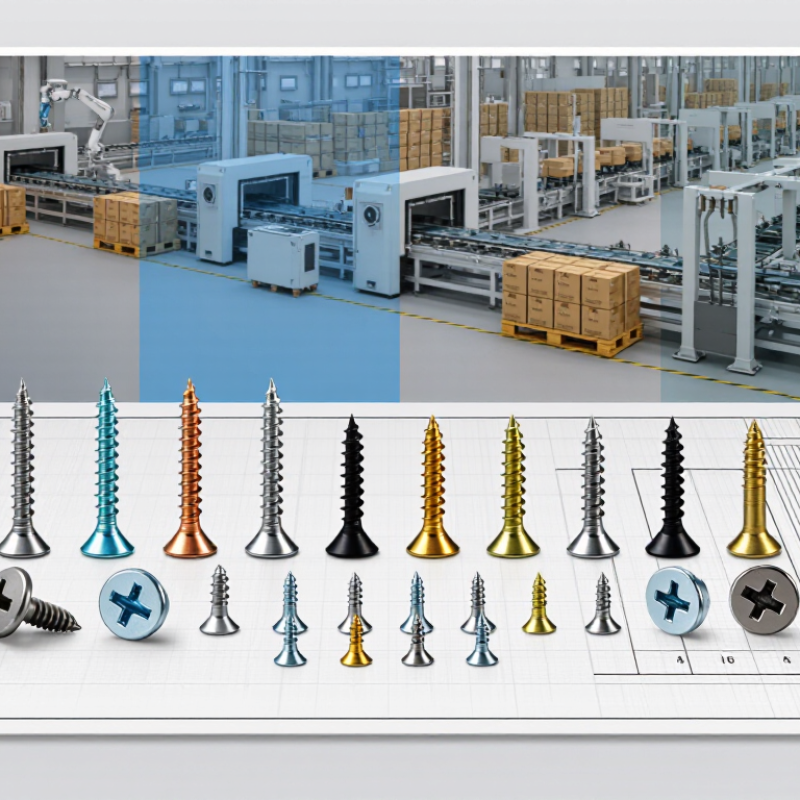
Top Wafer Screws Manufacturers in China for Global Buyers?

Define Wafer Screws by Head Design, Drive Type, and Application

Wafer screws are defined by a broad, low-profile head that spreads clamping force across a larger surface. The head is usually shallow and slightly rounded, with a wide underside that can help hold thin sheet material without a large washer. That shape is the key identifier. A catalog name alone can be misleading.

Drive type is a separate choice. Common recesses include Phillips, Pozidriv, Torx, and slotted designs; each calls for a matching driver and affects how reliably an installer can apply torque. Check the recess, not just the head. Poor fit can damage the drive or leave a loose joint. The boundary between similar head styles is not always tidy, so drawings and samples help.

Application guides selection. Wafer screws often fasten sheet-metal brackets, appliance panels, light enclosures, and electronic housings where a broad head and modest profile are useful. In a thin panel, head diameter and length matter as much as the drive. Too long, and the tip may interfere with nearby parts. For purchasing, confirm material, coating, dimensions, thread form, and installation method against the assembly drawing. A specification can still miss a detail. Check a real sample before approving production.


Use ISO 1478’s ST2.2–ST9.5 Range to Compare Thread Options

ISO 1478 gives global buyers a clear starting point: the ST2.2–ST9.5 range for tapping-screw threads. Small threads matter. ST2.2 and ST2.9 suit compact assemblies, while ST4.8, ST6.3, and ST9.5 can support larger fastening needs. The right choice depends on sheet thickness, pilot-hole diameter, material hardness, and required pull-out resistance—not diameter alone. A mismatch can strip thin sheet or make installation painfully slow.

For a practical comparison, request the thread designation, major diameter, pitch, point style, and recommended pilot-hole size from each manufacturer. Then test samples in the actual substrate. Check insertion torque, seating, and thread damage; a neat drawing cannot reveal how a screw behaves in a real panel. ISO 1478 defines thread geometry, but it does not certify every product’s performance. That distinction is easy to miss.

Material sourcing also deserves context. The World Steel Association’s World Steel in Figures 2025 reports global crude-steel production of 1,882.6 million tonnes in 2024. This scale indicates a broad steel supply base, not uniform fastener quality. Ask suppliers for material and dimensional inspection records, and confirm that quoted dimensions follow ISO 1478. I would not assume every factory stocks the full ST range. Verify availability, tolerances, and sample consistency before placing a large order.

Top Wafer Screws Manufacturers in China for Global Buyers? — Compare ISO 1478 ST2.2–ST9.5 Thread Options

Nominal thread diameter and standard coarse-thread pitch for ISO 1478 ST-size tapping screws.

The ST designation indicates nominal thread diameter in millimetres. Pitch is the distance between adjacent threads, also in millimetres. Confirm the applicable standard edition and product specification when selecting screws.

Assess Self-Drilling Screw Performance Against ISO 10666

For global buyers comparing wafer screws, ISO 10666 offers a useful baseline for evaluating self-drilling tapping screw performance. It covers mechanical and performance requirements, including drilling and tapping behavior. A supplier’s certificate is helpful, but buyers should also ask which test conditions and screw dimensions it represents.

Check samples in the materials and thicknesses used in production. Record the time needed to drill through the sheet, whether the screw seats cleanly, and any slipping or broken points. Test more than one screw from a lot. Small differences in drill-point geometry or heat treatment can affect results. Watch the washer or mating surface, too; a screw that drills quickly may still damage a thin panel when over-tightened.

ISO 10666 cannot answer every assembly question. Coating durability, head dimensions, and corrosion exposure may need separate specifications or tests. Compare results against the applicable standard edition and your own installation requirements. Keep the test setup consistent, including driver speed and pressure. A clean lab result is not the whole story. Real installation conditions can be messy, and I would not treat one successful sample as proof of steady production quality.

Compare Plating and Corrosion Tests Using ISO 4042 and ISO 9227

For global buyers comparing wafer screws from Chinese manufacturers, ISO 4042 and ISO 9227 answer different questions. ISO 4042 addresses electroplated coatings on fasteners, including coating designation and relevant process controls. Ask suppliers to state the plating system, nominal thickness, passivation, and any sealer in writing. Small details matter. On a wafer screw, the shallow head, drive recess, and underside can receive uneven coverage. A coupon tested beside the screws may not represent those areas.

ISO 9227 describes salt spray test methods, including neutral salt spray. It measures performance under specified laboratory conditions, not years of outdoor service. Request the exact test method, exposure duration, sample quantity, and acceptance criteria. Then ask for reports linked to the production lot, not just a general sample. Salt spray hours are not a universal ranking of coatings. A coating can pass a test and still perform differently in a damp assembly with crevices or dissimilar metals. That distinction is easy to overlook. Compare like-for-like coating systems and inspect actual screws when possible. One weakness in many comparisons is relying on a single test result; it is useful evidence, but not the whole picture.

Top Wafer Screws Manufacturers in China for Global Buyers? Compare Plating and Corrosion Tests Using ISO 4042 and ISO 9227

This supplier-comparison checklist focuses on verifiable technical criteria rather than company rankings. ISO 4042 covers electroplated coating systems for fasteners; ISO 9227 specifies salt-spray test methods. ISO 9227 does not establish one universal exposure duration or acceptance limit for every fastener.

Comparison dimension What buyers should compare ISO 4042 relevance ISO 9227 relevance Evidence to request from each supplier
Wafer-head screw specification Confirm the drawing, thread, dimensions, material, mechanical properties, and applicable product standard. “Wafer head” describes a head style; it does not by itself define the screw’s material or coating. Use the fastener’s material and design when selecting and specifying an electroplated coating system. Test reports should identify the actual screw or representative test pieces and their coating condition. Approved drawing, material specification, inspection plan, and clear identification of the tested lot or sample.
Electroplated coating designation Compare the specified coating system, including the coating metal and any conversion coating or supplementary treatment. Do not treat “plated” as a complete technical specification. ISO 4042 provides requirements and designation guidance for electroplated coating systems on fasteners. ISO 9227 can be used to expose coated specimens to a defined salt-spray environment, but it does not select the coating system. Coating designation, process specification, and lot-specific plating records.
Coating thickness and distribution Compare the required thickness, measurement locations, measurement method, and how the supplier addresses coating distribution on threads and under the head. Coating requirements must be considered alongside fastener geometry, thread fit, and the specified coating system. Salt-spray exposure is not a substitute for measuring coating thickness. Thickness results with the method, measurement locations, acceptance limits, and sample identification.
Thread fit and assembly Check that the coating does not cause unacceptable interference with the mating thread or affect assembly requirements. Electroplating can affect fastener dimensions and fit; specify the applicable dimensional and functional requirements. ISO 9227 does not determine thread interchangeability or assembly performance. Thread gauging or functional inspection records for the finished, coated screws.
Hydrogen embrittlement risk For susceptible high-strength fasteners, agree on the risk assessment and any required process controls or verification before production. ISO 4042 addresses hydrogen embrittlement considerations for electroplated fasteners and associated requirements. Salt-spray results do not demonstrate freedom from hydrogen embrittlement. Material and strength information, process-control records, and any agreed verification results.
Salt-spray test method Specify the test type—neutral salt spray (NSS), acetic acid salt spray (AASS), or copper-accelerated acetic acid salt spray (CASS)—and the applicable procedure. ISO 4042 concerns the coating system; it does not replace the corrosion-test method specification. ISO 9227 defines these salt-spray test methods and their operating conditions. Full report stating the ISO 9227 edition, test method, specimen preparation, exposure conditions, and laboratory identification.
Exposure duration and acceptance criteria Set the exposure duration and pass/fail criteria in the purchase specification for the specific application. Avoid comparing hours alone when methods or acceptance rules differ. Use coating-system requirements and the purchase specification to define the required performance. ISO 9227 describes how to conduct the test; it does not prescribe one universal duration or product acceptance limit for all screws. Written acceptance criteria defining the endpoint, permitted corrosion, evaluation method, and required exposure duration.
Test reporting and traceability Check that corrosion results can be linked to the supplied coating, production lot, and sample configuration. Traceability supports verification that the delivered fastener matches the specified coating system. Results are meaningful only when the test method, conditions, specimens, and evaluation are documented. Lot number, specimen description, test dates, method, observations, photographs where available, and report number.
Supplier comparison rule Compare suppliers against the same drawing, coating designation, test method, exposure duration, and acceptance criteria. Keep the electroplating-system requirements consistent across quotations. Keep the ISO 9227 method and evaluation rules consistent; salt-spray hours alone do not predict service life. A completed, like-for-like compliance matrix supported by current documents and lot-specific records.

Verify Chinese Suppliers Through Quality Systems, Traceability, and Samples

When assessing Chinese wafer screw manufacturers, look beyond a quality certificate. Ask how incoming materials, machining, heat treatment, and final inspection are controlled. A useful response includes current procedures, inspection criteria, and calibration records for measuring tools. Paperwork can look tidy. The details matter.

Traceability should connect each delivered lot to its material source and production records. Request a sample inspection report showing dimensions, thread checks, and surface finish results. Then compare the lot markings on the report with the packaging. If a supplier cannot explain how a nonconforming part is separated, that gap deserves attention. A certificate alone does not show how consistently a process runs.

Samples help test what documents cannot. Send a clear drawing and define critical dimensions, material requirements, and any cleanliness or coating expectations. Measure the sample with suitable gauges, check thread engagement in the intended mating part, and record results across several pieces. One sample may fit perfectly, while later production varies; ask how repeatability is monitored. This step takes time, and buyers sometimes rush it. That is worth reconsidering. Keep an approved sample and written acceptance criteria before placing a larger order.

Shopping Cart
Scroll to Top

Search for...

The Duravant family of operating companies serve the food processing, packaging and material handling segments.