

How to Choose a Double Stainless Steel Sink in 2026?

Choosing a Sink Double Stainless Steel in 2026 requires more than comparing prices and polished photographs. The right model should match your cooking habits, cabinet dimensions, plumbing layout, and cleaning routine. A busy family kitchen may need two generous bowls, while a compact apartment could benefit from unequal bowls and a low divider. Measure carefully. Small errors become expensive quickly.

Kitchen designer Susan Serra, CKD, offers a useful principle: “Design must serve the way people live.” That idea applies directly to double stainless steel sinks. Look for durable 304-grade stainless steel, preferably with a thickness near 16 or 18 gauge. Check the bowl depth, corner radius, drain position, sound insulation, and included accessories. A deep bowl can hide large pans, but it may strain shorter users. A tight corner looks modern, yet it can collect grime.

Do not judge quality by shine alone. Feel the underside. Better sinks often include firm reinforcement and thick insulating pads. Examine the rim for smooth finishing and consistent welding. Think about daily friction: muddy vegetables, sharp knives, hot baking trays, and water spots under bright kitchen lights. Some assumptions fail in real homes. A larger sink is not always better. A perfectly symmetrical design may waste useful space. This guide will help you compare practical details, question attractive but weak claims, and choose a Sink Double Stainless Steel that remains dependable beyond the first impressive installation.
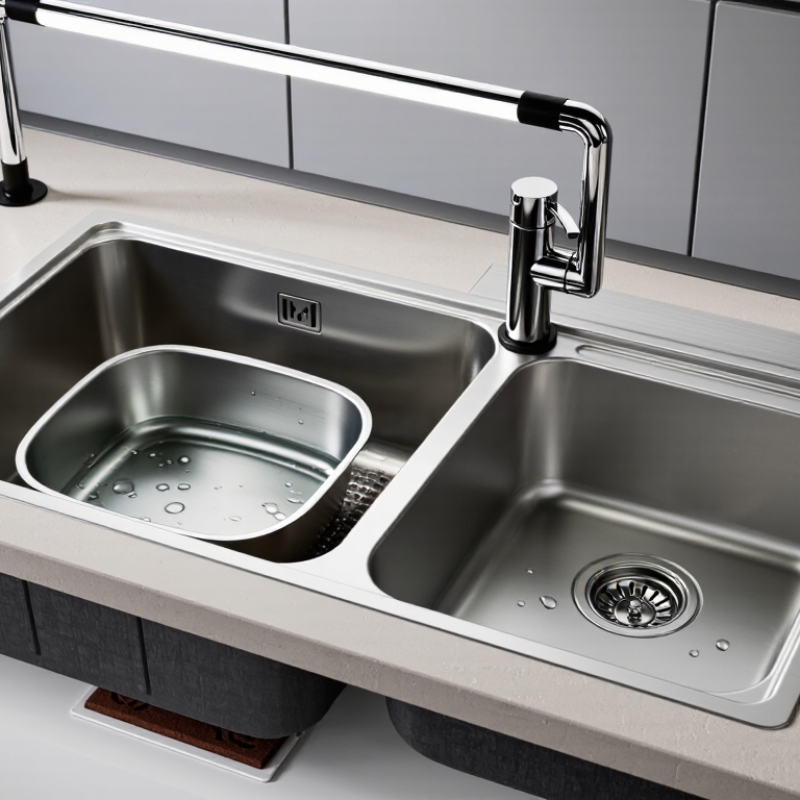
How to Choose a Double Stainless Steel Sink in 2026?

Understanding Double Stainless Steel Sink Types and Configurations

Choosing a double stainless steel sink starts with its configuration, not its shine. Equal bowls work well for washing and rinsing at the same time. An offset design offers one wider bowl for pans and a smaller bowl for preparation. A low divider gives more usable space while helping contain water. Measure twice.

Your daily habits should guide the bowl sizes. Large cookware may feel cramped in two narrow compartments. However, two deep bowls can create awkward bending and reduce cabinet storage. I have found that a nine-inch bowl suits many kitchens, but this is not universal. Taller users may prefer greater depth, while compact cabinets often need a shallower model.

Mounting style also changes the sink’s performance. An undermount edge creates a clean countertop transition and makes crumbs easier to sweep inside. A top-mount sink can simplify replacement and suit many existing counters. Farmhouse configurations need accurate cabinet support and careful measurements. Check the cabinet width, drain position, faucet holes, and plumbing clearance before ordering. Stainless steel grades such as 304 generally resist household corrosion well. Thicker steel can reduce vibration, but thickness alone does not guarantee quietness. Sound-dampening pads and protective coatings matter too. A brushed finish hides light scratches, while tight corners may collect residue. Corners matter. I once focused on bowl size and overlooked the drain location; that small mistake made under-sink storage frustrating every day.

Evaluating Size, Bowl Depth, Gauge, and Stainless Steel Quality

How to Choose a Double Stainless Steel Sink in 2026?

Size and bowl depth should match your daily habits, not only your countertop. For most homes, a 30–36-inch cabinet supports a double sink comfortably. A 60/40 bowl split handles large pans better than two equal compartments. The deeper bowl matters, too. A depth of 8–10 inches usually limits splashing without forcing uncomfortable bending. The 2024 Houzz U.S. Kitchen Trends Study identifies sink replacement as a frequent kitchen upgrade, but popular dimensions still cannot replace accurate cabinet measurements. Measure twice. I still see this mistake often.

Gauge describes sheet thickness. Lower numbers are thicker, so 16-gauge steel generally resists dents better than 18- or 20-gauge steel. However, gauge alone is incomplete. Check the actual thickness, corner radius, sound-deadening pads, and underside coating. The International Stainless Steel Forum reported global stainless crude-steel production above 60 million tonnes in 2024, showing the material’s continued industrial importance. That does not make every sink equally reliable.

For everyday kitchen use, 304 stainless steel remains a sensible benchmark. It typically contains about 18% chromium and 8% nickel, supporting corrosion resistance and a stable finish. Salt, bleach residue, and standing water can still cause staining. A brushed surface hides light scratches better, although it will not prevent them. I prefer a 16- or 18-gauge sink with rounded, fully welded corners. The less glamorous detail is drainage. A slightly sloped basin may outperform a deeper, flatter bowl.

Comparing Mounting Styles, Drainage Features, and Sound Reduction

Choosing a double stainless steel sink in 2026 requires more than checking bowl size. Mounting style changes daily cleaning. An undermount sink creates a smooth countertop edge, making crumbs easy to sweep inside. A top-mount model installs more simply and can suit older counters. However, its raised rim may collect water and soap. The 2024 Houzz U.S. Kitchen Trends Study reported that 76% of renovating homeowners selected engineered quartz countertops, so confirm the counter material before choosing installation.

Drainage needs practical testing. Look for sloped bowl floors, positioned drains, and deep channels around the basket strainer. Two drains can improve workflow, but poor slopes leave cloudy water near the rear corners. That is annoying. The National Kitchen and Bath Association’s 2024 Kitchen Trends Report identifies easier maintenance and improved functionality as continuing priorities. A compact rinse grid can protect the steel, although it may slow visual inspection of trapped food.

Sound reduction deserves careful judgment. Thicker steel, bonded pads, and full undercoating usually reduce the sharp clang of falling cookware. Marketing claims are inconsistent. ASTM E90 measures airborne sound transmission, not the impact noise inside a sink, so it should not be treated as a direct sink comparison. I would test a sample with running water and a metal spoon. Even then, cabinet structure affects the result. A quieter sink can still echo in an empty cabinet. EPA WaterSense reports that certified kitchen faucets use at least 20% less water than standard models, making faucet efficiency worth comparing beside sink design.

How to Choose a Double Stainless Steel Sink in 2026?

Comparing mounting styles, drainage features, and sound reduction performance

The chart uses a practical 1–5 comparison index, where higher scores indicate easier installation, more effective drainage, or better noise control. Top-mount sinks are generally the most retrofit-friendly, undermount sinks offer easier countertop cleaning, and flush-mount designs provide a streamlined appearance. Drainage performance improves with sloped basins, rear-positioned drains, and properly sized waste outlets. Sound reduction depends mainly on thicker stainless steel, underside insulation, and anti-vibration pads.

Matching Sink Design to Your Kitchen Layout and Daily Washing Needs

Choosing a double stainless steel sink starts with your kitchen’s working triangle. Measure the cabinet, countertop depth, and nearby dishwasher door swing. A sink can look elegant yet block circulation.

The National Kitchen and Bath Association’s Kitchen Planning Guidelines recommend 42 inches between work counters for one cook. They recommend 48 inches for multiple cooks. That clearance matters when two people load dishes together. In a narrow galley kitchen, choose a compact 60/40 bowl configuration. The larger bowl can hold a roasting pan. The smaller bowl suits rinsing vegetables or separating utensils. For a generous island, equal bowls provide better flexibility during busy meal preparation.

Daily habits should guide the divider height. A low divider lets you slide baking trays across both bowls. A high divider controls splashing but limits oversized cookware. Consider bowl depth, too. Extremely deep bowls may strain your back, especially during long washing sessions. They may also reduce usable cabinet storage. The U.S. Environmental Protection Agency’s WaterSense criteria limit labeled kitchen faucets to 1.5 gallons per minute, compared with the federal 2.2-gallon standard. Efficient flow helps, but poor bowl geometry still wastes water. Test the faucet reach with a real plate before ordering. I once favored maximum depth and regretted the awkward wrist angle. Design is rarely perfect. Leave room for revision.

How to Choose a Double Stainless Steel Sink in 2026? - Matching Sink Design to Your Kitchen Layout and Daily Washing Needs

Kitchen Layout Recommended Overall Sink Size Double-Bowl Configuration Typical Minimum Cabinet Width Best for Daily Washing Needs Key Advantages Points to Check Before Purchase
Compact apartment or galley kitchen Space-saving Approximately 760–810 mm wide × 450–500 mm front-to-back 60/40 split, with one larger bowl and one smaller bowl Usually about 900 mm, depending on the sink structure and installation method Washing dishes in batches, rinsing produce, and separating clean and dirty items Uses less counter space while preserving two separate work areas Measure the cabinet opening, plumbing position, faucet clearance, and rear countertop space
Standard L-shaped kitchen Balanced choice Approximately 810–915 mm wide × 500–550 mm front-to-back 50/50 split or 60/40 split Commonly about 900–1000 mm Everyday cooking, rinsing vegetables, washing cookware, and draining dishes Provides a practical balance between bowl capacity and usable counter space Confirm that both bowls can accommodate the cookware used most often in the home
Large L-shaped or U-shaped kitchen High capacity Approximately 915–1000 mm wide × 500–550 mm front-to-back 50/50 split with two deep bowls, or 60/40 split for a larger primary bowl Commonly about 1000–1200 mm Washing large pots, baking trays, cutting boards, and substantial quantities of dishes Offers more internal capacity and greater flexibility for multi-step food preparation Check the work-triangle distance between the sink, cooktop, and refrigerator
Island or peninsula installation Workflow-focused Approximately 760–915 mm wide × 450–550 mm front-to-back 50/50 or low-divider double bowl for easier movement of large items Often about 900–1000 mm Quick rinsing, food preparation, entertaining, and separating preparation from washing Supports two activities at the same time and can improve access from opposite sides Consider visual appearance, splash control, seating clearance, and exposed plumbing
Utility kitchen or laundry-adjacent space Heavy-duty use Approximately 810–1000 mm wide × 500–600 mm front-to-back 50/50 split or 60/40 split with deep bowls Commonly about 900–1200 mm Cleaning bulky cookware, soaking items, washing tools, and handling messy tasks More durable workspace for frequent or demanding cleaning tasks Verify countertop strength, bowl depth, waste-pipe capacity, and comfortable standing height
Narrow countertop with limited front-to-back depth Shallow format Approximately 760–810 mm wide × 400–450 mm front-to-back 60/40 split with a compact secondary bowl Usually about 900 mm, subject to the cutout and bowl dimensions Rinsing, draining, light dishwashing, and everyday preparation in smaller homes Preserves front counter space and reduces interference with nearby walkways Shallow bowls may provide less room for soaking large cookware; check faucet reach carefully
Kitchen used by several people at once Multi-tasking Approximately 915–1000 mm wide × 500–550 mm front-to-back 50/50 split with two usable bowls and separate drain positions Commonly about 1000–1200 mm One person preparing food while another rinses dishes or drains cookware Reduces task conflicts and allows simultaneous use of both bowls Ensure sufficient aisle width; a practical kitchen walkway is often planned at roughly 900 mm or more
Minimalist kitchen with clean-lined cabinetry Integrated look Approximately 810–915 mm wide × 500–550 mm front-to-back Equal double bowl with a low-profile rim or undermount installation Commonly about 900–1000 mm Regular washing while maintaining a visually continuous countertop surface Easier countertop wiping and a neat appearance around the sink area Confirm countertop compatibility, edge finishing requirements, and access for future servicing

Measurement note: Actual cabinet requirements vary by bowl depth, mounting method, rim design, plumbing layout, and countertop cutout. Always compare the sink’s installation template with the available cabinet and countertop dimensions before ordering.

Checking Installation Requirements, Maintenance, Warranty, and Value

How to Choose a Double Stainless Steel Sink in 2026?

A double stainless steel sink should match your cabinet size, countertop cutout, and plumbing layout. Measure twice. A sink that looks suitable online may need deeper cabinet clearance underneath. Check the bowl depth, divider height, drain position, and mounting method before ordering. Undermount installation creates a clean edge, but it requires accurate countertop work. Drop-in models are often simpler for replacements. I have seen small measurement errors delay an entire kitchen project.

Tips: Leave room for the waste pipes and water connections. Confirm whether the cabinet can support the sink’s weight when filled. Ask an installer to inspect the countertop material before cutting. That step may feel unnecessary, but repairs are costly.

Maintenance affects long-term value more than a polished showroom finish. Choose a practical steel thickness and a surface that hides light scratches. Rinse away salt, coffee, and acidic food residue after use. Dry the bowls with a soft cloth to reduce water marks. Avoid harsh scouring pads. I once ignored drying for several weeks, and the dull mineral film became difficult to remove. That was avoidable.

Read the warranty carefully. Check coverage for corrosion, manufacturing defects, accessories, and installation-related exclusions. A longer warranty is not automatically better. Reliable support should explain claims clearly and provide realistic repair terms. Compare the total value, including delivery, fitting, care products, and replacement parts. A cheaper sink may cost more if its drains or clips fail early.

Shopping Cart
Scroll to Top

Search for...

The Duravant family of operating companies serve the food processing, packaging and material handling segments.







