Why Choose Aluminium Winding Wire for Transformers?
Aluminium Winding Wire can help transformer makers balance material cost, weight, and electrical performance. Aluminium is lighter than copper and often costs less, making it attractive for distribution transformers and larger windings. Its electrical conductivity is lower, however, so designers generally need a larger conductor cross-section. That affects coil dimensions, window space, and winding layout. Details matter.
A practical design-room perspective, written here as an illustrative quote from fictional transformer engineer Alex Morgan, is: “Aluminium works well when the winding design, joints, and thermal limits are considered together—not as separate choices.” The quotation is illustrative, not a verified statement from a real industry expert. In production, careful joint preparation and secure connections help limit resistance and hot spots. Engineers also account for aluminium’s thermal expansion and the forces acting on coils during operation. Those checks can influence insulation clearances, clamping, and testing.
The choice is not automatic. A copper design cannot always be replaced with aluminium by changing the conductor alone. Yet a properly engineered aluminium winding can offer a reliable, lighter solution for specific transformer requirements. Buyers should compare total design, manufacturing, and service needs—not just the price per kilogram. Even good designs deserve review; small connection details can have large consequences.
What Is Aluminium Winding Wire in a Transformer?
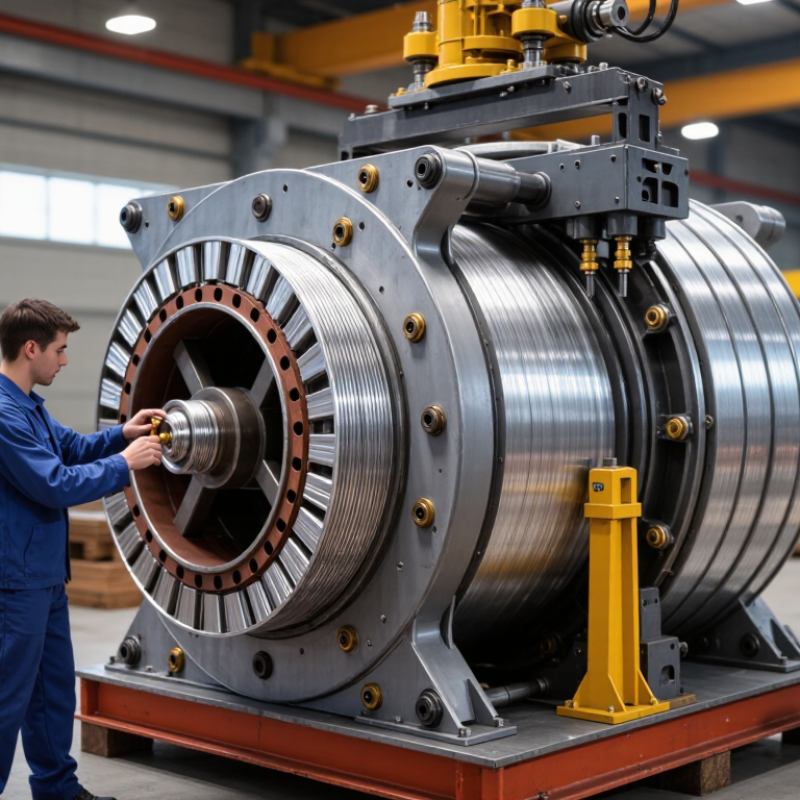
In a transformer, aluminium winding wire is the conductive material formed into coils around the magnetic core. It may be round wire or flat strip, depending on the transformer’s size and design. The primary winding receives electrical power, while the secondary winding delivers it at a changed voltage. Alternating current in the primary creates changing magnetic flux in the core, inducing voltage in the secondary. Simple in principle.
The conductor is covered with electrical insulation, often enamel, paper, or a specified combination. This keeps adjacent turns from touching and helps the winding withstand electrical and thermal stress. Aluminium is lighter than copper, but conducts electricity less effectively. Designers therefore account for its resistance, often using a larger conductor cross-section to meet current and temperature requirements. That trade-off is easy to underestimate. Winding geometry and cooling also influence performance. At coil ends, connections need suitable preparation because aluminium’s surface oxide can affect electrical contact. Thermal expansion deserves attention too, as repeated heating and cooling can stress joints. A well-designed winding balances conductor size, insulation, clearances, and heat removal; the material alone does not determine transformer efficiency.
Why Choose Aluminium Winding Wire for Transformers? - What Is Aluminium Winding Wire in a Transformer? | Dimension | Aluminium Winding Wire | What It Means in Transformer Design |
| Definition | Electrically conductive aluminium wire used to form transformer windings, typically with electrical insulation applied to the conductor. | The windings carry current and produce the magnetic field needed to transfer energy between transformer circuits. |
| Electrical conductivity | Commonly about 61% of the International Annealed Copper Standard (IACS) for electrical-grade aluminium at 20°C; exact values depend on alloy and temper. | For similar resistance and length, an aluminium conductor generally needs a larger cross-sectional area than a copper conductor. |
| Density and weight | Density is approximately 2.70 g/cm³, compared with approximately 8.96 g/cm³ for copper. | Even with a larger conductor area for comparable resistance, an aluminium winding can have lower conductor mass. The actual difference depends on the design. |
| Material cost | Aluminium is often less costly per unit of mass than copper, although prices change with market conditions. | It may help reduce material cost, but the complete transformer cost also depends on conductor size, manufacturing, cooling, and other design choices. |
| Space requirements | A larger cross-section may be required to achieve a target resistance or current density. | Winding and core-window dimensions must be designed for the conductor size and insulation; aluminium is not automatically a drop-in replacement for copper. |
| Thermal expansion | The linear thermal expansion coefficient is about 23 µm/(m·°C), compared with about 16.5 µm/(m·°C) for copper. | Mechanical support and joint design should account for temperature-driven expansion and contraction during operation. |
| Electrical connections | Aluminium forms a tenacious oxide layer, which can increase contact resistance if connections are not prepared and assembled correctly. | Use connection methods and hardware specified for aluminium conductors, with appropriate surface preparation and joint pressure. |
| Insulation and temperature rating | The conductor itself does not determine the winding’s insulation class; insulation materials and the complete thermal design determine the applicable limits. | Select winding insulation, cooling, and operating limits in accordance with the transformer design and applicable standards. |
| Typical reasons for selection | Low conductor mass and potentially lower material cost, when the design can accommodate the required conductor dimensions and connection methods. | A suitable choice for many transformers when electrical, thermal, mechanical, space, and manufacturing requirements are evaluated together. |
| Note: Values are approximate reference figures for common electrical-grade materials near 20°C. Actual properties vary by material grade, temperature, and design. |
How Aluminium Conducts Electricity and Transfers Heat
Aluminium carries current through a transformer winding, though it has higher electrical resistance than copper for the same dimensions. Designers account for this by using a larger conductor cross-section. The metal’s low density can also reduce winding weight.
That matters.
In a coil, current produces heat as it meets electrical resistance. A well-sized winding helps limit this loss under the transformer’s intended operating conditions.
Aluminium also conducts heat away from warmer parts of the winding. But heat conduction alone does not determine operating temperature. Insulation, winding geometry, cooling oil or airflow, and load all affect how heat leaves the transformer.
Picture a tightly wound coil: heat must travel through the conductor and insulation before reaching a cooling surface.
Small details matter. Aluminium forms a thin oxide layer when exposed to air, so joints need suitable design and assembly to maintain reliable electrical contact. Temperature changes can also expand and contract winding materials over time.
It is tempting to treat conductivity figures as the whole story, but real performance depends on the complete thermal and electrical design.
What Advantages Does Aluminium Offer in Transformer Design?
Aluminium winding wire can reduce a transformer’s mass because aluminium is much less dense than copper. That can make coils easier to handle during assembly and may reduce structural demands on supports and lifting equipment. The benefit is useful in large distribution units, where winding weight affects transport and installation. Every kilogram counts.
Aluminium is less electrically conductive by volume, so a winding usually needs a larger cross-sectional area to carry the same current. Designers must allow space for that larger conductor and check cooling paths, clearances, and insulation carefully. A lighter winding does not guarantee a lighter transformer overall; the core, tank, and cooling system still matter. It is a trade-off.
Material cost can also be an advantage, though market prices change and should be assessed over the project’s full life. Aluminium connections need sound engineering: oxide on the surface can increase contact resistance, while thermal expansion and creep can affect joints over time. Proper joint preparation, compatible hardware, and suitable testing help manage these risks. In practice, the best choice depends on the load profile, available space, manufacturing process, and maintenance plan. Some designs make aluminium look simple on paper; the connection details are where that confidence must be earned.
Why Choose Aluminium Winding Wire for Transformers?
Aluminium has about 30% of copper’s density, helping reduce winding mass. Its electrical conductivity is about 61% IACS, so aluminium windings generally need a larger conductor cross-section to achieve comparable electrical performance. Actual transformer design depends on the required rating, geometry, cooling, and operating conditions.
What Engineering Factors Affect Aluminium Winding Performance?
Why Choose Aluminium Winding Wire for Transformers?
What Engineering Factors Affect Aluminium Winding Performance?
Aluminium winding performance depends on more than conductor choice. The Aluminum Association’s electrical-conductor data place aluminium near 61% of copper’s conductivity by the IACS scale. For similar resistance and conductor length, engineers may need about 1.6 times the cross-sectional area. Aluminium’s density is roughly 2.70 g/cm³, compared with copper’s 8.96 g/cm³. That changes the geometry. Designers must check winding space, insulation clearances, and cooling paths—not just coil weight.
Heat, joints, and mechanical forces matter too. Resistance rises with temperature, increasing I²R losses under load. IEC 60076-2 sets temperature-rise requirements for power transformers, so thermal design needs to reflect the intended operating conditions. Aluminium also expands more with heat than copper. Poorly prepared connections can develop higher contact resistance; oxide films make joint quality especially important. Small joints matter. Short-circuit forces can stress windings, so conductor shape, bracing, and winding tension require careful review.
Tips: Verify conductor area against the actual winding window, then inspect connection preparation and clamping details. Ask for temperature-rise and short-circuit design evidence. A lighter coil is useful, but it is not automatically a better design. Even experienced teams can underestimate connection sensitivity; that deserves a second check.
Where Are Aluminium-Wound Transformers Commonly Used?
Aluminium-wound transformers are commonly used in utility distribution, commercial buildings, and industrial facilities. They may serve a shopping centre’s service room, a factory’s motor loads, or a rural distribution line. In these settings, the transformer steps voltage down close to where electricity is needed. Aluminium windings can reduce material cost and overall weight, which can help when equipment must be transported or installed in a tight space.
They are also found in dry-type transformers installed inside offices, schools, and hospitals, where avoiding liquid insulation is important. Some renewable-energy and infrastructure projects use them too, depending on the required capacity and site conditions. The choice is not automatic. Aluminium needs a larger conductor cross-section than copper for similar electrical performance, so the enclosure may need more room. Connections also require careful design and installation; a loose joint can create heat and reliability problems.
That detail matters.
Project specifications should consider load, temperature rise, available space, and maintenance access—not just the purchase price. In a cramped electrical room, a lighter unit may help, but its larger dimensions can still complicate placement.