

How to Choose an Electric Motor for Your Project in 2026?

Choosing an electric motor in 2026 is less about picking the biggest rating and more about understanding the job. Will it lift a load, turn a pump, or run a small conveyor for hours? Each task places different demands on torque, speed, duty cycle, and control. A motor that looks right on a catalog page can still overheat or waste energy in real use. That happens.

Electric-drive author Austin Hughes has written extensively about matching motors with drives and loads. A useful paraphrase of that engineering principle is: “Match the motor to the real load, not just the headline rating.” This guide applies that idea to your Electric Motor Project, from defining operating conditions to comparing AC, DC, and brushless options. It also considers efficiency, starting current, available power, mounting space, noise, maintenance, and the motor controller. For example, a pump that starts frequently may need a different selection from one running steadily at a fixed speed. Check the actual load profile. Then compare credible manufacturer data, not just product summaries. Some details may remain uncertain until you test a prototype; that is worth admitting. The outline ahead offers a practical path through those decisions, with clear trade-offs rather than a single “best” motor.
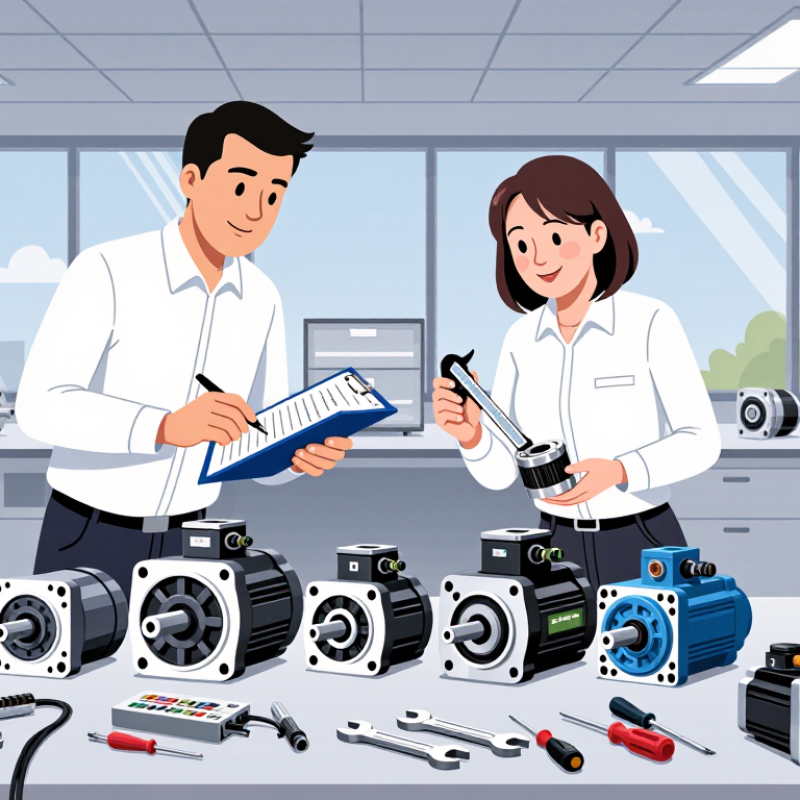
How to Choose an Electric Motor for Your Project in 2026?

Define the Project’s Load, Motion, and Operating Requirements

Start with the driven load, not the motor catalog. Record the required torque, speed range, direction changes, and load inertia. A conveyor may run steadily, while a packaging arm accelerates, stops, and reverses repeatedly. Those motion differences affect starting torque and heating.

Small details matter. The International Energy Agency’s 2011 report on motor-driven systems estimates that they consume about 46% of global electricity. The U.S. Department of Energy’s 2014 motor-system sourcebook puts motors at about 70% of U.S. industrial electricity use. These figures underline why matching motor output to the actual load matters.

Map the full operating cycle, including peak demand, normal running time, starts per hour, and rest periods. Specify the available voltage and frequency, the control method, and the space around the motor. Dust, washdown, vibration, and hot enclosures can change protection and cooling needs.

Heat adds up. A motor that handles a brief peak may still overheat during repeated cycles. It is easy to over-focus on peak torque and overlook the ordinary working cycle. Write down both, then check the proposed motor against the load profile and expected operating conditions.

Compare Electric Motor Types and Their Typical Applications

Choosing a motor starts with the load, not the catalog. The International Energy Agency’s 2011 report on electric motor systems estimates that motors use about 45% of global electricity. That scale makes efficiency worth checking, especially for pumps, fans, and compressors that run for long hours. AC induction motors are rugged and widely used for these steady-duty jobs. Synchronous motors can offer precise speed and strong efficiency, while brushless DC motors suit compact equipment that needs controllable speed. The trade-off is added drive electronics.

For positioning, stepper motors move in measured increments and work well in small printers or indexing tables. Servo motors use feedback to correct position and speed, making them useful in robotics and packaging lines. Brushed DC motors are simple to control, but their brushes wear; that maintenance can be easy to overlook. A motor’s label alone cannot tell you how it behaves under your actual load.

Tips: Record required torque, speed range, duty cycle, and starting load before comparing options. Check the drive, cooling, and mounting space too. A pump may need smooth continuous operation; a small conveyor may need frequent starts. Test under realistic conditions when possible. A tidy specification sheet can still miss a noisy gearbox or a hot enclosure.

Match Motor Power, Speed, Torque, and Supply to the Project

Choosing an electric motor starts with the work it must do, not the largest number on a product label. Estimate the load, then calculate the torque needed to start and keep it moving. A small conveyor carrying uneven boxes may need more starting torque than its steady running speed suggests. Add a sensible margin, but avoid oversizing: an unnecessarily powerful motor can waste energy and complicate control. Real loads are rarely as tidy as a spreadsheet.

Speed matters just as much. Check the required shaft speed and whether gears, belts, or a controller will help match it. Then confirm the power supply, including voltage, phase, frequency, and available current. A motor that fits the mechanical design may still be unsuitable for the site’s electrical supply. For variable-speed applications, verify that the motor and controller are designed to work together. Also consider duty cycle, cooling, mounting, and the environment around the motor, such as dust or heat. Write down your assumptions and check them against measured load data where possible. That last step is easy to skip—and often worth revisiting.

Evaluate Efficiency, Controls, Environment, and Maintenance Needs

How to Choose an Electric Motor for Your Project in 2026?
Evaluate Efficiency, Controls, Environment, and Maintenance Needs

Choose efficiency against the real duty cycle, not just the highest figure on a data sheet. A motor running near its rated load may perform differently from one that spends most of its day lightly loaded. Estimate operating hours, starts per hour, and load changes; then compare energy use and purchase cost over the expected service life. Small details matter. For a pump running eight hours daily, even a modest efficiency gap can add up. Check starting current and required torque, too. A motor that looks efficient on paper may be a poor match for frequent starts.

Controls shape performance. If speed must vary, confirm that the motor works with the intended drive and cooling arrangement. At low speeds, a shaft-mounted fan may move too little air. Plan for suitable feedback, overload protection, and accessible settings. Keep it simple. Consider heat, dust, moisture, vibration, and limited airflow at the installation site. Choose protection and insulation for actual conditions, rather than guessing from a room’s appearance. Maintenance deserves equal attention. Check whether bearings, terminals, and cooling passages are accessible for inspection. Set practical inspection intervals based on operating hours and site conditions. Vibration readings or unusual bearing noise can flag a problem, though neither replaces proper diagnosis. Estimates can be wrong; validate assumptions with measured load data where possible.

How to Choose an Electric Motor for Your Project in 2026? — Evaluate Efficiency, Controls, Environment, and Maintenance Needs
Motor Type Efficiency Considerations Control Requirements Environment and Operating Conditions Maintenance Needs Common Project Fit
AC Induction Motor Efficiency varies with motor size, design, and load. Proper sizing and operation near the rated load can reduce energy waste. Can run from a compatible AC supply; a variable-frequency drive is commonly used when adjustable speed or soft starting is needed. Available in enclosures suited to different dust and moisture conditions. Check temperature limits, enclosure rating, and cooling requirements. Generally robust. Inspect bearings, cooling paths, electrical connections, and vibration; bearing service depends on operating conditions. Pumps, fans, conveyors, and other applications needing continuous rotation.

Permanent-Magnet Synchronous Motor (PMSM) Can deliver high efficiency, particularly across a useful operating range, but system performance depends on motor sizing, drive quality, and load profile. Usually requires an electronic drive with rotor-position information or a suitable sensorless control method. Consider heat limits and protection against moisture, dust, and vibration. High temperatures can affect permanent magnets and insulation life. No brushes to replace. Check bearings, seals, connectors, and drive cooling; follow the manufacturer's inspection intervals. Energy-conscious equipment, precision machinery, and applications requiring smooth, controlled operation.
Brushless DC Motor (BLDC) Often efficient compared with brushed motors of similar use, though actual results depend on speed, torque, controller, and cooling. Requires electronic commutation. Confirm controller compatibility, speed range, torque demand, and whether position sensors are needed. Compact designs can be sensitive to heat buildup. Select suitable ingress protection and cooling for the installation location. No mechanical brushes; inspect bearings, wiring, connectors, and controller ventilation. Compact equipment, battery-powered systems, fans, and variable-speed drives.
Brushed DC Motor Efficiency depends on motor design and operating point. Brush friction and electrical losses can make it less suitable for long, continuous duty than some brushless options. Speed can often be adjusted by changing the applied voltage or using a compatible PWM controller; check current and starting-current ratings. Brush wear and electrical arcing may make some models unsuitable for dusty, explosive, or otherwise hazardous environments without appropriate protection. Brushes and commutators wear and may need inspection or replacement. Service life depends on load, speed, and duty cycle. Simple, low-cost applications where straightforward DC speed control is useful.
Stepper Motor Efficiency is highly dependent on speed and load. Holding current can create heat even when the shaft is stationary; use suitable current reduction where supported. Requires a stepper driver and a motion command source. Verify torque at operating speed, not only holding torque. Check motor and driver temperature, mounting rigidity, and protection from contaminants. Resonance can affect operation at certain speeds. Typically no brushes. Inspect bearings, couplings, mounting, and wiring; monitor temperature and missed-step risk. Positioning tasks with moderate speed and predictable loads, such as small automation stages.
Servo Motor System System efficiency depends on the motor, drive, feedback devices, and motion profile. Frequent acceleration and deceleration can affect energy use. Uses a servo drive and feedback, such as an encoder or resolver, for closed-loop control of position, speed, or torque. Match the motor and feedback-device protection to dust, moisture, vibration, and temperature. Observe cable routing and electrical-noise requirements. Inspect bearings, feedback devices, connectors, cables, and drive cooling. Keep configuration and fault records for troubleshooting. Applications requiring accurate positioning, rapid response, or controlled motion under changing loads.
Selection note: Compare motors using the required torque, speed range, duty cycle, starting load, supply voltage, drive compatibility, enclosure rating, and expected service conditions. Efficiency figures are application-dependent; use rated test data for the specific motor and operating point.

Verify Compatibility, Safety, and Installation Requirements

Before choosing a motor, compare its nameplate with the project’s actual power supply. Check voltage, phase, frequency, rated current, and speed—not just horsepower. A motor that starts successfully may still run hot if its load exceeds its rating. Measure the driven equipment’s startup demand, too. Pumps, fans, and conveyors can need more torque at startup than during steady operation. Small mismatch, big trouble.

Safety checks begin with the motor’s enclosure and operating environment. Dust, moisture, heat, and corrosive vapors can affect which protection level is suitable. Confirm that guards cover rotating shafts and couplings, and that the installation includes appropriate overload protection and grounding. Follow the motor and control equipment instructions; do not guess at wiring from a diagram for a different model. If the supply or protection requirements are unclear, ask a qualified electrician.

Installation details matter just as much as the motor rating. Check shaft diameter, mounting pattern, available clearance, and whether the base is rigid and level. Misalignment can create vibration you feel through the frame, then wear bearings sooner than expected. Leave room for cooling airflow and future service. It is easy to overlook cable routing or a tight maintenance space during planning. A final fit check helps, though it cannot replace commissioning measurements under the real load.

Shopping Cart
Scroll to Top

Search for...

The Duravant family of operating companies serve the food processing, packaging and material handling segments.