How to Choose Compound Steel Grating for Your Project
Compound Steel Grating is often specified where drainage, ventilation, and dependable walking surfaces must work together. In a plant, a forklift route, a wet service platform, and a cable trench may need very different panel designs. The right choice begins with actual use, not a catalog photograph. Check imposed loads, support spacing, bearing-bar direction, opening size, and fastening method. Small details matter.
Industry figures offer context, not a product prescription. The World Steel Association’s October 2024 Short Range Outlook estimated global steel demand at 1,751 million tonnes in 2024. It forecast 1,772 million tonnes for 2025. These figures reflect steel’s continuing infrastructure role, but they cannot determine the best grating for a specific site. Engineers should use project load calculations and applicable standards, then review supplier test data and fabrication drawings. A panel that looks robust may still deflect excessively across a long span.
Corrosion protection deserves equal attention. Compare hot-dip galvanizing, coating systems, and stainless steel against moisture, chemicals, cleaning practices, and maintenance plans. Review cut edges, welds, fixings, and replacement access. There is no universal best panel. Even a careful specification can overlook an awkward installation constraint, so verify dimensions on site before production. This guide explains how to choose Compound Steel Grating by balancing safety, durability, cost, and practical fit. A single strength rating never tells the whole story.
Define Compound Steel Grating by Its Grating-and-Plate Load Path
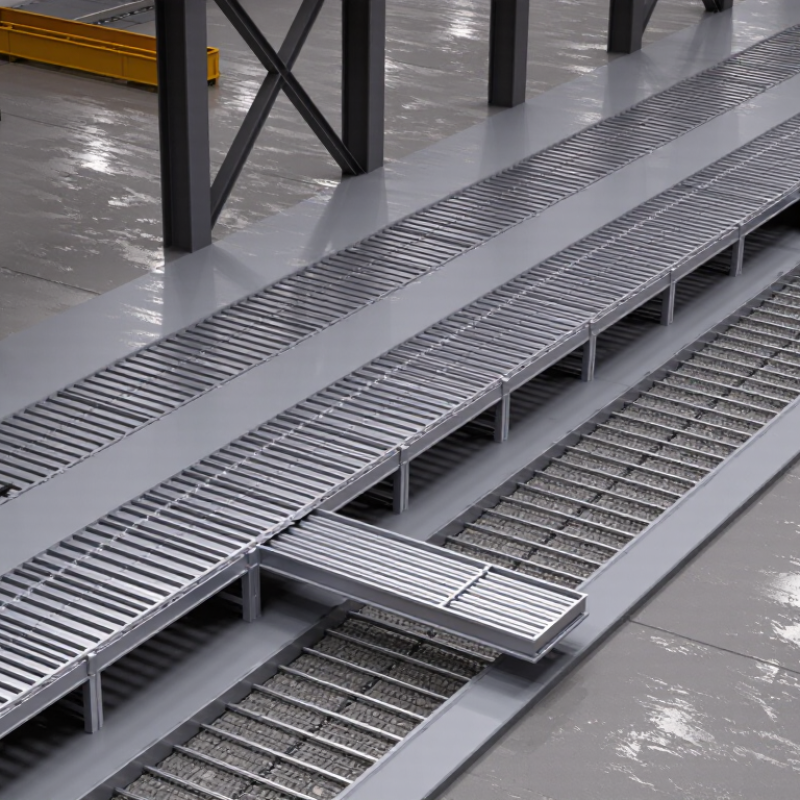
Compound steel grating combines an open steel bar grating with a solid plate secured to its top surface. The plate provides a continuous contact area for shoes, carts, or equipment. The grating’s bearing bars transfer that load to the supporting beams. A wheel crossing the panel may load only a small patch of plate, so the plate’s stiffness and its attachment to the bars matter. The load path is not simply “plate to beam.” It passes through connected components. Small details count.
When selecting a panel, check the clear span, bearing-bar direction, plate thickness, and connection method against the actual loads. A thin plate may flex between bars under a concentrated load, even when the grating’s rated capacity appears adequate. Weld spacing and quality also affect how effectively the plate shares load with the grating. Do not assume uniform load transfer without supporting design data. That shortcut can be misleading. Consider drainage, surface traction, corrosion exposure, and the weight of the finished panel, too. Ask the supplier or engineer for calculations based on the specified span and loading; generic capacity tables may not reflect your exact assembly.
Set Design Loads and Span Limits Using ANSI/NAAMM MBG 531
How to Choose Compound Steel Grating for Your Project
Set Design Loads and Span Limits Using ANSI/NAAMM MBG 531
ANSI/NAAMM MBG 531 offers a useful reference for evaluating metal bar grating, but confirm the applicable edition and project requirements. Measure the clear span between supports, not the panel’s overall length. Bearing bars should run in the load-carrying direction, with their ends properly supported. Define whether the design load is uniform or concentrated, such as a small wheel or maintenance cart. These cases behave differently. Small detail. Big difference.
Use the load tables for the selected bearing-bar depth, thickness, spacing, and steel grade, then check deflection against the project’s specified limit. Do not assume a table for standard open grating covers a compound assembly with added plate or another layer. Its added weight and connection details may change the response. Note support width, bearing length, and attachment method on the drawings. A tidy calculation can still miss a field condition: a shallow recess may leave less bearing than expected. Measure it. If the panel geometry or loading falls outside the reference tables, ask a qualified engineer to verify the design rather than extrapolating.
Compare 19-W-4 Spacing: 1-3/16-in Bearing Bars and 4-in Cross Bars
For compound steel grating, 19-W-4 describes a specific grid: bearing bars are spaced 1-3/16 inches on center, and cross bars are spaced 4 inches apart. Those dimensions affect how the panel feels underfoot and how loads reach its supports. The tighter bearing-bar spacing creates a relatively close walking surface. Still, spacing alone does not establish capacity.
NAAMM’s Metal Bar Grating Manual, MBG 531-17, provides load and deflection tables organized by grating type, bar size, and span. Use the matching table for the proposed bearing-bar depth and clear span; do not transfer a capacity from a different panel. Check concentrated loads too, such as a wheel passing over one bar. Small gaps matter. A panel that feels firm over a short test span may flex noticeably across a longer opening.
Before specifying 19-W-4, confirm the support layout, required load, finish, and whether the grating will carry a plate or other added components. Compare the calculated deflection with the project’s serviceability limits, not only its strength requirement. The 4-inch cross-bar spacing is a geometry detail, not a load rating. I would verify the supplier’s certified load data against the actual span; that step is easy to overlook.
Specify ASTM A36 Steel with a 36-ksi Minimum Yield Strength
When specifying compound steel grating, name ASTM A36 and state a 36-ksi minimum yield strength. This gives fabricators a clear material baseline for bearing bars, supports, and welded connections. Confirm the grade on mill test reports; a generic “carbon steel” note does not establish the required strength. Check the product form and applicable requirements, since minimum properties can depend on section size. Details matter.
A 36-ksi yield value describes when steel begins to deform permanently under tensile stress. It is not an allowable grating load. Span, bar depth and spacing, panel orientation, support width, wheel loads, and deflection limits still affect selection. Request load tables for the exact panel layout, rather than a catalog value detached from its supports. For compound assemblies, verify that the steel substrate, topping or infill, and attachment details are evaluated together.
Specify finish and service conditions separately. Moisture, deicing salts, and washdown can shorten service life, even when the steel meets its strength requirement. Galvanizing or coating may help, but cut edges and welds need attention. Check field dimensions before ordering; small discrepancies can leave a panel rocking or bearing unevenly.
How to Choose Compound Steel Grating for Your Project
Specify ASTM A36 steel and verify the minimum yield strength for the applicable product form and thickness.
ASTM A36 plate has a specified minimum yield strength of 36 ksi at thicknesses up to and including 8 inches, and 32 ksi at thicknesses over 8 inches. For grating, confirm the material specification and thickness of the bearing bars with the supplier and project requirements.
Choose a Corrosion Finish and Verify Galvanizing to ASTM A123/A123M
For compound steel grating, choose a corrosion finish that matches the actual exposure: indoor humidity, coastal salt spray, or chemical washdown. Hot-dip galvanizing is often suitable for outdoor steel, but the environment and maintenance plan still matter.
NACE International’s 2013 IMPACT study estimated global corrosion costs at US$2.5 trillion annually, or 3.4% of global GDP. That figure is broad, not a grating-specific forecast, but it shows why coating details deserve attention.
Salt changes the equation.
Tips: Specify ASTM A123/A123M for hot-dip galvanized iron and steel products. Ask for coating-thickness records and inspection documents tied to the supplied panels. Check welded joints, edges, and drainage areas closely; water trapped in a corner can undermine an otherwise sound finish.
Confirm that the grating’s material category and steel thickness match the applicable ASTM requirements. There is no single coating-thickness value for every product. Also ask whether galvanizing occurs after fabrication, since cutting or welding afterward may leave areas needing repair. A certificate alone is not a full inspection. Compare the paperwork with the delivered panels, and record any bare spots, rough buildup, or damaged edges before installation. One detail is easy to miss: the site’s cleaning chemicals may affect the finish, so include them in the specification review.



















