How to Choose the Right Corrugated Steel Pipe?
Choosing the right Corrugated Steel Pipe begins with the ground, water, and traffic above it. An attractive price is not a design method. Pipe diameter, wall thickness, coating, corrugation profile, and installation quality must work together. The Federal Highway Administration’s Hydraulic Design of Highway Culverts, HDS-5, emphasizes hydraulic capacity, inlet control, outlet control, and energy management. These factors determine whether a pipe quietly carries stormwater or struggles during a severe rainfall event.
Material selection also requires evidence. ASTM A760/A760M and AASHTO M36 define important requirements for metallic-coated corrugated steel pipe used in drainage applications. The Corrugated Steel Pipe Institute’s Handbook of Steel Drainage and Highway Construction Products provides practical guidance on structural design, soil interaction, corrosion, and durability. Its recommendations remind engineers that bedding matters. A poorly compacted trench can create a visible flat spot above the pipe. That small detail may become a costly failure.
Supply conditions deserve attention, too. World Steel Association’s World Steel in Figures 2024 reports approximately 1.89 billion tonnes of crude steel production worldwide in 2023. This supports broad material availability, but it does not guarantee identical quality from every supplier. Request coating data, steel grade documentation, load calculations, and installation instructions. Consider soil pH, resistivity, chloride exposure, abrasion, and expected service life. No checklist captures every field condition perfectly. That limitation deserves honest review. A reliable choice balances hydraulic performance, structural capacity, corrosion resistance, local standards, delivery realities, and the contractor’s installation experience.
Define the Project Requirements and Site Conditions
How to Choose the Right Corrugated Steel Pipe?
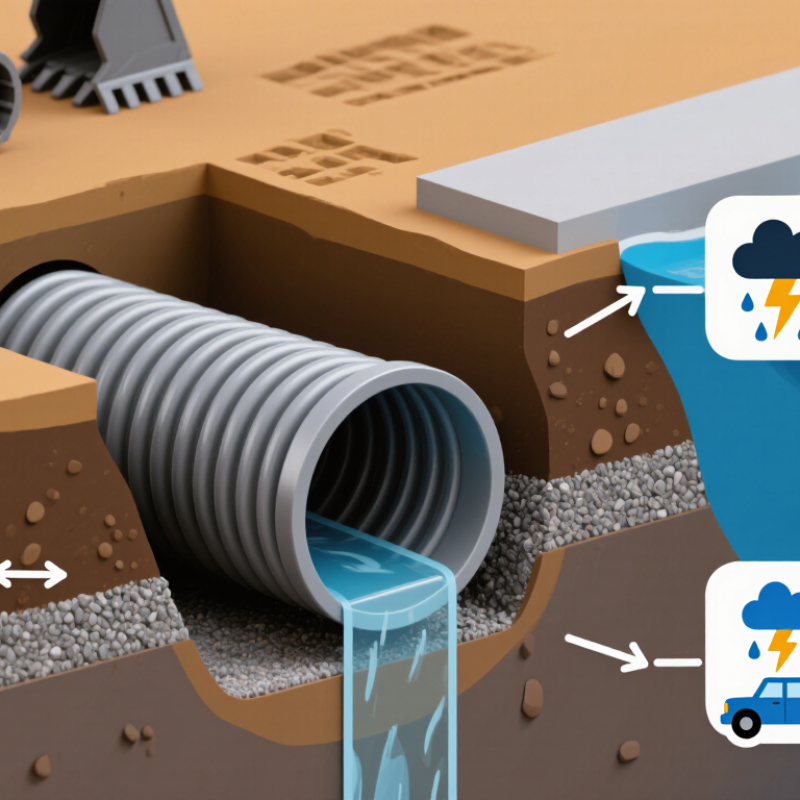
Choosing the right corrugated steel pipe begins with clear project requirements. Before comparing pipe sizes, define the water flow, burial depth, traffic load, and expected service life. Record the inlet and outlet elevations, because a small grade change can affect drainage performance. A drainage crossing is never just a pipe. Small details matter.
Inspect the site carefully. Note soil type, groundwater level, nearby utilities, and access for construction equipment. Soft clay may require different bedding than dense gravel. Standing water can also increase corrosion risk, especially where drainage is poor. Use local rainfall data and hydraulic calculations to confirm the required diameter. Do not rely only on a similar project nearby. The ground may look similar, but its behavior can differ significantly.
Define maintenance needs before selecting the final design. Consider cleaning access, inspection points, debris buildup, and possible future widening. Confirm applicable structural and drainage standards with a qualified local engineer. Field measurements are valuable, but they are not perfect. A rushed survey can miss seasonal groundwater or hidden erosion. I have seen plans change after one storm exposed an unexpected flow path. That experience is worth remembering when reviewing a calm, dry site.
Compare Corrugated Steel Pipe Profiles, Sizes, and Materials
Choosing corrugated steel pipe starts with the profile, not the diameter. FHWA’s Hydraulic Design of Highway Culverts explains that capacity depends on slope, roughness, inlet control, and headwater. Its design tables commonly use Manning’s n near 0.024 for corrugated metal, although the value changes with profile and flow conditions. Small corrugations, such as 2-2/3 by 1/2 inch, usually offer smoother hydraulics. Deeper profiles, such as 5 by 1 inch or 6 by 2 inches, can improve structural stiffness. That trade-off deserves a calculation.
Size selection should reflect actual site conditions. Measure the contributing drainage area, design storm, cover depth, and allowable headwater. A larger pipe is not automatically safer. Oversizing can reduce self-cleaning velocity and increase sediment deposits. FHWA guidance recommends checking both inlet and outlet control. I would also test debris blockage, because a clean model rarely matches a roadside inlet.
Material selection follows the exposure. AASHTO M36 distinguishes zinc-coated, aluminum-coated, and polymer-coated steel products. Some specifications require zinc coatings around 610 g/m², but project requirements differ. Confirm coating class, soil pH, chloride exposure, abrasion, and service-life assumptions. The Federal Highway Administration notes that durability depends on both soil and water chemistry. This is often underestimated. My practical mistake would be trusting a coating label without reviewing the drainage environment. Compare the report data, then inspect the site.
How to Choose the Right Corrugated Steel Pipe?
Comparison of common corrugated steel pipe profiles, nominal sizes, and material options
| Typical Profile | Nominal Size Range | Common Material / Coating | Typical Selection Guidance |
| 68 × 13 mm | 300–1800 mm diameter | Hot-dip galvanized steel | Suitable for conventional drainage and culvert applications with moderate loading. |
| 76 × 25 mm | 450–2400 mm diameter | Galvanized or aluminum-coated steel | A deeper corrugation provides increased stiffness for larger diameters and heavier cover. |
| 125 × 25 mm | 900–3600 mm structural plate systems | Galvanized, aluminum-coated, or polymer-coated steel | Used where larger spans, higher stiffness, or enhanced corrosion protection are required. |
| 150 × 50 mm | 1800–7500 mm structural plate systems | Galvanized or polymer-coated structural steel | Designed for large-span applications subject to significant soil and traffic loads. |
Profile depth and pitch influence structural stiffness, installation requirements, and allowable cover. Smaller diameters commonly use factory-formed pipe, while larger openings are often assembled from structural plate. Galvanized steel is a general-purpose option; aluminum-coated or polymer-coated steel is normally considered when the soil or water environment is more corrosive. Final selection should be verified against the applicable design standard, hydraulic requirements, soil conditions, loading, and service-life target.
Evaluate Strength, Coatings, Durability, and Corrosion Resistance
Choosing corrugated steel pipe requires more than checking diameter and price. Strength depends on steel thickness, corrugation profile, backfill quality, and traffic loading. FHWA’s Hydraulic Design of Highway Culverts identifies soil-structure interaction as a key factor. A strong pipe can still deform when poorly compacted soil surrounds it. Field installation matters.
Coatings control the first line of defense. AASHTO M36 and ASTM A929 cover metallic-coated corrugated steel pipe requirements, including zinc and aluminum-based coatings. FHWA durability guidance often uses a 75-year design-life target for major highway infrastructure. However, actual performance depends on soil resistivity, pH, moisture, chlorides, abrasion, and drainage conditions. The American Galvanizers Association reports that zinc coating life increases with coating thickness, but wet, acidic soils can shorten service life sharply. That detail is easy to overlook.
Tips: Request a site corrosion assessment before selecting a coating. Record soil pH, resistivity, chloride levels, and groundwater movement. Use thicker steel where loads or installation risks are high. Consider polymer or aluminum coatings in aggressive environments, but verify abrasion resistance. A laboratory result is not the whole answer. Inspect damaged coating before backfilling, because small scratches can become expensive problems. Pricing alone can mislead.
Check Hydraulic Performance, Standards, and Installation Needs
Choosing corrugated steel pipe starts with hydraulic performance, not diameter alone. The Federal Highway Administration’s Hydraulic Design of Highway Culverts, HDS-5, lists a typical Manning’s roughness coefficient of about 0.024 for corrugated metal pipe. That roughness can reduce flow capacity compared with smoother interiors. Check design discharge, slope, headwater, tailwater, and expected debris. Inlet control may govern the result.
Use recognized standards for material and fabrication. ASTM A760/A760M covers corrugated steel pipe requirements, including dimensions and workmanship. AASHTO M36 provides widely used specifications for corrugated steel pipe and fittings. Coating selection still matters. Soil chemistry, moisture, abrasion, and freeze-thaw exposure can change service expectations. A drainage report should document these conditions, not simply state “corrosion resistant.”
Installation often decides whether the calculated performance becomes real performance. ASTM A798/A798M addresses installation practices for corrugated steel pipe. Place suitable bedding, maintain line and grade, and compact backfill evenly around the haunches. Small voids can become large deformation zones. Field inspection should check joints, coating damage, alignment, and cover depth. I have seen designs fail on paper because construction records were incomplete. That is an uncomfortable gap. Verify assumptions against local testing and actual site conditions.
Balance Product Quality, Service Life, and Total Cost
How to Choose the Right Corrugated Steel Pipe?
Balance Product Quality, Service Life, and Total Cost
Choosing corrugated steel pipe is not simply a matter of selecting the lowest quotation. The right decision connects soil conditions, water flow, loading, coating, and installation quality. A pipe that looks economical on delivery day may demand earlier repairs.
In field evaluations, I check the site before comparing products. Soil acidity, moisture, abrasion, and traffic loads can change performance significantly. A thicker wall may improve structural strength, but it does not solve every corrosion risk. Protective coatings, joint design, and drainage details also deserve close attention. Small installation errors matter. Poor bedding can create uneven pressure and premature deformation.
Service life should be estimated, not assumed. Ask for verified test data, material specifications, inspection records, and clear warranty conditions. Reliable suppliers should explain how their calculations match local drainage standards and expected loads. They should also provide practical support during handling and installation. This is often overlooked.
Total cost includes transport, equipment, labor, maintenance, and replacement disruption. A durable pipe may cost more initially but reduce long-term uncertainty. Still, “more expensive” does not always mean “better.” I have seen projects over-specify materials without reviewing actual site risks. That shortcut wastes money. A balanced comparison uses lifecycle cost, documented performance, and realistic field experience rather than price alone.