

How to Choose the Right Electrostatic Collector

Choosing an Electrostatic Collector is not a matter of picking the highest efficiency number. The right unit must match the contaminant, airflow, operating temperature, and maintenance conditions. A fine-particle collector in a metalworking shop faces a different load from one handling cooking fumes or indoor dust. That distinction matters.

The U.S. Environmental Protection Agency’s Electrostatic Precipitator fact sheet (EPA-452/F-03-028, 2003) reports typical collection efficiencies of 99–99.9% for industrial electrostatic precipitators. This is useful context, not a guarantee for every collector or installation. Actual performance depends on particle properties, gas flow, electrode condition, and system design. A neat catalog number can mislead. That sounds decisive. It isn’t.

Before comparing models, identify what is being collected and measure the airflow and particle load where the unit will operate. Check the manufacturer’s stated test conditions, pressure drop, power demand, cleaning method, and replacement-part availability. Ask how efficiency was measured, and request documentation for the specific operating range—not merely a best-case figure. For example, a unit that handles a steady, modest load may struggle when filters or collection plates accumulate residue. Maintenance access matters, too; a collector that is difficult to clean may not deliver its rated performance over time. EPA guidance offers a solid technical starting point, but site measurements and qualified engineering review should guide final selection. There is no universal winner. A careful choice starts with the actual air stream, then tests whether the equipment can manage it consistently.
How to Choose the Right Electrostatic Collector

Understanding How Electrostatic Collectors Work

How to Choose the Right Electrostatic Collector
Understanding How Electrostatic Collectors Work

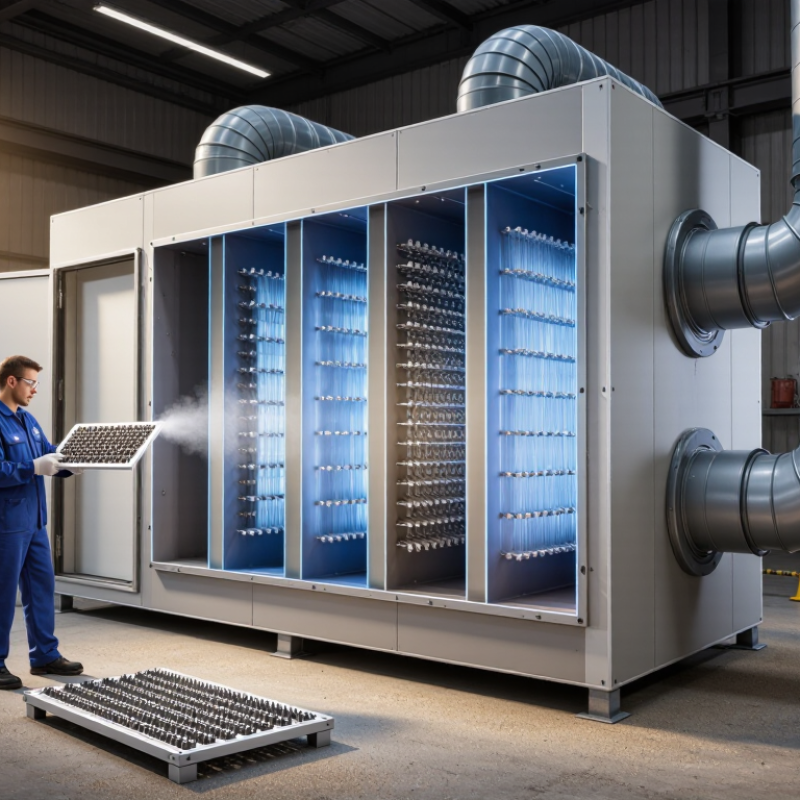
An electrostatic collector does not simply trap dust in a mesh. It gives airborne particles an electrical charge, then draws them toward oppositely charged plates. Picture fine dust moving through the unit and settling on metal surfaces. The plates need regular cleaning; a visibly dusty collector may capture particles less effectively. Performance also depends on airflow, particle size, and how well the unit is maintained.

The U.S. Environmental Protection Agency’s Electrostatic Precipitators fact sheet (EPA-452/F-03-028) reports that industrial systems can achieve collection efficiencies above 99 percent under suitable conditions. That figure describes industrial equipment, not every room-sized air cleaner. It is a useful reference, but not a promise for a home. Some electronic air cleaners can also generate ozone, so check independent performance information and the manufacturer’s maintenance instructions before choosing one. The science is elegant. Real rooms are messier.

Tips: Check clean-plate instructions, airflow ratings, and ozone information. Match the collector to your room and likely particle load. A unit that is difficult to maintain may not perform as expected.


Identifying the Particles and Pollutants to Capture

Choosing an electrostatic collector starts with identifying what is actually in the air. “Dust” may mean coarse wood fibers, fine mineral powder, oily mist, or smoke-like particles, and each behaves differently. Keep a representative sample from normal operation, not just a clean startup. Note particle size, concentration, moisture, temperature, and whether particles carry oil or sticky residues. Small details matter.

Particle size affects how easily the collector can charge and capture particles. Very fine particles may need careful performance testing, while sticky aerosols can build up on collection plates and complicate cleaning. Electrical resistivity also matters: particles that resist charge transfer may be harder to collect consistently. Ask for measurements across changing production conditions, since one sample rarely tells the whole story. It can be tempting to rely on a supplier’s typical efficiency figure, but that figure may not match your mix of pollutants.

Record airflow and capture goals alongside the particle data. A collector sized for one exhaust rate may perform poorly when fans, shifts, or processes change. Check whether the stream contains corrosive gases or combustible dust, and have qualified professionals assess relevant equipment and safety requirements. I have seen “mostly dry dust” descriptions hide intermittent damp, oily material. That uncertainty deserves another sample, not a guess.

How to Choose the Right Electrostatic Collector - Identifying the Particles and Pollutants to Capture

Particle or Pollutant Typical Particle Size Common Sources Electrostatic Collector Considerations Important Limitations
Oil and coolant mist Droplets commonly range from submicron sizes to several micrometres; the distribution depends on the process. Metalworking machines, machining operations, and cooking processes Assess the mist loading, droplet-size distribution, airflow, and whether collected liquid can drain from the collector. Very fine droplets may be harder to collect. Sticky deposits and inadequate drainage can reduce performance or increase maintenance.
Welding fume Primary particles are often submicron; airborne fume may also form larger agglomerates. Arc welding, cutting, and thermal metalworking Check airflow at the source, fume composition, operating temperature, and the collector’s ability to handle changing process loads. Some fume constituents may be hazardous. A collector does not replace source capture, exposure controls, or required emissions testing.
Combustion smoke and fine aerosol Often concentrated in the fine-particle range, including particles below 2.5 micrometres. Combustion equipment, industrial process exhaust, and smoke-generating operations Confirm that the equipment is designed for the gas temperature, flow rate, particle properties, and expected concentration. Electrostatic collection captures particles, not gases such as carbon monoxide or most gaseous organic compounds.
Fly ash and other mineral particles Broad size distribution, from fine particles below 2.5 micrometres to larger particles. Boilers, kilns, furnaces, and mineral-processing operations Particle electrical resistivity, gas temperature, moisture, and dust loading are important design inputs. Very high resistivity can contribute to back corona; very low resistivity can promote particle re-entrainment. Site-specific testing may be needed.
Coarse dust and process particles Often larger than 10 micrometres, though the actual range varies by process. Material handling, grinding, and bulk processing Consider a pre-separator or other upstream dust control where coarse loading is high, and verify that the collector can handle the expected mass flow. Large or heavy particles may settle or be captured by other equipment more economically; performance depends on the full system design.
Gaseous pollutants and vapours Not particles; present as gas molecules or vapour. Solvent use, chemical processes, and combustion emissions Identify these pollutants separately when defining the treatment train; gas-phase treatment may require adsorption, absorption, or another suitable process. An electrostatic collector is not, by itself, a control device for gaseous pollutants.

Selection tip: Confirm the particle-size distribution, concentration, gas temperature and humidity, airflow, particle resistivity, and pollutant chemistry before specifying a collector. Capture efficiency depends on the application and system design; verify performance under the intended operating conditions.

Matching Collector Types to Operating Conditions

How to Choose the Right Electrostatic Collector

Matching Collector Types to Operating Conditions

Choosing an electrostatic collector starts with the gas stream, not a catalog. Measure temperature, moisture, particle size, and dust resistivity across normal and upset conditions. A dry ESP suits free-flowing particles that remain solid and can be collected in hoppers. It avoids wash-water handling.

For sticky aerosols, acid mist, or particles formed after cooling, a wet ESP may be more appropriate. It washes collected material from the plates, but adds water treatment and drainage needs. The U.S. EPA’s 2003 Electrostatic Precipitator fact sheet reports typical collection efficiencies of 99–99.9%. Treat that range as a reference, not a guarantee; actual performance depends on particle resistivity, gas flow, and field design.

High-resistivity dust can resist charging, while very conductive dust may lose charge too quickly. Both conditions can reduce capture. Ask for site-specific tests or validated performance data at the actual gas temperature and load. One uncomfortable detail: operating conditions drift, and a collector selected for average flow may underperform during peaks. The table looks tidy; the plant rarely is.

Comparing Capacity, Efficiency, and Maintenance Needs

How to Choose the Right Electrostatic Collector
Comparing Capacity, Efficiency, and Maintenance Needs

Choose capacity from your real airflow, not a catalog’s headline rating. The U.S. EPA’s Dry Electrostatic Precipitator fact sheet (EPA-452/F-03-028, 2003) reports collection efficiencies of 99% or higher for well-designed systems. Actual results depend on particle size, dust resistivity, gas temperature, and operating conditions. Not always. Check airflow peaks and inlet dust loading, too; a unit sized for average conditions may struggle during production surges.

Efficiency is only one part of the comparison. The EPA fact sheet gives a typical ESP pressure drop of about 0.2–0.5 inches of water, but this does not predict every system’s energy use. High-voltage equipment and collector design matter. A quoted 99% can flatter a clean test. Ask for the outlet concentration, test conditions, and particle-size range, especially when handling fine process dust.

Maintenance can quietly reshape operating costs. Dry ESPs use periodic rapping to remove dust from collection plates, while hoppers, insulators, electrodes, and power controls need inspection. Ask how often servicing is expected and whether technicians can reach key components without a long shutdown. A clogged hopper or fouled insulator can undermine performance. Compare labor, downtime, and replacement parts alongside purchase price.

Checking Safety, Space, and Compliance Requirements

How to Choose the Right Electrostatic Collector

Safety, space, and compliance should shape the selection before airflow capacity does. Electrostatic collectors use high-voltage components, so check access panels, grounding, emergency shutoffs, and maintenance isolation. OSHA’s Control of Hazardous Energy standard, 29 CFR 1910.147, outlines lockout requirements for covered servicing work. Leave enough room to open panels and remove collection plates without moving nearby equipment. A unit that fits on paper may still block a walkway.

Match the collector to the particles and operating conditions. The U.S. EPA’s Air Pollution Control Technology Fact Sheet: Dry Electrostatic Precipitator (EPA-452/F-03-028, 2003) reports collection efficiencies above 99% in suitable applications. That figure is not a guarantee for every process; particle properties, airflow, and maintenance affect results. Confirm the design conditions with a qualified engineer. Also check the site’s electrical supply, ventilation, fire-safety provisions, and locally applicable codes. Compliance details vary by facility and jurisdiction, so document the relevant approvals before installation.

Tips: Measure the full service envelope, not just the machine footprint. Photograph nearby doors, ducts, and cable routes. Ask who will isolate power during cleaning, and record the answer. One overlooked clearance can make routine work awkward.

Shopping Cart
Scroll to Top

Search for...

The Duravant family of operating companies serve the food processing, packaging and material handling segments.