

How to Choose a Tennis Stringing Machine?

Choosing a Tennis Stringing Machine is less about buying the most impressive model and more about matching the tool to your real workload. A home player restringing a few frames each month has different needs from a busy club technician. Richard Parnell, a professional racquet technician, is often associated with practical, hands-on stringing advice. A useful summary of that approach—not a verified verbatim quote—is: “Choose a machine that delivers consistent tension and suits the work you actually do.” That distinction matters.

Start with the tension system. Drop-weight machines are generally simple and economical, while crank and electronic models can speed up repeated jobs. Consider the clamps, mounting system, turntable, and available support, too. Imagine securing a racket at the kitchen table: a stable mount and clamps that hold the string cleanly matter more than a long feature list. Check whether replacement parts and service are accessible where you live. Small details add up.

Still, machine specifications do not tell the whole story. A premium machine cannot replace careful technique, and a budget model may frustrate someone stringing rackets all afternoon. I would reconsider any choice based only on price or speed. Think about your budget, space, experience, and expected volume before comparing models. The right Tennis Stringing Machine should make accurate, repeatable work easier—not turn stringing into a test of patience.
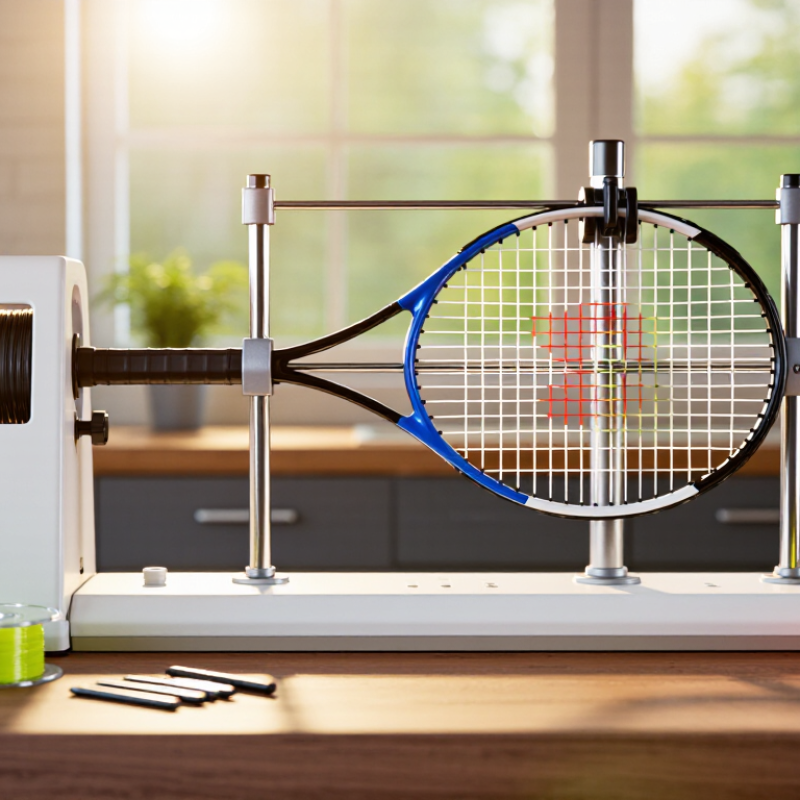
How to Choose a Tennis Stringing Machine?

Understanding the Main Types of Tennis Stringing Machines

Understanding the Main Types of Tennis Stringing Machines

A drop-weight machine uses gravity to pull string tension. Its steady pull depends on keeping the weight arm level, so careful setup matters. A crank machine pulls quickly, then locks at the chosen tension. Because string can stretch after lockout, the finished bed may feel slightly different. Electronic constant-pull machines adjust tension as the string elongates. They are convenient for frequent work, but their sensors and calibration need attention.

The 2023 Tennis Participation Report from the USTA and Tennis Industry Association counted 23.8 million U.S. players. That figure signals a large playing community, but it does not tell you how many racquets you will string. For occasional home use, a drop-weight model can be a practical learning tool. Clubs and busy stringers may value the speed of crank or electronic systems. Clamps, mounting stability, and reliable calibration matter as much as the pulling mechanism. I still find that one detail gets overlooked: a fast machine cannot make up for rushed technique.

Tip: Before buying, string a test racquet and check tension consistency across several jobs. Keep notes on settings and string type. Small differences can be easy to miss.

Comparing Tensioning Systems and Accuracy

How to Choose a Tennis Stringing Machine?

Comparing tensioning systems and accuracy

A stringing machine’s tensioning system affects both workflow and consistency. Drop-weight models use gravity, so the bar must settle level before each pull. They are mechanically simple, but stringer technique matters. Crank systems pull quickly and lock at a set tension; a smooth, repeatable motion helps reduce variation. Electronic systems can offer constant-pull tension, continuing to draw as the string stretches. That can make results more consistent, though the machine still needs careful setup and calibration. Speed is not accuracy.

Look closely at how the tension head holds the string, how easily you can read the setting, and whether the supports keep the frame steady. A loose clamp can lose tension even on a well-calibrated machine. Small differences show up across a full bed, especially when knots are tied or strings settle. There is no perfect setup for every player; even careful stringers may need to adjust after checking the finished racquet.

Tips: Check calibration with a suitable tension calibrator at several settings. Keep clamps clean, and test their grip on a scrap string. Listen for slipping. Record settings and string type, then compare the racquet’s feel after play. If readings drift, pause and inspect before changing your technique. Calibration checks can feel tedious, but skipping them makes troubleshooting harder.

How to Choose a Tennis Stringing Machine? — Comparing Tensioning Systems and Accuracy
Tensioning System How It Works Tension Behavior During Pulling Accuracy Considerations Typical Advantages Best Suited For
Drop-weight A weighted bar applies tension through gravity. The bar is positioned horizontally at the selected setting. Provides a continuous pull while the bar remains correctly positioned. The stringer may need to reposition the bar as the string stretches. Can provide consistent tension when the machine is level, correctly calibrated, and the bar is positioned as instructed. Bar angle and operating technique affect the result. Simple mechanism, no motor required, and generally straightforward to maintain. Home stringers and users who prefer a simple system and do not mind a slower, hands-on process.
Lockout crank A hand-operated crank pulls the string until the mechanism reaches its set tension and locks. Stops pulling at the lockout point. As the string relaxes after lockout, tension in the string can decrease before it is clamped. Calibration and consistent cranking technique matter. Because the pull does not continue after lockout, results can differ from a constant-pull system, especially with strings that stretch more. Fast operation, mechanical simplicity, and no need for an electrical supply. Frequent stringers who value speed and a practical mechanical setup.
Electronic constant-pull An electronic tension head measures the pull and continues adjusting to maintain the selected tension while the string stretches. Compensates for string relaxation during the pull until the string is clamped or the pulling cycle ends. Can help produce repeatable pulls when properly calibrated. Accuracy still depends on calibration, clamps, mounting, and consistent stringing technique. Convenient tension selection, repeatable operation, and less need for manual adjustment during a pull. Club stringers, high-volume users, and players seeking efficient, repeatable stringing.
Electronic linear-pull An electronic motor draws the string in a controlled, generally straight-line motion while monitoring the selected tension. Typically maintains the requested pull during the tensioning cycle, depending on the machine’s control system and settings. May offer precise, repeatable control, but the actual result should be checked with a suitable calibrator and depends on the complete setup—not just the pulling mechanism. Controlled operation and convenient adjustment; some models include additional pulling modes or presets. Professional or high-volume stringers who want electronic control and are prepared to maintain and calibrate the machine.

Accuracy note: A tensioning system alone does not guarantee the final string-bed tension. Calibration, clamp condition, string type, mounting, pull settings, and the stringer’s technique all influence consistency. Check the machine periodically with an appropriate calibrator and follow its operating instructions.

Evaluating Mounting Systems, Clamps, and Key Features

A mounting system should hold the racquet securely without squeezing the frame. Many machines use two-point or six-point support. Six-point systems spread contact across more areas, but their supports must be adjusted carefully. Check that each post touches the frame evenly and does not block grommet holes. That matters. Overtightening can distort a frame during stringing, while loose supports may let it shift under tension. A two-point system can work well, too, if it stays stable and suits the racquets you string. The setup should feel solid, not forced.

Clamps affect both workflow and string consistency. Fixed clamps usually offer firm, repeatable positioning, while floating clamps rely on the tensioned strings for support. Feel the jaws: they should grip without crushing or marking the string. Smooth movement helps, but too much play can make placement frustrating. For dependable results, check that clamp bases lock securely and that the tension mechanism can be calibrated. A clear tension display and accessible adjustment points are useful when changing settings. Also inspect the table height and tool storage; small ergonomic details matter during a long session. It is tempting to focus on features alone. I would test the mounting and clamps with a familiar racquet before deciding.

Matching Machine Capacity to Your Skill Level and Budget

Choosing a stringing machine is less about buying the most advanced unit than matching its capacity to your actual workload. If you string a few personal racquets each month, a drop-weight machine can be a sensible start. It is slower, but its steady pull teaches you to handle the frame, weave crosses, and check knots carefully. Allow room for a stable table, basic tools, and occasional replacement clamps. Those small costs are easy to overlook. Very easy.

Players who string weekly, or help teammates, may prefer a crank machine for faster setup and repeatable tension. Its lockout action takes practice, and tension can vary if you rush your timing. At a club or small shop, an electronic machine may save time on busy evenings. Its higher price should match real demand. Before paying extra, test whether the supports hold a frame securely and the clamps move smoothly. A high-capacity machine cannot fix rushed technique; consistent results matter more than unused features. That judgment is not perfect: a quiet home setup can become busy, and upgrading later may cost more.

Considering Setup, Maintenance, and Long-Term Support

Choosing a tennis stringing machine starts with the space and workload you actually have. Measure the bench, allow room for the turntable, and check that the mounting system fits the racquet frames you string most. A stable base matters: a frame that shifts while pulling tension can make careful work frustrating. Small detail, big difference. Before buying, test the clamp action and tension-head controls if possible. They should feel repeatable, not merely smooth. Electronic features can save time, but they add parts that may need service. A manual model can be dependable, though its operation may feel slower during a busy week.

Maintenance should be realistic, not aspirational. Keep clamps and rails free of string dust, inspect mounting supports for wear, and follow the manufacturer’s calibration interval with a suitable tension calibrator. Record readings; memory is unreliable. Ask how replacement clamps, sensors, or power components are obtained, and whether clear service instructions are available. Long-term support matters most when a machine develops a fault during a tight turnaround. Check warranty terms, response channels, and repair options before purchase. I would not choose solely by feature count; extra functions are useful only if you can maintain them. Support promises can be vague, so get practical details in writing.

Shopping Cart
Scroll to Top

Search for...

The Duravant family of operating companies serve the food processing, packaging and material handling segments.