What Is Deep Hole Honing and How Does It Work?
Deep Hole Honing is a precision finishing process used to improve the inside surface of a long, narrow bore. It is common in engine cylinders, hydraulic components, and other parts where fit and fluid control matter. It removes a small amount of material after drilling or boring, refining surface texture and, within limits, bore shape. Unlike drilling, which creates a hole, honing refines one that already exists.
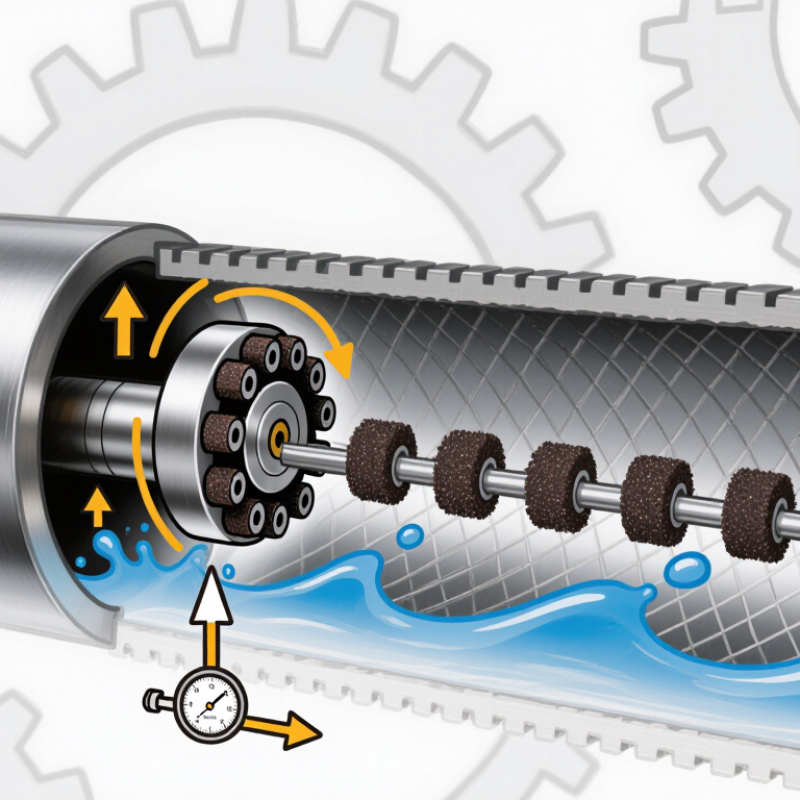
A honing head carries abrasive stones that press against the bore wall. As the head rotates and moves back and forth, the stones cut fine peaks and form a crosshatch pattern. That pattern can help retain lubricant, but the right finish depends on the part’s design and service needs. Small details matter.
Deep holes add practical challenges: tool reach, alignment, coolant flow, and stable support all influence results. If a long tool deflects, the bore may finish unevenly. Operators typically check diameter and geometry at several depths using suitable gauges or inspection equipment. Machine settings, abrasive type, material hardness, and honing allowance must suit the workpiece; there is no single recipe. The process sounds simple on paper. In practice, it can be fussy. A neat crosshatch alone does not prove that a bore meets specification. This guide explains how Deep Hole Honing works, what happens during the cutting cycle, and which measurements help verify the result. Some judgment remains.
What Deep Hole Honing Is and What It Achieves
Deep hole honing is a precision finishing process for improving the inside surface of a long, narrow bore. A honing head carries abrasive stones that press gently against the bore wall. As the head rotates and moves back and forth, the stones remove small amounts of material. The result is a smoother, more consistent surface and, within process limits, improved bore size and geometry. The motion leaves a fine crosshatch pattern.
That pattern matters. It can help retain lubricant between moving parts and support more even contact. In a hydraulic cylinder, for example, a uniform bore can help a seal travel without catching on rough spots. The process is controlled, not dramatic; changes may be measured in microns. It cannot fix every defect. Severe misalignment or damage may require another operation before honing. Results also depend on the starting bore, abrasive selection, and careful measurement. A smooth finish alone does not prove a part meets its dimensional requirements, so technicians check both surface texture and bore geometry.
How a Bore Is Prepared for the Honing Process
Before deep-hole honing, the bore must be clean, measurable, and safely supported. Chips, abrasive grit, and dried coolant can hide defects or scratch the surface during setup. A technician may flush the bore, then inspect it with suitable gauges or a borescope. Look for scoring, burrs, taper, and changes in diameter along the length. Small details matter.
The bore’s starting condition helps determine how much material honing should remove. Measure near the entrance, middle, and far end where practical, and record the readings. Remove raised burrs around the opening and intersecting holes, but avoid rounding edges excessively. That can alter the finished geometry. The remaining stock should be sufficient for correction without forcing the tool to remove too much material.
Setup matters just as much. Clamp the workpiece securely and align its bore with the honing tool’s path. A slight mismatch can produce uneven contact, especially in a long bore. Check that the tool can travel through the required length and that honing fluid can reach the cutting area. Not every bore needs identical preparation; material, geometry, and prior machining all affect the process. And inspection is not perfect. Gauge readings can vary, so questionable measurements deserve a second check.
How the Honing Cycle Shapes and Finishes a Deep Bore
A deep bore may look smooth at its entrance but vary farther inside. Deep hole honing refines the bore with abrasive stones mounted on a long, guided tool. The tool rotates while moving back and forth, creating a fine crosshatch pattern. That pattern can help retain lubricant in applications where the surface design calls for it. Small changes matter.
During the honing cycle, the stones press gently against the bore and remove tiny high spots. Their pressure and the tool’s speed are adjusted to suit the material and finishing target. Coolant carries away heat and abrasive debris. The operator checks diameter, roundness, and straightness as work progresses, since a reading at one end cannot describe the whole bore. Honing can improve a bore’s finish and geometry, but it is not a cure for every severe alignment problem. This is where judgment matters; the process can need adjustment even when the first measurements look acceptable.
Tips: Clean and inspect the bore before honing, then measure at several depths. Keep the tool aligned, and avoid rushing the cycle. After honing, remove abrasive residue and verify the surface and dimensions against the part’s requirements.
Common Applications of Deep Hole Honing
Deep hole honing is used where a long internal bore needs accurate sizing, straightness, and a controlled surface finish. Common applications include hydraulic cylinders, excavator booms, industrial presses, and landing-gear actuators. In these parts, a smooth bore helps seals move evenly and limits uneven wear. Honing stones rotate and travel along the bore, removing small amounts of material. The process can correct minor taper or waviness, but it cannot rescue every badly misaligned part.
The application base is substantial. Grand View Research’s 2023 hydraulic cylinder market report estimated the global market at about USD 14.9 billion that year. This figure does not measure honing demand directly; it shows the scale of equipment whose performance can depend on precise cylinder bores. Material, bore length, clearance, and operating pressure all affect the required finish. A mirror-like surface is not automatically better. Seal design matters, too.
Tips: Check bore size and straightness at several depths before honing. Record the measurements. Confirm the target finish with the component drawing and seal requirements, rather than relying on appearance alone. One overlooked detail can mean repeating the setup.