

What Are the Different Types of Irrigation Parts?
Irrigation Parts are the working pieces behind every controlled watering system. They move water, regulate pressure, direct flow, and help prevent leaks. A drip line may use a filter, pressure regulator, tubing, and small emitters. A sprinkler system may rely on valves, risers, spray heads, and a controller. Each part has a job. Small details matter.
Dr. Michael Dukes, an irrigation researcher at the University of Florida, studies irrigation management and water use. No source article was provided to verify a direct quotation from him, so the following is an editorial paraphrase, not his verbatim words: “Reliable irrigation depends on matching water delivery to the needs of the site.” That principle helps explain why parts should be selected as a connected system, not as isolated purchases. A mismatched nozzle can leave dry patches. A clogged filter can quietly reduce flow. It happens.
This guide introduces the main types of Irrigation Parts, what they do, and where they fit. You’ll encounter pumps and backflow devices, valves and controllers, pipes and fittings, filters, emitters, and sprinkler heads. The right combination depends on water source, layout, soil, and plants. Even a tidy design can need adjustment after installation. That part deserves a closer look.
Water Sources and Pumping Components
What Are the Different Types of Irrigation Parts?
Water Sources and Pumping Components
An irrigation system begins at its water source: a well, pond, canal, or storage tank. Each source creates different demands. A pond intake may need a screened floating assembly to avoid drawing leaves and sediment. A well usually requires a submersible pump matched to its depth and expected flow. Surface pumps need reliable priming and adequate suction conditions. Small details matter. The U.S. Geological Survey’s 2015 water-use report estimated irrigation withdrawals at 118 billion gallons per day, about 42% of U.S. freshwater withdrawals. That scale makes sensible pump selection more than a hardware choice.
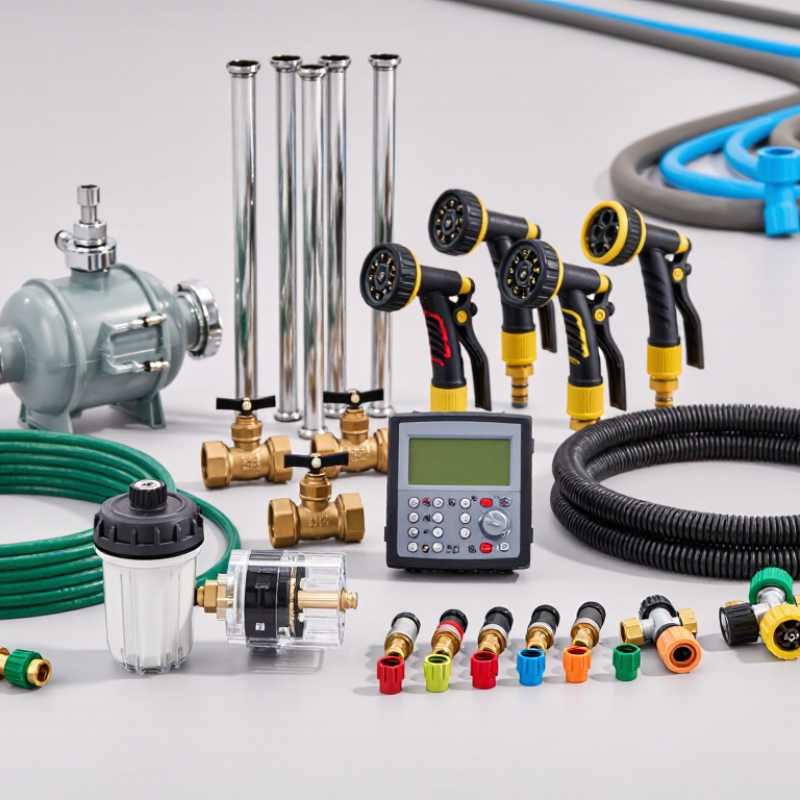
Common pumping components include an intake screen, pump, foot valve or check valve, pressure gauge, and flow meter. Screens limit debris; valves help prevent backflow or loss of prime. Gauges and meters show whether pressure and flow match the system’s needs. The USDA’s 2018 Census of Agriculture recorded 58.3 million irrigated acres, but acreage alone cannot determine pump size. Elevation change, pipe length, source level, and emitter requirements matter too. I would not size a pump from a field’s area alone. A clean-looking layout can still hide friction losses or a seasonal drop in well level. Check source conditions during actual operation, and treat estimates as estimates.
What Are the Different Types of Irrigation Parts? - Water Sources and Pumping Components
| Part or Source | Category | Main Function | Typical Use or Consideration |
|---|---|---|---|
| Well | Water source | Provides access to groundwater for irrigation. | Available flow and water quality can vary; local regulations may apply to well construction and water withdrawal. |
| Reservoir or storage pond | Water source | Stores water for use when it is needed by the irrigation system. | May collect runoff or receive water from another source. Intake screening helps limit debris entering the system. |
| River, stream, or canal intake | Water source | Allows water to be drawn from a surface-water supply. | Intakes commonly need a screen or strainer to reduce the entry of leaves, sediment, and other debris. |
| Municipal or utility connection | Water source | Supplies water through a public or managed distribution network. | Connection rules, permitted flow, and backflow-prevention requirements depend on the local water provider and regulations. |
| Intake screen or foot valve | Intake component | Helps prevent debris from entering the pump; a foot valve also helps retain water in a suction line when the pump stops. | Typically installed at the submerged end of a suction line. Screens need inspection and cleaning to prevent clogging. |
| Suction pipe | Pump connection | Carries water from the source to the pump inlet. | Must be suitable for suction service and sized to limit friction loss. Air leaks on the suction side can interfere with pump operation. |
| Centrifugal pump | Pump | Uses a rotating impeller to move water and provide flow for an irrigation system. | Commonly used for surface-water supplies and pressurized systems. Selection should match the required flow and total operating head. |
| Submersible pump | Pump | Operates while submerged and pushes water upward through a discharge pipe. | Often used in wells or other deep water sources. Pump capacity should be matched to the water source and system demand. |
| Discharge pipe | Pump connection | Carries pumped water from the pump toward the irrigation network. | Pipe material and diameter should suit the system pressure, flow, and installation conditions. |
| Check valve | Flow-control component | Allows flow in one direction and helps prevent reverse flow when the pump stops. | Installed in a suitable location on the discharge line or as part of a pump assembly, according to the system design. |
| Pressure gauge | Monitoring component | Displays water pressure at the point where it is installed. | Useful for checking pump and system operation; readings should be interpreted with the gauge location and system conditions in mind. |
| Pressure switch or controller | Control component | Starts or stops a pump based on system conditions or a control signal. | Settings and control method should be compatible with the pump and the irrigation system requirements. |
| Filter or strainer | Water-treatment component | Removes suspended particles that could clog emitters, nozzles, or other downstream equipment. | Filter type and mesh or screen rating should be selected for the water quality and the needs of the irrigation equipment. |
| Flow meter | Monitoring component | Measures the volume or rate of water moving through a pipe. | Can help monitor water use and identify unexpected changes in flow that may indicate a leak or blockage. |