
How to Find a China Kitchen Faucet Accessories OEM Supplier?
Finding a dependable Kitchen Faucet Accessories Oem supplier in China takes more than comparing prices or polished product photos. Buyers need evidence of repeatable quality, clear communication, and production capacity that matches their order. A sample may look excellent under showroom lights. The harder test is whether its finish, dimensions, and fittings remain consistent across a full production run.
Management thinker Peter Drucker wrote, “Quality in a product or service is not what the supplier puts in. It is what the customer gets out of it.” That principle fits OEM sourcing well: judge a supplier by what arrives, not only by what its sales team promises. Ask for material specifications, inspection procedures, and a sample that reflects the proposed production process. Check how the supplier handles drawing revisions, packaging details, and defects. Small details matter.
A useful evaluation also looks beyond the first quotation. Confirm which accessories the factory makes in-house, which processes it outsources, and how it tracks changes between orders. Request recent product records and references where possible, then compare their claims with observable evidence. A factory visit or independent inspection can reveal practical details, such as storage conditions and assembly checks. Not every buyer can arrange one. That limitation should be acknowledged, not ignored.
This guide explains how to assess candidates, compare samples, and ask sharper questions before placing an order. The goal is not to find the cheapest listing. It is to identify a partner whose process can be checked, discussed, and improved over time.
Define the Accessory Scope, Materials, Dimensions, and Drawing Requirements
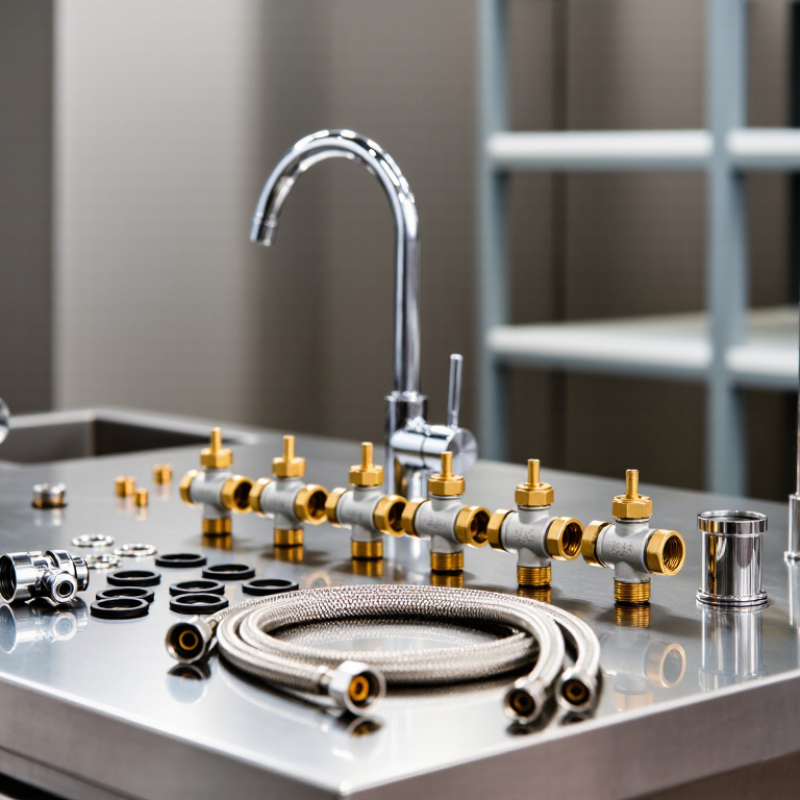
Before contacting a China kitchen faucet accessories OEM supplier, define exactly what the order includes. List items such as spray heads, pull-out hoses, mounting nuts, washers, and adapters. Separate standard components from optional parts. A phrase like “faucet accessories” can mean different things to different factories. Be specific. Note the faucet model, installation type, and intended use for each item. This helps suppliers assess compatibility and quote the right components.
State the required materials and finishes, such as stainless steel, brass, or a specified polymer. Identify dimensions, thread standards, hose length, and acceptable tolerances where applicable. Small differences matter: a mounting nut that is only a few millimeters too wide may not fit the sink opening. Provide dimensioned drawings with units, material callouts, and clear views of connection points. Photos can help, but they should not replace measurements. It is easy to overlook a washer or thread detail; review the drawing against a real assembly before approval.
Tips: Mark critical dimensions on the drawing. Ask the supplier to confirm unclear specifications in writing. Share a sample when drawings cannot show the fit clearly. A neat drawing is useful, but a checked drawing is better.

Screen China OEMs for Factory Controls and ISO 9001 Certification
A reliable China-based OEM should explain how factory controls protect each faucet accessory, not just show a polished catalogue. Ask to see incoming checks for brass, stainless steel, or plastic components. Request examples of machining tolerances, plating inspections, and assembly records. For pull-out hose kits or sprayer parts, check whether the factory performs leak or pressure tests. The method should match the product’s intended use.
Tips: Review the ISO 9001 certificate’s validity, issuing body, and site scope. Confirm that it covers the factory making your parts. During an audit, compare written procedures with real workstations. Look for dated calibration labels, inspection logs, and traceable batch records. Ask how staff record defects and verify corrective actions.
A neat audit file is reassuring, but it cannot prove every shift follows the procedure. Observe a live inspection if possible, and ask workers how they handle a failed check. A capable supplier should answer with records and clear examples, not broad promises. Check whether sample approval, production inspection, and shipment release have named owners. One detail can still be missed; document open questions and agree on measurable checks before placing an order.
Verify NSF/ANSI/CAN 372 Compliance: 0.25% Maximum Lead in Wetted Surfaces
When evaluating a China kitchen faucet accessories OEM supplier, ask for current NSF/ANSI/CAN 372 evidence for the exact parts you plan to buy. The standard sets a 0.25% maximum weighted-average lead content across wetted surfaces. These include surfaces that contact drinking water, such as a cartridge housing or connector. NSF’s standard documentation explains the calculation; the U.S. EPA also defines “lead free” plumbing products using the 0.25% wetted-surface limit. A general material declaration is not the same as product certification. Check the certificate scope, model numbers, and validity with the certifier. Small parts matter.
Tips: Request a component list and test or certification records for every water-contact part. Compare the listed materials with the production sample, including the valve body and hose fittings. A polished sample proves little. If a supplier changes an alloy or subcontractor, ask whether the change affects the certification. This step is easy to overlook, and paperwork can lag behind production.
For a practical review, ask how the factory controls material batches and keeps traceable records. Match purchase specifications to the certified configuration, then retain a sample from each approved batch. NSF/ANSI/CAN 372 addresses lead content; it does not, by itself, verify every aspect of faucet performance or installation safety. Treat it as one essential checkpoint, not the whole audit.
Check Faucet Flow Impact Against the U.S. 2.2-gpm Kitchen-Faucet Limit
When evaluating a China kitchen faucet accessories OEM supplier, check measured flow—not just the number printed on a product sheet. The U.S. Department of Energy’s federal standards, 10 CFR 430.32(o), set a maximum kitchen-faucet flow rate of 2.2 gallons per minute at 60 psi. Ask for a test report showing the pressure, faucet configuration, and measured result. A single figure without test conditions is weak evidence.
Ask whether the report covers each relevant spray mode and the supplied aerator or flow restrictor. The ASME A112.18.1/CSA B125.1 plumbing-fittings standard provides performance and test requirements for faucets; confirm the applicable edition and test scope with a qualified laboratory. Check samples from production, too. A prototype may use a different restrictor from a later shipment.
Small parts matter.
A flow change can affect both compliance checks and the user’s sense of rinsing power. I would not rely on a catalog claim alone. Request dated reports tied to the exact model and component list, then compare the results with your target market’s requirements.
Validate Samples, Quality Plans, Tooling, MOQ, and Export Documents Before Ordering
When evaluating a China kitchen faucet accessories OEM supplier, request samples made with the same materials and finishing process planned for production. Check thread fit, plating consistency, burrs, and how washers sit against the connector. A polished sample is not enough. Ask for dimensions and material details, then compare them with your drawings and assembly requirements.
Request a written quality plan that identifies inspection stages, measurement tools, and acceptable defect limits. For example, confirm how the supplier checks thread gauges and finish defects before packing. Ask whether inspection records can be shared with each production lot. Details matter. A quality plan that only says “100% inspection” is difficult to assess without clear criteria. Tooling deserves the same scrutiny: confirm ownership, maintenance responsibility, expected life, and charges for changes. These points are easy to overlook when a quotation looks attractive.
Clarify the MOQ for each accessory, finish, and packaging option; one combined order may still have separate minimums. Before paying a deposit, request a sample timeline and a production schedule in writing. Review export documents with the supplier, including the commercial invoice, packing list, and product details needed by your freight provider. Requirements can vary by destination, so verify them with the relevant logistics or customs professional. Small inconsistencies between the invoice and carton labels can create avoidable delays. A careful checklist helps, though it cannot replace a final pre-shipment inspection.