

7 POY Spinning and Winding Tips for Buyers
A POY line can look impressive in a showroom, yet daily performance depends on details buyers may not notice at first. Output figures matter, but so do yarn consistency, winding tension, package shape, and how quickly operators can respond to a fault. A poorly built package can create trouble downstream, even when the machine runs smoothly. Small details count.
POY Spinning And Winding decisions should start with the products you plan to make, your target production volume, and the conditions inside your plant. Ask suppliers how they measure yarn quality and package stability, and request trial data that matches your intended materials and operating speeds. A brochure rarely tells the whole story. Check what is included in the quoted configuration, from control systems to spare parts and technical support. Then compare energy use, maintenance access, operator training, and the availability of replacement components.
During a factory visit or sample run, watch the threadline and inspect finished packages closely. Listen for unusual vibration. Ask operators what needs frequent adjustment, not only what works well. Their answers may reveal practical limits that polished demonstrations miss. No line is perfect.
This guide presents seven useful tips for buyers assessing spinning and winding equipment. It covers questions to raise before purchase, evidence to request, and trade-offs worth discussing with suppliers. Some specifications are difficult to compare directly, and a lower price may not mean lower long-term cost. Treat estimates as estimates, verify claims against your production needs, and document assumptions before committing. A careful review cannot remove every risk, but it can make the decision more informed.
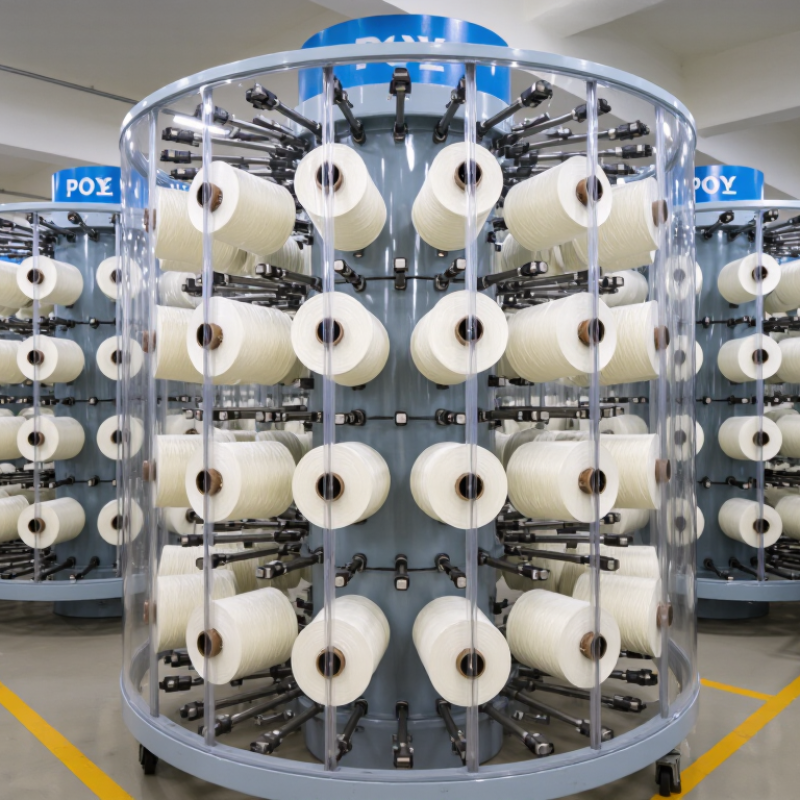
Understanding POY Spinning and Winding in the Manufacturing Process
POY, or partially oriented yarn, is made by melting polymer chips, pushing the melt through a spinneret, cooling the filaments, and winding them at controlled speed. The result is a continuous yarn with some molecular orientation, ready for further drawing or texturing. Small process changes matter. Quench airflow, finish application, and winding tension can affect filament uniformity and package stability.
The market is substantial: Textile Exchange’s Materials Market Report 2024 estimates global fiber production at 124 million tonnes in 2023, with polyester representing 57 percent. That scale makes consistent POY quality important, but market volume alone says little about a specific supplier’s control. Buyers should request lot-level data for denier variation, broken filaments, package weight, and winding defects. Check whether packages unwind smoothly on the intended equipment. Ask for a production trial, not only a sample cone. A tidy package can still conceal uneven tension.
For strength and elongation comparisons, ISO 2062 describes a single-end yarn testing method. Confirm test conditions and repeatability before comparing results. Review package hardness and build across several positions, too. Details matter here. A useful buying checklist should include traceable test records, agreed acceptance limits, and a clear response when results drift. Even a strong process has variation; the supplier’s ability to explain it is worth examining.

Evaluating Yarn Quality Before Placing an Order
7 POY Spinning and Winding Tips for Buyers
Evaluating Yarn Quality Before Placing an Order
POY quality affects downstream texturing, so review more than the quoted denier. Ask for recent test data on denier variation, tenacity, elongation, and interlace consistency. Check oil content too; uneven finish can cause friction and unstable processing. Compare results with your own specification, not only the supplier’s typical range. Small differences matter.
Tips: Request samples from several packages, not just one. Inspect the bobbin edges for damage and uneven winding. Run a short unwinding trial at your expected speed, then note tension changes, fuzz, and filament breaks. Record test conditions so results can be compared fairly. A single test can mislead.
Check package weight and build, since poor winding may create trouble even when lab results look sound. Ask how the lot was sampled and whether the figures represent that production batch. If possible, test a retained sample after delivery against the pre-order sample. Results may vary between labs, and I would not treat one clean trial as proof of consistency. Keep a little margin in your evaluation.
| Tip | Quality Dimension | What to Check | Indicative Evaluation Criteria | Buyer Action |
|---|---|---|---|---|
| 1. Confirm linear density | Denier or decitex consistency | Test representative packages from the lot and compare measured linear density with the order specification. | Results should meet the agreed nominal value and tolerance. ISO 2060 provides a recognized method for determining yarn linear density. | Request test results by lot and clarify the sampling plan and permitted variation before approving the order. |
| 2. Review tensile properties | Tenacity and elongation at break | Check whether yarn strength and stretch are suitable for the intended draw-texturing or downstream process. | Use the buyer’s application-specific limits; POY values vary with polymer, denier, process settings, and intended use. ISO 2062 covers single-end tensile testing of yarns. | Compare supplier results with a tested sample and require consistent test conditions, including gauge length and test speed. |
| 3. Inspect evenness and appearance | Denier variation, filament defects, and surface uniformity | Look for unevenness, broken filaments, fuzz, contamination, and visible variation along the yarn. | Set an agreed evenness limit and defect-acceptance procedure. There is no single universal limit suitable for every POY specification. | Examine multiple packages and request an evenness report using a stated test method and instrument setting. |
| 4. Check spin-finish consistency | Finish level and distribution | Assess whether the finish is uniform and appropriate for package handling and the next processing stage; watch for dry, oily, or sticky spots. | Agree on a finish target and test method with the supplier. The required level depends on the yarn application and process conditions. | Include finish-level limits in the specification and test a sample under the intended downstream process conditions. |
| 5. Evaluate winding quality | Package build, firmness, and unwinding behavior | Check package shape, edge formation, surface stability, and whether yarn unwinds without snagging or excessive tension fluctuations. | Packages should be uniform and free from sloughing, ribboning, soft spots, and collapsed edges; define acceptable package dimensions and weight in the order. | Unwind a trial package at a representative speed and inspect the package core and outer layers for damage or unstable build. |
| 6. Verify interlacing or entanglement | Interlace-node level and consistency, if specified | For interlaced POY, confirm that nodes are present and distributed consistently according to the product specification. | Node count and test procedure should be mutually agreed; requirements vary by end use and are not universal across POY products. | Request the test method and lot results, then confirm the yarn performs reliably in the buyer’s downstream process. |
| 7. Approve traceability and a pre-shipment sample | Lot consistency and documentation | Check that package labels, production lots, test records, and retained samples can be linked clearly. | Documentation should identify the product specification, lot or batch, test date, measured results, and applicable acceptance limits. | Approve a representative sample before shipment and define how nonconforming packages or lots will be handled. |
Note: Numerical acceptance limits should be agreed in the purchase specification. POY performance depends on polymer, filament design, denier, spinning and winding conditions, and the intended downstream process; use supplier data as a starting point and validate it with representative samples.
Checking Winder Performance and Package Consistency
When assessing POY winder performance, look beyond the displayed production speed. Run several positions with the same yarn and compare winding tension, package weight, and doff time. Watch the yarn path during acceleration and near the end of a package. Sudden tension changes can create soft edges, hard bands, or uneven package density. These defects may not show in a quick visual check. They can cause trouble during later unwinding.
Tips: Check package diameter and weight across multiple positions, not just one. Look for firm, even edges and a smooth surface. Record any breaks, alarms, or tension fluctuations during a full run. Small differences matter.
Ask for test packages made under conditions close to your intended production setup. Measure package build and compare samples from the beginning, middle, and end of the run. A neat outer surface is useful, but it does not prove consistent density inside. If results vary, repeat the test and inspect the machine settings before deciding the cause. One test is rarely enough. I would also leave room for operator feedback; a checklist can miss a brief vibration or an awkward changeover.
Matching POY Specifications to Your Production Needs
POY specifications should match the yarn’s end use, not just a familiar item on a supplier sheet. Check denier and filament count against the fabric weight, texture, and coverage your process requires. A finer yarn may suit lightweight fabric, while a heavier one can provide more body. Confirm tensile strength and elongation with your drawing and texturing conditions. Too much variation can cause breaks or uneven output. Small differences matter.
Tip: Compare oil content, interlace level, and package build with your equipment settings. Ask for tolerances, not only nominal values. Then run a small trial using your usual winding speed and machine tension. Record breaks, package edges, and yarn behavior after unwinding. A neat package is useful, but it does not guarantee smooth processing.
Also consider shrinkage and thermal behavior if the yarn will undergo heat setting or texturing. Request test data for the intended lot, and check that the test method is clear. Results can vary between methods. One detail buyers sometimes overlook is how long packages have been stored; storage conditions may affect handling. I would not rely on a specification sheet alone. Compare the data with a sample run, and revise the target if the yarn performs differently on your line.
Comparing Suppliers, Costs, and Delivery Requirements
7 POY Spinning and Winding Tips for Buyers
Comparing Suppliers, Costs, and Delivery Requirements
POY buyers should compare yarn performance, landed cost, and delivery reliability—not just the quoted price. Textile Exchange’s Materials Market Report 2024 estimates global fiber production reached 124 million tonnes in 2023, with polyester accounting for about 57%. That scale makes consistent specifications especially important. Request test results for denier variation, tenacity, elongation, interlace, and package weight. Ask suppliers to clarify test methods and acceptable tolerances. A trial cone can reveal winding issues that a datasheet may miss.
Compare quotes using the same shipment terms and order quantity. Include packaging, freight, insurance, inspection fees, and any price adjustments in your cost comparison. One uncomfortable point: the cheapest offer can become a costly mistake if packages arrive uneven or late. The World Bank’s Logistics Performance Index 2023 tracks factors including shipment timeliness and tracking. Use these as prompts when assessing a supplier’s delivery records, not as a substitute for checking them directly. Confirm production lead time, dispatch date, transit estimate, and how delays will be reported.
Tip: Request a sample lot and a written shipment schedule. Check cone build, labels, and package weights on arrival. Leave a practical buffer for transit delays; even a good plan can slip.
7 POY Spinning and Winding Tips for Buyers - Comparing Suppliers, Costs, and Delivery Requirements
How to use this chart: Compare supplier quotations at the same nominal yarn count. The conversions use dtex = denier × 10 ÷ 9. Before ordering, confirm the specified count and tolerances, then compare quoted price, minimum order quantity, production lead time, and delivery terms directly with each supplier. Lead times and costs vary by order and supplier.









