What Is a Quartz Reactor and How Does It Work?
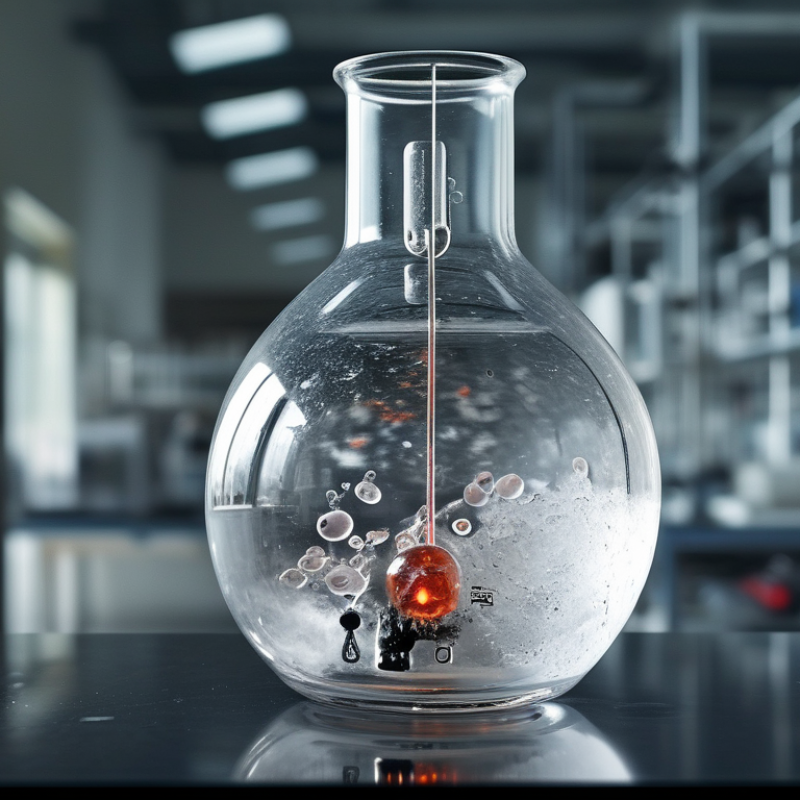
A Quartz Reactor is a process vessel made from high-purity quartz. It supports controlled chemical, thermal, and photochemical reactions. Unlike many metal chambers, quartz does not easily introduce metallic contamination. Its smooth inner surface also helps reduce residue buildup. This matters in laboratories, semiconductor processing, and advanced materials research. The transparent walls provide a useful view of the reaction zone. Quartz is not indestructible.
A Quartz Reactor works by holding reactants inside a controlled environment. A feed system introduces gases, liquids, or solid samples through sealed ports. Heating elements, lamps, or plasma sources then supply the required energy. In photochemical systems, quartz can transmit ultraviolet light more effectively than ordinary glass. Temperature sensors and pressure controls help maintain stable operating conditions. Small changes can alter the final result.
Design details matter. Wall thickness, joint quality, flow direction, and heating uniformity affect performance. Operators should inspect the reactor for scratches, clouding, chips, and thermal stress before use. A tiny surface defect may become serious during rapid heating. Manufacturers’ temperature and pressure ratings should guide every operating decision. Cleaning procedures must match the quartz grade and process chemistry. Aggressive handling can shorten service life. Not every reactor performs identically. That is an important limitation.
This guide explains how quartz reactors function, where they are used, and why material selection matters. It also examines common components, operating conditions, maintenance practices, and practical safety controls. Reliable results require more than a transparent vessel. They depend on disciplined procedures, accurate measurements, and careful interpretation of experimental data.
Quartz Reactor Definition and Core Purpose
A quartz reactor is a high-purity process chamber used in semiconductor, solar-cell, and laboratory manufacturing. Its core purpose is to hold wafers or samples inside a controlled thermal and chemical environment. Quartz tolerates high temperatures, resists many process gases, and introduces fewer metallic contaminants than ordinary materials. This purity matters. A tiny contaminant can reduce yield across many wafers.
The reactor usually contains a quartz tube, wafer boat, gas inlet, heater, and exhaust path. Operators load wafers into the boat, then control temperature, pressure, and gas flow. At elevated temperatures, gases can oxidize surfaces, deposit thin films, or modify dopant concentration. The quartz walls remain relatively inert, while the wafer surface receives the intended reaction. In practice, uniform gas flow is difficult. Small temperature differences may create uneven film thickness.
SEMI’s 2024 World Fab Forecast reported global semiconductor fab capacity exceeding 30 million eight-inch-equivalent wafers per month. The International Energy Agency also reported strong growth in global solar manufacturing capacity in 2023, where thermal quartz components support several high-temperature steps. These figures show the reactor’s industrial importance, but they do not prove every quartz design performs equally well. Surface wear, particle buildup, and cleaning frequency still require careful inspection. A clear tube is not automatically a clean reactor.
Quartz Properties That Make It Suitable for Reactors
Quartz reactors use a fused-silica chamber to contain gases, liquids, or powders during controlled reactions. Their performance comes from material properties, not appearance. NIST data places silica’s melting point near 1,713°C. Fused quartz also tolerates rapid heating better than many common glasses. Its thermal expansion is extremely low, often near 0.5 × 10⁻⁶ K⁻¹. This helps reduce cracking when a hot tube meets cooler surroundings.
Chemical resistance is another advantage. Quartz withstands many acids and oxidizing atmospheres, although concentrated alkalis can attack it at elevated temperatures. The material also remains electrically insulating and transmits ultraviolet light. That combination supports plasma treatment, photochemical reactions, semiconductor processing, and laboratory synthesis. The Semiconductor Industry Association’s 2024 industry report highlights contamination control as essential for advanced manufacturing. Quartz supports that goal because its smooth surface releases fewer particles than rougher materials. Still, “inert” is not absolute. Deposits, metal fittings, and thermal stress can change the result.
Tips: Check the reactor’s temperature gradient, not only its maximum rating. Inspect cloudy zones, scratches, and wall thinning before each run. The USGS Mineral Commodity Summaries 2024 reports large-scale industrial silica production, but raw material volume does not guarantee reactor quality. Purity, fabrication, cleaning, and handling matter more. A better design may use a slightly thicker tube, even if heat transfer becomes slower. That trade-off deserves testing.
Main Components and Internal Structure
A quartz reactor is a heated chamber used for controlled wafer processing. Its main body is high-purity fused quartz, chosen for low contamination and strong thermal resistance. SEMI’s 2024 industry outlook expects global semiconductor fab equipment spending to exceed $100 billion in 2025. That scale increases demand for stable reactor design and repeatable processing.
Inside, the quartz tube surrounds the wafer boat, which holds multiple wafers in vertical slots. A gas inlet introduces process gases near one end, while an exhaust outlet removes by-products from the opposite side. Heating elements sit outside the tube, usually in several temperature zones. These zones reduce thermal gradients along the wafer stack. A door, flange, and sealing assembly protect the controlled atmosphere, while sensors track temperature, pressure, and gas flow. The space is narrow. Small particles matter.
A controller adjusts heating power and gas delivery during each process step. The goal is consistent coating, oxidation, or diffusion across every wafer. The 2023 IRDS roadmap repeatedly identifies contamination control and process uniformity as major manufacturing challenges. Quartz is clean, but it is not perfect. Repeated thermal cycling can cause stress, surface devitrification, or dimensional changes. Engineers therefore inspect tube clarity, seal condition, and temperature calibration at defined intervals. A reactor may look simple from outside. Its internal balance is not.
What Is a Quartz Reactor and How Does It Work?
A quartz reactor is a high-temperature process vessel made from fused silica. Its main internal components typically include a quartz tube, gas inlet, gas outlet, sample holder or wafer boat, and a heated reaction zone. The transparent, chemically resistant tube allows controlled gas reactions around the samples.
The chart shows representative temperature windows commonly used in quartz tube reactor processes. Actual conditions depend on the material, gas chemistry, pressure, reactor geometry, and process recipe.
How a Quartz Reactor Operates Step by Step
A quartz reactor is a heated chamber made from high-purity quartz. It supports controlled chemical or material-processing reactions. Its operation follows a clear sequence, although real systems require careful adjustment.
The process starts when the reactor is inspected for cracks, residue, or poor connections. A gas inlet then introduces a controlled atmosphere, while an outlet removes used gases. The heating system raises the quartz tube to a selected temperature. Quartz handles high heat and offers strong chemical resistance, but it can still fail under sudden temperature changes.
Once stable, raw materials enter the reaction zone. Heat activates the process, and gases or vapors move across the heated surface. Sensors monitor temperature, pressure, and flow. If conditions drift, the controller adjusts the system or pauses the cycle.
After processing, the heater cools gradually, and the chamber is purged before opening. The sequence sounds simple. It is not always predictable.
Tips: Keep the quartz surface clean and inspect it under bright light. Avoid touching hot quartz with tools or cold liquids. Confirm gas flow before heating. Record each cycle, because small changes often explain large results. A useful review question is, “Which step changed today?” This question may reveal more than a perfect-looking final product.
Common Applications, Benefits, and Operating Limitations
A quartz reactor uses a fused-quartz tube to hold materials during controlled heating, gas flow, or ultraviolet exposure. Quartz tolerates high temperatures and introduces fewer metallic impurities than many alternatives. Its transparency also allows operators to inspect wafers, coatings, or chemical reactions without opening the chamber.
The process is precise, but not effortless. Heating elements raise the reactor temperature, while gases move through carefully positioned inlets and outlets. In semiconductor processing, this supports oxidation, diffusion, cleaning, and deposition steps. SEMI’s 2024 World Fab Forecast projected global fabrication capacity would exceed 30 million 200-millimeter-equivalent wafers per month in 2024. That scale keeps quartz components important. Solar manufacturing is another major user. The International Energy Agency reported nearly 420 gigawatts of solar photovoltaic capacity additions in 2023, increasing demand for controlled high-temperature processing.
Quartz reactors also appear in laboratories, chemical treatment systems, and ultraviolet photochemistry. Their benefits include low contamination, strong thermal stability, and good UV transmission. However, quartz is brittle. Sudden temperature changes can create cracks, especially around joints and scratches. Alkali metals and aggressive fluorinated chemicals may also damage the surface. I would not assume “high purity” means unlimited service life. Operators still need gradual heating, clean handling, leak checks, and regular inspection. Small deposits can alter gas flow. That detail is easy to miss. Replacement schedules should reflect temperature cycles, cleaning methods, and actual process chemistry, not only calendar age.
What Is a Quartz Reactor and How Does It Work? - Common Applications, Benefits, and Operating Limitations
| Data Dimension | Typical Information | How It Works or Why It Matters | Practical Considerations |
|---|---|---|---|
| Basic Definition | A quartz reactor is a reaction vessel, tube, chamber, or insert made primarily from high-purity fused quartz or fused silica. | It provides a chemically resistant and thermally stable environment in which gases, liquids, powders, or solid samples can undergo controlled reactions. | The design may be a single tube, a multi-zone tube, a batch vessel, or a continuous-flow chamber. |
| Main Operating Principle | Reactants are introduced into the quartz vessel, exposed to controlled heat, light, plasma, or another energy source, and then removed or collected as products. | Quartz acts as the reaction boundary while allowing process conditions such as temperature, residence time, pressure, and atmosphere to be controlled. | Gas flow, heating rate, mixing, and cooling must be matched to the reaction chemistry and reactor geometry. |
| Material Composition | High-purity amorphous silicon dioxide, commonly referred to as fused quartz or fused silica. | The material contains very little alkali or metallic contamination compared with ordinary glass, which helps protect sensitive processes. | Purity grade, surface finish, wall thickness, and manufacturing method affect service life and contamination levels. |
| Temperature Capability | Many quartz reactor components can operate continuously at approximately 900–1,100°C, with higher temperatures possible for carefully controlled short-term use. | Quartz retains useful strength and dimensional stability at elevated temperatures and has a relatively low coefficient of thermal expansion. | Actual limits depend on the load, temperature uniformity, atmosphere, wall thickness, support method, and heating and cooling rate. |
| Thermal Shock Resistance | Generally better than common glass because fused quartz expands very little when heated. | Low thermal expansion reduces stress caused by temperature changes and helps the vessel tolerate rapid thermal transitions. | Thermal shock resistance is not unlimited. Local hot spots, scratches, impact, and uneven cooling can still cause cracking. |
| Chemical Resistance | Strong resistance to many acids, water, and numerous solvents under suitable conditions. | The silica network is relatively inert in many laboratory and industrial environments, reducing corrosion and unwanted reaction with the vessel. | Hot concentrated alkalis, hydrofluoric acid, and some high-temperature reactive compounds can attack quartz significantly. |
| Optical Transmission | High-purity quartz can transmit ultraviolet, visible, and near-infrared radiation, with transmission depending on grade and thickness. | Light can pass through the reactor wall to initiate photochemical reactions, ultraviolet disinfection, or light-assisted catalysis. | Surface deposits, impurities, wall thickness, and radiation wavelength can reduce transmission over time. |
| Atmosphere Control | Common process atmospheres include air, nitrogen, argon, hydrogen-containing mixtures, oxygen, steam, and vacuum conditions. | Controlled atmospheres limit oxidation, support reduction or deposition reactions, and improve repeatability. | Gas purity, leak tightness, flow stability, and safe handling of flammable gases are essential. |
| Pressure Range | Many quartz reactors are designed for atmospheric or reduced-pressure operation rather than high-pressure service. | Thin-walled quartz tubes and vessels are well suited to flowing-gas and vacuum processes when properly supported. | Quartz is brittle and should not be treated as a general-purpose high-pressure vessel. Pressure ratings must be established for the specific design. |
| Heating Methods | Typical methods include electric tube furnaces, resistance heaters, infrared heating, induction-assisted systems, and external heating jackets. | External heating allows the reaction zone to be controlled without placing metallic heating elements directly in the process stream. | Temperature gradients should be minimized, especially at the boundaries between hot and cool zones. |
| Batch Operation | Reactants are loaded into the vessel, processed for a defined time, and removed after the cycle is complete. | Batch reactors are useful for laboratory development, small production volumes, heat treatment, and experiments requiring flexible recipes. | Batch processing may provide lower throughput and less uniformity than a well-designed continuous-flow system. |
| Continuous-Flow Operation | Reactants continuously enter the reactor while products and unreacted materials leave through an outlet. | Continuous flow can provide stable residence time, repeatable gas composition, and efficient integration with downstream equipment. | Flow distribution, pressure drop, sealing, and residence-time control become increasingly important as scale increases. |
| Common Application: Semiconductor Processing | Thermal oxidation, diffusion, annealing, chemical vapor deposition, and other high-temperature wafer processes. | The low contamination potential and high-temperature performance of quartz support controlled processing of sensitive materials. | Particle generation, metallic contamination, surface deposits, and thermal uniformity must be monitored carefully. |
| Common Application: Chemical Vapor Deposition | Formation of thin films, coatings, powders, or nanostructured materials from gaseous precursors. | Heated quartz tubes provide a clean reaction zone in which precursor gases decompose or react on a substrate. | Deposits can gradually reduce the internal diameter and optical transmission, requiring cleaning or replacement. |
| Common Application: Photochemistry | Ultraviolet- or visible-light-driven oxidation, reduction, polymerization, and catalytic reactions. | The reactor wall transmits selected wavelengths while containing the reaction mixture and allowing controlled irradiation. | Light intensity, wavelength, optical path length, and fouling of the quartz surface strongly influence performance. |
| Common Application: Water and Wastewater Treatment | Ultraviolet disinfection and advanced oxidation processes using light-sensitive oxidants or catalysts. | Quartz sleeves or chambers transmit ultraviolet radiation to the fluid while separating the lamp from the process water. | Scaling, suspended solids, and organic deposits can reduce ultraviolet transmission and require scheduled cleaning. |
| Common Application: Materials Research | Synthesis and heat treatment of nanoparticles, ceramics, catalysts, thin films, carbon materials, and powders. | Quartz supports controlled heating and gas exposure while minimizing unwanted reaction with the sample. | Sample loading, precursor compatibility, particle deposition, and temperature calibration affect repeatability. |
| Key Benefit: Purity | Low levels of extractable and metallic impurities when an appropriate quartz grade is used. | This helps reduce contamination in electronic, optical, chemical, and analytical processes. | Handling tools, seals, coatings, and upstream gases can still introduce contamination even when the quartz is highly pure. |
| Key Benefit: Visibility | Transparent walls allow visual observation of color changes, condensation, particle movement, and reaction progress. | Operators can inspect the process without opening the vessel or disturbing the controlled atmosphere. | Visibility decreases when the surface becomes coated, etched, fogged, or contaminated. |
| Key Benefit: Low Thermal Expansion | Fused quartz has a very low coefficient of thermal expansion compared with many common glasses and metals. | Low expansion improves dimensional stability and reduces stress during heating and cooling. | Mechanical supports should allow for the small amount of expansion that still occurs and should avoid point loading. |
| Key Benefit: Clean Process Environment | Quartz has a smooth, nonporous surface that is relatively easy to inspect and clean. | A clean inner wall can reduce carryover between process cycles and limit unwanted nucleation sites. | Cleaning chemicals must be compatible with quartz, and abrasive cleaning can create scratches that weaken the vessel. |
| Operating Limitation: Brittleness | Quartz is hard but brittle and can fracture from impact, bending, scratches, or excessive mechanical stress. | Unlike many metals, it does not plastically deform to relieve concentrated stress. | Use padded supports, avoid force during installation, and inspect for chips, cracks, and deep scratches before operation. |
| Operating Limitation: Alkali Attack | Hot concentrated alkaline solutions and vapors can chemically attack silica. | The reaction can roughen the surface, change dimensions, and shorten the service life of the reactor. | Process chemistry should be reviewed for temperature, concentration, contact time, and the presence of alkaline contaminants. |
| Operating Limitation: Hydrofluoric Acid | Hydrofluoric acid and fluoride-containing conditions can etch or dissolve silica. | Etching damages optical clarity and may reduce wall thickness and mechanical reliability. | Quartz should not be selected for direct contact with hydrofluoric acid unless a qualified design specifically addresses the exposure. |
| Operating Limitation: Thermal Gradient | Uneven heating or cooling can create internal stress even though quartz has excellent thermal shock resistance. | Stress concentrates where hot and cold regions meet or where the vessel is constrained by rigid supports. | Use controlled ramp rates, uniform heating zones, and properly designed supports. |
| Maintenance Requirement | Regular inspection, cleaning, leak checks, and replacement of degraded parts are necessary. | Deposits, scratches, devitrification, discoloration, and contamination can affect reaction quality and safety. | Maintenance intervals should be based on temperature, chemistry, operating hours, visual condition, and process sensitivity. |
| Best Selection Criteria | Consider reactor geometry, quartz purity, operating temperature, pressure, chemical exposure, optical wavelength, flow rate, and required capacity. | Matching the vessel design to the process prevents premature failure and improves product consistency. | Engineering review is recommended for pressurized, highly corrosive, rapidly heated, or flammable-gas applications. |

Note: Operating ranges are general engineering guidelines. The allowable conditions for a specific quartz reactor depend on its dimensions, fabrication quality, support system, process chemistry, pressure, and heating profile.