
7 Tips for Choosing a Yogurt Packing Machine
Choosing a Yogurt Packing Machine is not simply a matter of comparing prices and production speeds. The right equipment must protect yogurt quality, maintain accurate filling, and fit the realities of your facility. A machine that looks impressive in a showroom may struggle with thick yogurt, fruit pieces, frequent flavor changes, or limited floor space.
Walter Soroka, a respected packaging specialist, described packaging as “the art, science, and technology of enclosing and protecting products.” His observation remains highly relevant to yogurt production. A reliable Yogurt Packing Machine should control portion volume, seal cups evenly, and reduce exposure to air during filling. Small details matter. A weak seal can cause leakage. A difficult cleaning process can slow the entire shift.
The best decision begins with practical evidence. Check the machine’s filling accuracy, sealing temperature, cup compatibility, and cleaning access. Ask for test results using your actual yogurt recipe. Plain yogurt may flow differently from Greek yogurt. Fruit-on-the-bottom products create another challenge.
Do not trust every specification sheet.
A lower purchase price can hide higher maintenance costs, wasted packaging materials, or complicated operator training. I have seen equipment selected for maximum speed when the factory really needed flexibility. That choice can become expensive. It is also reasonable to question whether every automated feature is necessary.
The following seven tips will help buyers evaluate capacity, hygiene, flexibility, sealing performance, maintenance, supplier support, and total operating cost. These factors create a clearer path toward a machine that performs consistently, not merely one that looks advanced.
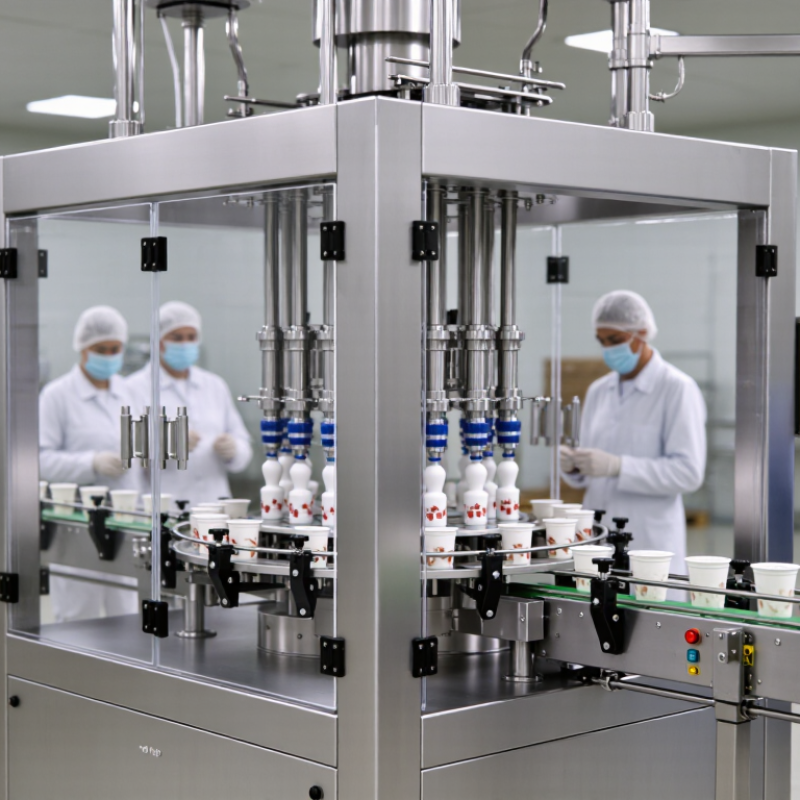
Understanding Yogurt Packing Requirements
Understanding Yogurt Packing Requirements
Yogurt packing begins with the product, not the machine. Before choosing equipment, measure viscosity, filling volume, cup size, and sealing temperature. Tip 1: Test the yogurt at its actual production temperature. Cold yogurt may flow differently. Tip 2: Check whether the recipe contains fruit pieces or grains. Small pieces can affect pumps and filling accuracy.
Tip 3: Match the machine to your daily output, not an ideal future target. Tip 4: Confirm that the filling system handles your smallest and largest portions. Tip 5: Inspect sealing requirements carefully. Film type, rim shape, and seal strength must work together. A weak seal creates leakage and waste. Tip 6: Request a cleaning demonstration. Product residue can hide around valves, nozzles, and corners.
Hygiene design matters in every shift. Food-contact surfaces should be accessible, smooth, and easy to inspect. Tip 7: Ask for a realistic trial using your cups, film, and yogurt. Watch the first hour, not only the final sample. In my experience, output figures often look impressive, while changeover time gets overlooked. That mistake is expensive. Operators should also test controls, alarms, and recipe settings. Simple screens help, but they do not replace training. Leave room for improvement. A machine may fit today’s product, yet fail after a minor recipe change.
7 Tips for Choosing a Yogurt Packing Machine - Understanding Yogurt Packing Requirements
| No. | Selection Tip | Yogurt Packing Requirement | Practical Data Range | What to Check Before Purchase |
|---|---|---|---|---|
| 1 | Match the Filling System to Product Viscosity | Yogurt may be smooth, stirred, set, Greek-style, or contain fruit pieces. Viscosity and inclusions affect filling accuracy and product handling. | Smooth yogurt: approximately 1,000–3,000 mPa·s Greek-style yogurt: approximately 3,000–10,000 mPa·s Fruit pieces: commonly up to 5–10 mm, depending on the recipe | Request product trials using the actual recipe. Positive-displacement or servo-controlled piston fillers are generally suitable for higher-viscosity products, while the pump and valve must be sized to avoid excessive shear and clogging. |
| 2 | Choose the Correct Cup or Container Format | The machine must accommodate the container material, dimensions, opening shape, and required fill volume. | Common yogurt fills: 100–500 g Typical cup materials: PP, PS, PET, or paper-based laminate Typical seal diameters: approximately 50–100 mm | Confirm cup diameter, height, flange design, stacking method, denesting accuracy, lid dimensions, and changeover parts. The container should be tested for deformation, static charge, and reliable placement. |
| 3 | Size the Machine for Required Output | Production speed should meet demand without sacrificing filling accuracy, sealing quality, or hygienic handling. | Small or pilot production: approximately 10–30 cups/min Medium production: approximately 30–100 cups/min Higher-speed lines: commonly above 100 cups/min, subject to cup size and process configuration | Calculate output using the actual number of filling lanes, fill volume, planned operating hours, product changeovers, and expected uptime. Allow capacity for future growth instead of selecting only the minimum required speed. |
| 4 | Verify Filling Accuracy and Portion Control | Accurate portioning reduces giveaway, supports label compliance, and helps maintain consistent product presentation. | A practical target for many cup-filling applications is approximately ±1% to ±2% of nominal fill weight, depending on product and machine design. | Ask for measured test results at the intended speed and fill volume. Check whether the machine uses servo-driven dosing, individual lane adjustment, automatic weight feedback, or recipe-based parameter storage. |
| 5 | Prioritize Hygienic Design and Cleaning | Dairy products require surfaces and components that can be cleaned effectively and inspected easily. | Product-contact parts should generally be made from food-contact stainless steel or approved food-grade polymers. Typical cleaning approach: manual cleaning or CIP-compatible design, depending on the line. | Look for sloped surfaces, minimal product traps, tool-free removal of contact parts, accessible seals, sanitary welds, and documented cleaning procedures. Confirm compatibility with the detergents, temperatures, and sanitation methods used at the facility. |
| 6 | Check Sealing and Shelf-Life Protection | The seal must remain continuous and leak-resistant while supporting product protection, cold-chain handling, and consumer opening requirements. | Heat-sealing conditions commonly depend on lid material and coating, often within approximately 120–200°C. Actual settings must be established through seal trials. | Evaluate seal temperature control, dwell time, pressure, foil or laminate compatibility, peel strength, leak testing, and seal appearance. Confirm that the sealing station can compensate for normal variation in cup and lid materials. |
| 7 | Confirm Utilities, Footprint, and Changeover Needs | The machine must fit the available production area and connect safely to electrical, pneumatic, refrigeration, drainage, and cleaning systems. | Electrical supply: commonly 220–480 V AC, depending on site standards Compressed air: often approximately 6–8 bar for pneumatic components Changeover objective: typically 15–45 minutes for simple format changes, depending on design | Review the machine layout, access clearances, utility consumption, noise level, guarding, drainage, spare-parts list, operator training, and format-change procedure. Include installation space for conveyors, date coding, lid feeding, and downstream packing. |