

Top 10 Construction Equipment Battery Types for Buyers

Choosing a battery for construction equipment is not just a matter of matching voltage. A cold morning, a long idle period, or repeated engine starts can change what works well on site. That matters. A Construction Equipment Battery must suit the machine’s electrical system, duty cycle, and working environment. The wrong fit may lead to slow starts, shortened service life, or avoidable downtime. No single type suits every machine.

This guide introduces ten battery types buyers may encounter, including flooded lead-acid, AGM, gel, and lithium-ion options. It compares practical factors such as starting power, capacity, maintenance needs, charging behavior, durability, and cost. Specifications can look tidy on paper; field conditions rarely are. Check the equipment manual for voltage, dimensions, terminal layout, and manufacturer requirements before comparing products. Ask suppliers for clear test data and warranty terms, and consider how easily the battery can be serviced or replaced at your location. Some newer designs may offer advantages, but performance depends on the machine and operating conditions. The aim is not to name one universal winner. It is to help buyers weigh the trade-offs and choose a battery that fits their equipment, work schedule, and support needs.
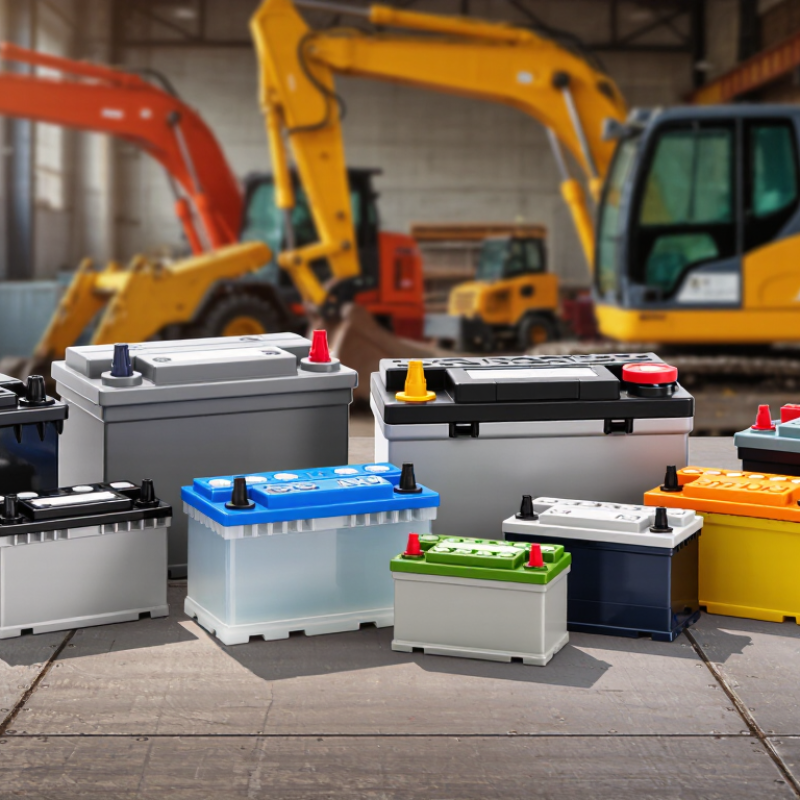
Top 10 Construction Equipment Battery Types for Buyers

Construction Equipment Battery Basics: Chemistry, Voltage, and Duty Cycle

Construction equipment batteries must match the machine’s chemistry, voltage, and daily workload. Flooded lead-acid batteries are common and often cost less, but they need suitable maintenance and ventilation. Absorbent glass mat batteries contain electrolyte in a sealed design and can tolerate vibration better, though they still require compatible charging. Lithium iron phosphate batteries can reduce weight and support repeated cycling, but their battery management systems and charging limits must suit the equipment. Chemistry matters. Check the machine manual before choosing; similar-looking batteries are not always interchangeable.

Voltage is not a guess. Many machines use 12- or 24-volt systems, while larger equipment may use higher-voltage banks. Confirm the required voltage, terminal layout, dimensions, and cold-cranking rating. A battery that fits the tray can still be wrong electrically. For example, a loader that starts repeatedly in cold weather needs adequate cranking power, not just a high capacity figure.

Duty cycle changes the choice. Frequent starts, long idle periods, vibration, and lights or cab electronics all affect battery demand. For equipment that sits between shifts, parasitic loads can quietly drain charge. For machines running accessories with the engine off, cycle life and reserve capacity deserve closer attention. Keep service records, too. They may reveal a pattern that a specification sheet misses.

The 10 Construction Equipment Battery Types Buyers Should Know

Construction equipment batteries vary by duty, not just voltage. Flooded lead-acid batteries are familiar and cost-conscious, but require ventilation and routine checks. AGM batteries resist vibration better and need less maintenance. Gel batteries handle deep discharge well, though charging must match their specifications. Enhanced flooded batteries offer a tougher option for frequent start-stop use. That distinction is easy to miss.

Lithium iron phosphate batteries suit some electric machines because they combine long cycle life with stable performance. Nickel manganese cobalt batteries offer high energy density, but need careful thermal management. Nickel-cadmium batteries tolerate cold and demanding cycles, yet are less common today. Nickel-metal hydride batteries appear in some hybrid systems, though they are not a universal fit. Sodium-ion batteries are an emerging option; availability and performance vary. Solid-state batteries remain largely developmental for heavy equipment. Not every type fits every machine. Check the required starting current, operating temperature, charging system, and space before choosing. A battery that looks suitable on paper may struggle after a cold morning and a long shift.

How Battery Types Compare in Performance, Service Life, and Cost

Top 10 Construction Equipment Battery Types for Buyers
How Battery Types Compare in Performance, Service Life, and Cost

Construction batteries differ sharply under vibration, heat, and repeated deep discharges. Flooded lead-acid batteries are inexpensive and widely available, but need watering and ventilation. AGM and gel batteries are sealed and resist spills, though repeated deep cycling can shorten service life. Lithium-ion options, including LFP and NMC, offer faster charging and more usable capacity. LFP is often chosen for thermal stability; NMC packs typically prioritize energy density. Nickel-cadmium tolerates harsh conditions but raises handling and disposal concerns. Nickel-metal hydride, sodium-ion, and ultracapacitor hybrids serve more specialized needs. Real sites are messier than spec sheets.

Service life depends on temperature, depth of discharge, and charging habits—not chemistry alone. Compare cycle-life figures at the same discharge depth. For cost context, BloombergNEF reported an average lithium-ion pack price of $139 per kWh in 2023. That is a market benchmark, not a quote for a ruggedized construction pack; enclosures, controls, and installation change the final cost. Lead-acid usually costs less upfront, while lithium systems may reduce charging downtime and replacement frequency. Calculate cost per operating hour.

Tips: Check the machine’s charging system and required starting current before choosing. Ask suppliers for cycle-life test conditions, warranty terms, and cold-weather performance. A cheap battery that fails during a muddy shift is not cheap.

Top 10 Construction Equipment Battery Types: Performance, Service Life, and Cost

Bars show representative deep-cycle life ranges, in cycles, rather than guaranteed lifetimes. Flooded lead-acid batteries usually have the lowest upfront cost; EFB, AGM, and gel options generally cost more, while lithium and industrial LTO or NiCd batteries often require a higher initial investment. Actual performance and total cost depend on battery specification, depth of discharge, temperature, charging, and duty cycle. Starter batteries are not intended for repeated deep discharging.

How to Match a Battery Type to Equipment and Job Conditions

Match the battery to the machine’s actual duty cycle, not just its size. A diesel excavator that needs dependable starting may call for a starting battery with suitable cold-cranking capacity. A lift or compact machine with repeated electric operation may need deep-cycle performance instead. Check the equipment manual for voltage, terminal layout, dimensions, and charging limits. Check the nameplate. A battery that fits the tray can still be wrong for the charging system.

Job conditions narrow the choice further. Flooded lead-acid batteries can suit accessible equipment where routine checks are practical; sealed AGM types reduce spill concerns in rough, vibrating environments. Lithium-ion options can offer lower weight and useful cycle life, but require compatible charging controls and may need protection from extreme temperatures. No option is perfect. On a cold, remote site, starting power and reliable charging access may matter more than weight. In a warm operation with frequent stops, cycle life may matter more. Dust, vibration, idle time, and overnight storage all change the calculation. It is easy to focus on purchase price and overlook downtime; that trade-off deserves a second look. Confirm specifications with the equipment documentation and a qualified service technician before replacing the battery.

Top 10 Construction Equipment Battery Types for Buyers — How to Match a Battery Type to Equipment and Job Conditions
# Battery type Typical equipment or application Key strengths Limitations and checks Best match for job conditions
1 Flooded lead-acid starting battery Diesel engine starting in excavators, loaders, dozers, and other mobile machines Established technology; generally cost-effective; can deliver high cranking current. Requires correct charging and, where applicable, electrolyte and terminal maintenance. Spilled electrolyte and venting require care. Confirm the required starting-current rating, voltage, dimensions, and polarity. Cost-sensitive fleets with routine maintenance and equipment that uses a conventional engine-starting battery.
2 AGM lead-acid battery Engine starting, auxiliary power, and equipment with vibration exposure or limited access for maintenance Sealed, valve-regulated design; spill-resistant when installed as specified; generally more vibration-tolerant than conventional flooded batteries. Must use a compatible charging profile. Often costs more than a flooded battery, and excessive heat or overcharging can shorten service life. Rough, mobile work where reduced routine battery maintenance is useful and the charging system supports AGM.
3 EFB (enhanced flooded battery) Engine starting and cyclic auxiliary loads where a standard flooded battery may experience frequent charge-discharge cycles Designed for improved cycling performance compared with a conventional flooded starting battery; retains a familiar lead-acid format. Not equivalent to a deep-cycle traction battery. Check the equipment maker’s charging specifications and required battery dimensions. Machines with repeated starts or moderate auxiliary loads that still require a lead-acid starting battery.
4 Gel lead-acid battery Some auxiliary and standby power systems, including applications requiring a sealed lead-acid design Electrolyte is immobilized in gel; sealed construction helps reduce spill risk when used correctly. Requires a compatible, controlled charging profile. Overvoltage can cause permanent damage. Not every gel battery is suitable for engine cranking. Stationary or auxiliary applications where a sealed battery is appropriate and charging voltage can be controlled.
5 Flooded deep-cycle lead-acid battery Electric lifts, small utility vehicles, and other equipment designed for repeated deep discharge Built for repeated cycling rather than brief engine-starting bursts; widely understood and recyclable through established lead-acid channels. Usually heavier and requires more maintenance than sealed alternatives. Avoid leaving it discharged; verify cycle-life data at the intended depth of discharge. Budget-conscious electric equipment with regular charging access and maintenance support.
6 Lithium iron phosphate (LFP) Electric compact equipment, material-handling machines, and auxiliary or traction systems designed for lithium batteries High usable energy, low weight relative to lead-acid, and typically long cycle life. LFP is generally more thermally stable than many other lithium-ion chemistries. Requires a battery management system and compatible charger. Charging may be restricted below freezing; verify cold-weather limits, enclosure protection, and service support. Frequent-use equipment where reduced weight, high cycling capability, and reliable charging infrastructure matter.
7 Lithium nickel manganese cobalt oxide (NMC) Some electric mobile machines and high-energy battery packs engineered around this chemistry High energy density can support compact, lighter battery packs for a given energy capacity. Requires carefully engineered cell monitoring, thermal management, and a compatible charger. Confirm pack-level safety features and approved operating limits. Applications where space and weight are major design constraints and the machine is specifically engineered for an NMC pack.
8 Lithium titanate (LTO) Specialized electric or hybrid equipment requiring rapid charging or frequent high-power cycling Can support high charge and discharge rates and strong cycle life when the pack is designed for those demands. Typically has lower energy density and higher cost than common lithium-ion alternatives. Availability and pack compatibility may be limited. High-utilization operations with short charging windows, frequent cycling, and a system designed for LTO.
9 Nickel-cadmium (NiCd) Legacy or specialized industrial equipment, including some applications requiring rugged rechargeable batteries Can tolerate demanding operating conditions and repeated cycling in appropriately designed systems. Cadmium is toxic and subject to strict handling and disposal rules. Memory-effect concerns depend on usage; confirm legal requirements, charger compatibility, and replacement availability. Existing systems specifically designed for NiCd where environmental compliance and end-of-life recycling are managed.
10 Sodium-ion Emerging stationary or selected electric-equipment applications, subject to commercial availability and system approval Uses sodium-based chemistry and may offer an alternative to some lithium-based supply chains; performance varies by product and design. Availability, energy density, cold-weather behavior, cycle life, and service infrastructure are product-specific and may be less established for construction equipment. Buyers assessing newer battery systems through a qualified equipment supplier, with verified specifications and service arrangements.

Buyer note: Battery chemistry alone does not determine compatibility. Confirm the machine manufacturer’s specified voltage, capacity, starting-current or traction requirements, terminal layout, dimensions, charging profile, temperature limits, and safety approvals before purchase.

Charging, Maintenance, and Safety Factors for Battery Buyers

Top 10 Construction Equipment Battery Types for Buyers

Battery performance depends on more than chemistry. Shift length, idle time, temperature, and charging access all matter. DOE’s 2022 Grid Energy Storage Technology Cost and Performance Assessment reports modeled round-trip efficiency near 85% for lithium-ion systems. It gives lead-acid systems about 75%. These are grid-storage estimates, not guarantees for construction machines, but they show why charging losses deserve attention.

Match the charger profile to the battery type and the equipment manual. Avoid topping up flooded lead-acid batteries before charging; check electrolyte levels afterward, when the battery has cooled. For lithium-ion packs, use compatible charging equipment and follow stated temperature limits. A dusty connector or pinched cable can interrupt a shift. Small habits matter.

Charging areas need clear access, dry floors, and good ventilation, especially where batteries may release gas. OSHA’s powered-industrial-truck rules, 29 CFR 1910.178(g), call for designated charging areas and precautions against sparks and open flames. Applicability depends on the equipment and workplace, so confirm local requirements. Crews often inspect cables but miss loose battery restraints. That happens. Add restraint checks to routine inspections, and record unusual heat, swelling, odor, or slow charging for qualified service review.

Shopping Cart
Scroll to Top

Search for...

The Duravant family of operating companies serve the food processing, packaging and material handling segments.