

China Top RFID Locker Suppliers for Global Buyers
Rfid Locker systems are moving from pilot projects into warehouses, campuses, hospitals, and residential buildings. Market reports support this wider movement. Grand View Research valued the global RFID market at approximately USD 14.5 billion in 2022. It also projected an 11.9% compound annual growth rate from 2023 to 2030. MarketsandMarkets has published a higher forecast, reflecting different market definitions and tracking methods. These figures should not be treated as direct Rfid Locker sales data. Public reports rarely separate lockers from tags, readers, software, and broader RFID infrastructure.
Mark Roberti, founder of RFID Journal, once said, “RFID is not a technology; it is a business enabler.” That principle matters when evaluating China’s leading suppliers. A strong supplier should demonstrate more than a polished factory video. Buyers should inspect reader accuracy, antenna performance, cloud integration, delivery records, and after-sales support. Ask for testing under real conditions. A parcel locker may face metal shelves, crowded compartments, weak networks, and thousands of daily scans. Small errors become expensive quickly.
China offers mature electronics manufacturing, flexible customization, and competitive production capacity. However, low pricing alone can hide weak firmware, unstable locks, or unclear data ownership. Buyers should request sample units, traceable quality records, and compliance documents for their target markets. Relevant checks may include EPCglobal standards, ISO/IEC 18000-63, RoHS, CE, or FCC requirements. Requirements differ by country. This is where supplier comparisons become less tidy. The best Rfid Locker is not always the cheapest model. It is the one that works consistently after installation, not only during a trade-show demonstration.
RFID Locker Technology and Its Role in Global Storage Solutions
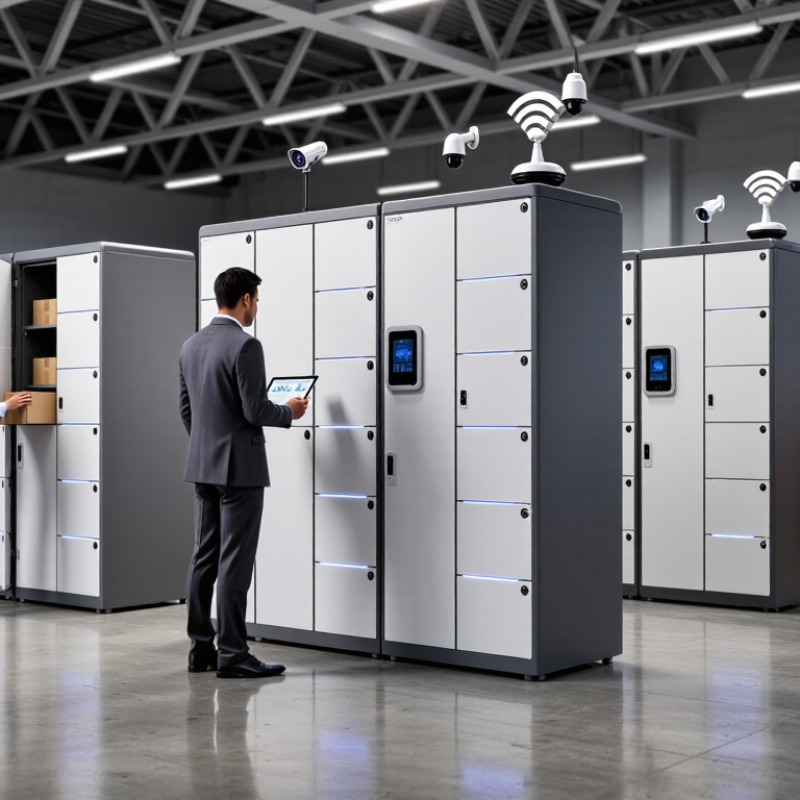
RFID locker technology is reshaping secure storage in offices, campuses, hospitals, and logistics facilities. Each compartment uses a reader, antenna, and digital identity record. Users can unlock assigned spaces with cards, tags, or approved mobile credentials. This creates a clear audit trail, especially when many people share limited storage.
Grand View Research reports that the global RFID market was valued at billions of dollars in recent years and is expected to grow strongly through 2030. MarketsandMarkets also projects steady expansion in the smart locker market, driven by automated collection and workplace digitization. These figures support wider adoption, but they do not guarantee a successful installation. Metal doors, crowded reader zones, weak network coverage, and poor tag placement can reduce accuracy. Real testing still matters more than a polished specification sheet.
Tips: Ask suppliers for reader-range tests, access logs, emergency override procedures, and integration evidence. A practical pilot should measure failed scans during busy periods. It should also test gloves, different card angles, and temporary network loss. Suppliers in China can offer flexible cabinet layouts and control systems, but buyers should verify electrical safety, data protection, warranty terms, and local compliance. RFID is useful, not flawless. A careful deployment leaves room for human review when technology misreads a tag.

Key Criteria for Choosing an RFID Locker Supplier in China
Choosing an RFID locker supplier in China requires more than comparing prices. MarketsandMarkets’ 2024 RFID Market report projects the sector to grow from about USD 15.8 billion in 2023 to USD 40.9 billion by 2032. This growth increases supplier choices, but quality varies. Ask for verified read-rate data, supported frequencies, and testing records. Confirm compatibility with EPC Gen2v2 and ISO/IEC 18000-63 standards. A supplier should also explain performance around metal doors, liquids, and densely packed items.
Integration matters. Request a live demonstration using your actual tags, locker materials, and network conditions. Check API documentation, user authentication, data encryption, firmware updates, and audit logs. The supplier should provide clear drawings, wiring details, spare-part lists, and response times for technical support. UL, CE, RoHS, or local certifications may support procurement, but certificates must match the exact locker model. A polished sample can still conceal weak software. That deserves careful testing.
Tips: Start with a small pilot and measure failed reads, opening time, power use, and recovery after network loss. Ask for a three-year maintenance estimate, not only the purchase price. Review factory inspection procedures and service experience with similar environments. The RFID Journal industry research repeatedly highlights integration and data accuracy as practical adoption barriers. Do not accept impressive percentages without test conditions. Even a minor tag-position error can disrupt daily operations.
China RFID Locker Suppliers for Global Buyers
Key technical criteria include regional frequency compatibility, regulatory compliance, tag support, read performance, security, and after-sales service. The chart compares recognized UHF RFID operating bands that suppliers should support for different export markets.
How to use this benchmark: Confirm that the RFID locker supplier can configure readers and antennas for the destination market. The frequency ranges below are regulatory reference bands, not company or brand performance claims.
References: ETSI EN 302 208 for Europe, FCC 47 CFR §15.247 for the United States, and ARIB STD-T107 for Japan.
Leading China-Based RFID Locker Supplier Categories
China-based RFID locker suppliers usually serve several practical categories. Parcel locker manufacturers build modular units for apartments, offices, and delivery centers. Employee locker suppliers focus on access control, shift changes, and audit records. Campus and healthcare suppliers often provide smaller compartments with easy cleaning surfaces. Industrial suppliers offer stronger cabinets for tools, uniforms, and shared equipment.
Buyers should also compare OEM manufacturers, software integrators, and complete project suppliers. OEM factories can adjust cabinet sizes, RFID readers, colors, and compartment layouts. Integrators connect lockers with attendance, inventory, or visitor systems. In real projects, I check antenna performance with different card positions. A reader that works only at the center can frustrate daily users. Stainless steel, ventilation, emergency access, and offline operation deserve careful inspection.
Tips: Request a sample cabinet before placing a large order. Test wet hands, crowded compartments, and repeated door use. Ask for reader range data, maintenance procedures, and software update policies. Confirm whether the supplier tests every unit before shipment. Certifications and written warranties improve purchasing confidence, but they do not replace factory inspection. Some suppliers promise highly flexible systems, yet customization may increase delivery time. That trade-off needs honest discussion.
Manufacturing, Customization, and Quality Control Capabilities
China’s capable RFID locker suppliers combine metal fabrication, electronics assembly, and software integration under one production system. Experienced manufacturers control cabinet dimensions, steel thickness, welding quality, powder coating, and door alignment. Sample lockers should be opened repeatedly, not inspected only when new. Small hinges reveal large problems.
Customization may include locker size, compartment layout, RFID frequency, display language, access permissions, and network connection. Suppliers can adapt designs for offices, campuses, hospitals, and logistics facilities.
However, customization can complicate maintenance. A unique controller or reader may create future replacement difficulties. Buyers should request wiring diagrams, interface details, and spare-part policies before approving production.
Quality control should cover incoming components, assembly, programming, and final inspection.
Factory acceptance testing can verify recognition speed, failed-card handling, emergency access, and data accuracy.
No factory is flawless. Suppliers that openly report defects and corrective actions often appear more reliable than those promising perfect output. Third-party inspections and independent sample testing remain sensible for large orders.
International Purchasing, Compliance, and After-Sales Support
China Top RFID Locker Suppliers for Global Buyers
International sourcing requires more than a competitive quotation. A 2024 Fortune Business Insights analysis valued the global RFID market at approximately USD 14.59 billion in 2023. This growth increases demand for traceable, connected storage systems. Buyers should request a complete technical file, including RFID frequency, read range, access records, materials, and electrical ratings. Ask for destination-specific compliance evidence. Requirements may include CE, FCC, UKCA, RoHS, or REACH, depending on the market.
Details matter. A locker tested in a factory may behave differently in a hospital, campus, or warehouse. Metal doors, dense packages, and nearby readers can reduce identification accuracy. Request sample testing with real items before approving mass production. Confirm encryption methods, user permissions, data retention, and software integration. A written acceptance test prevents vague promises. It also exposes gaps early.
After-sales support should be measurable. Require remote diagnostics, firmware procedures, spare-part lists, response times, and local service options. Define replacement rules for readers, locks, screens, and power modules. The IEC 62443 series highlights the importance of cybersecurity across industrial automation systems, which is relevant to connected locker networks. A purchase order is not a deployment plan. One uncomfortable lesson remains: low unit cost can hide expensive integration work. Buyers should document every assumption, even the uncertain ones.
| Evaluation Area | Buyer-Side Data Dimension | Relevant Technical or Commercial Benchmark | International Purchasing Requirement | Recommended Evidence to Request |
|---|---|---|---|---|
| RFID Architecture | High-frequency RFID option | 13.56 MHz; commonly aligned with ISO/IEC 15693 or ISO/IEC 14443 applications | Suitable for short-range user identification, controlled read zones, and card or key-fob access | Reader datasheet, supported tag types, read-distance test report, and system integration protocol |
| RFID Architecture | Ultra-high-frequency option | 860–960 MHz operating range, subject to the destination country’s radio regulations | Suitable for longer read distances and item-level identification; frequency must be configured for the import market | Frequency configuration, regional radio approval information, antenna specification, and interference test results |
| Locker Construction | Material and corrosion protection | Powder-coated steel or stainless steel; coating performance should be defined by the applicable project specification | Confirm sheet thickness, surface treatment, humidity exposure, weld quality, and packaging protection before mass production | Material declaration, coating specification, sample photographs, inspection checklist, and pre-shipment inspection report |
| Electrical Safety | Input power compatibility | Common international configurations include 100–240 V AC, 50/60 Hz, when supported by the supplied power system | Voltage, plug type, earthing, fuse protection, and local electrical requirements must match the destination market | Power-supply label, electrical schematic, safety test report, plug specification, and product manual |
| Product Compliance | Market-access documentation | Requirements vary by destination; typical reviews may include EMC, electrical safety, radio, RoHS, and chemical-substance obligations | Compliance documents must identify the exact model, applicable directives or regulations, test standards, and issuing laboratory | Declaration of conformity, accredited laboratory reports, technical file index, and component compliance declarations |
| Cybersecurity | Access-control and data protection | Secure authentication, role-based permissions, encrypted communication, audit logs, and controlled administrator access | For cloud-connected systems, define hosting location, data retention, breach response, user deletion, and integration responsibilities | API documentation, security questionnaire, network diagram, software update policy, and data-processing terms |
| Commercial Terms | International trade and shipping | Incoterms® 2020 options may include EXW, FOB, FCA, CIF, or DAP, depending on the agreed logistics model | Clarify export documentation, HS classification responsibility, freight scope, insurance, customs clearance, and delivery point | Pro forma invoice, packing list, commercial invoice template, certificate-of-origin process, and agreed Incoterm |
| Quality Control | Pre-shipment inspection coverage | Inspection should cover dimensions, appearance, door alignment, lock operation, RFID read performance, electrical safety, and packing | Use an approved inspection plan with measurable acceptance criteria before the final balance payment | Inspection checklist, sampling level, defect classification, calibration records, and corrective-action procedure |
| Customization | Engineering-change management | Model revision, firmware revision, BOM control, and sample approval should be traceable throughout production | No material, electronic, firmware, or enclosure substitution should occur without written buyer approval | Approved drawings, BOM, change-notice form, golden sample, firmware version record, and revision history |
| Packaging | Export packaging suitability | Packaging should protect against impact, moisture, abrasion, and movement during multimodal transport | For wood packaging, confirm compliance with destination-country import rules, including ISPM 15 where applicable | Packaging specification, carton and pallet dimensions, drop-test method, moisture protection plan, and shipping marks |
| Lead-Time Control | Production and delivery milestones | Milestones normally include design approval, sample approval, component procurement, assembly, inspection, and dispatch | Contractual delivery dates should define the start event, approved sample status, delay notification, and remedy process | Project schedule, production status reports, capacity statement, critical-component list, and escalation contacts |
| Warranty | Warranty scope and period | Coverage should explicitly address cabinet structure, locks, RFID readers, controllers, power supplies, displays, and software | Define warranty start date, exclusions, response time, replacement-part responsibility, and labor or travel treatment | Signed warranty terms, failure classification table, serial-number policy, and replacement-parts price list |
| After-Sales Support | Remote technical assistance | Support channels may include email, ticketing, video diagnosis, remote logs, and scheduled firmware maintenance | Specify service hours, time-zone coverage, first-response target, severity levels, and language availability | Service-level agreement, support workflow, escalation matrix, troubleshooting guide, and remote-access controls |
| After-Sales Support | Spare-parts continuity | Critical parts include locks, RFID modules, controllers, power supplies, displays, cables, and mounting hardware | Confirm recommended spare ratio, part interchangeability, storage conditions, and end-of-life notification period | Spare-parts catalog, exploded-view drawing, minimum order quantities, lead times, and discontinuation policy |
| Installation | Deployment and commissioning | Site readiness may include floor condition, power, network access, anchoring, environmental conditions, and user enrollment | Assign responsibility for unloading, positioning, anchoring, electrical work, network setup, testing, and operator training | Installation manual, site-survey form, commissioning checklist, training materials, and acceptance certificate |
| Supplier Verification | Manufacturing and export capability | Verification should cover legal entity, production location, quality system, subcontractors, export history, and references | Use independent checks and contract controls; certificates alone do not replace product-specific verification | Business registration details, factory audit report, quality certificates, customer references, and recent shipment records |