

What Are the Top Types of Crusher Wear Parts in 2026?
Crusher Wear Parts may look like simple consumables, but their selection affects uptime, product size, and operating cost. The scale is substantial. The U.S. Geological Survey’s Mineral Commodity Summaries 2025 estimates that U.S. crushed-stone production reached about 1.5 billion metric tons in 2024. Every tonne passes through equipment whose liners, mantles, and blow bars face repeated impact and abrasion.
Barry Wills, mineral-processing author and editor, provides a useful technical lens: match equipment and process choices to the ore and operating conditions. Applied to wear parts, that means considering feed hardness, abrasiveness, moisture, and crusher design—not just purchase price. A low-cost liner can wear out quickly. A tougher alloy may last longer, but only where its properties suit the application.
This guide examines the leading types expected to matter in 2026: manganese-steel jaw and cone liners, alloy-steel components, martensitic blow bars, and ceramic-composite options. Their performance is not universal. A coarse, abrasive feed can demand a different solution from a softer, impact-heavy application. Real wear patterns matter.
Look for the details.
Manufacturer specifications and documented operating results can help buyers compare service life, change intervals, and cost per tonne. One caution: reported wear-life gains are difficult to compare unless feed conditions and operating hours are similar. The right Crusher Wear Parts choice begins with evidence from the actual circuit, then balances durability, safety, and consistent output.
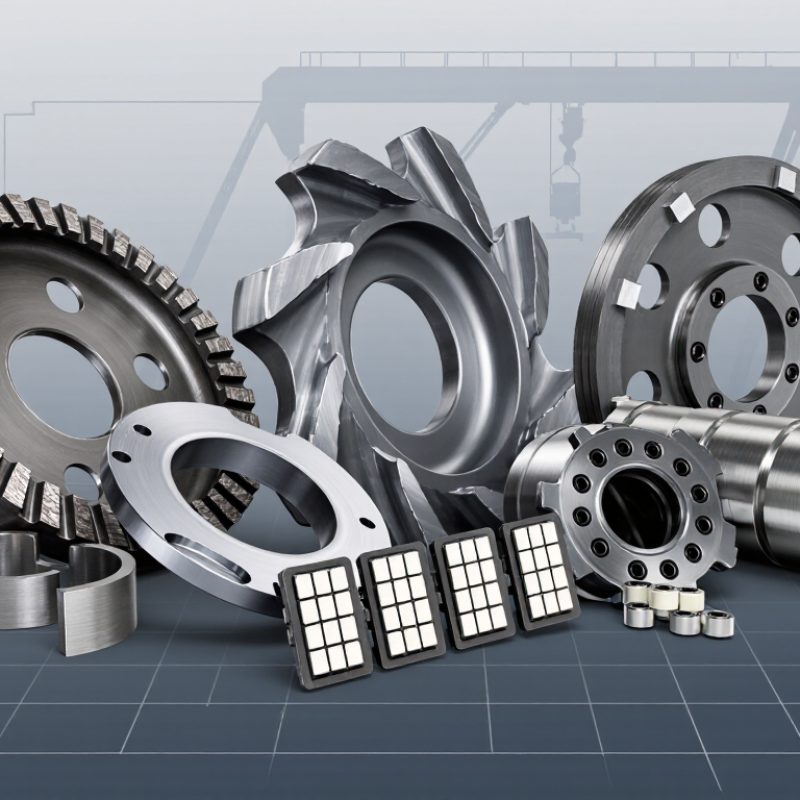
What Crusher Wear Parts Do in Crushing Systems
What Are the Top Types of Crusher Wear Parts in 2026?
What Crusher Wear Parts Do in Crushing Systems
Crusher wear parts are the working surfaces that contact and break rock. Jaw plates grip material in primary crushers, while mantles and concaves compress it in cone crushers. Blow bars strike material in impact crushers. These components also protect the machine’s main structure from repeated impact and abrasion. Their shape helps control how material moves through the chamber and affects the size and consistency of the output. That matters.
Wear is not always even. Feed size, rock hardness, moisture, and operating settings can change where abrasion concentrates. A worn profile may reduce throughput or produce less consistent material before a part looks completely spent. Replacing parts too early wastes usable material; waiting too long can strain other components. The right inspection interval depends on actual site conditions.
Tips: Check wear patterns during planned inspections, not only by calendar dates. Compare measurements across the part, and record changes over time. Uneven wear can point to uneven feeding or a setting that needs review. Small changes count.
Match replacement parts to the crusher model, feed material, and target product size. Material choice matters, but so does fit and installation. Follow the equipment maker’s specifications, and have trained personnel check clearances after replacement. Even a careful inspection can miss something; keep records and revise the maintenance plan when field results disagree with expectations.
What Are the Top Types of Crusher Wear Parts in 2026? — What Crusher Wear Parts Do in Crushing Systems
| Wear Part | Typical Crusher | What It Does | Common Material Options | Typical Wear or Replacement Signs |
|---|---|---|---|---|
| Jaw dies (jaw plates) | Jaw crusher | Form the fixed and moving crushing surfaces; compress feed material as the jaw closes. | Manganese steel is common; alloy selection depends on feed and operating conditions. | Reduced tooth profile, uneven wear, lower throughput, or a product size that becomes harder to control. |
| Cheek plates | Jaw crusher | Protect the side walls of the crushing chamber from contact with moving rock. | Wear-resistant steel; manganese steel is used in some designs. | Visible thinning, cracking, or wear that exposes the crusher frame. |
| Mantle | Cone crusher | Covers the moving head and works with the concave to compress and reduce rock. | Manganese steel is commonly used; grade and profile vary with the application. | Worn or uneven crushing profile, reduced capacity, or changes in product gradation. |
| Concave (bowl liner) | Cone crusher | Lines the stationary bowl and provides the opposing surface to the mantle. | Manganese steel is common, with selection guided by feed characteristics and crusher design. | Uneven chamber wear, a changed closed-side setting, or declining crushing performance. |
| Blow bars | Horizontal-shaft impact crusher | Strike incoming material and accelerate it against the impact surfaces to break it. | Options include manganese steel, martensitic steel, and high-chrome iron; the best choice depends on material and impact conditions. | Rounded or heavily worn striking edges, cracking, or reduced impact-crushing efficiency. |
| Impact aprons and breaker plates | Impact crusher | Provide impact surfaces that receive and redirect material thrown by the rotor. | Wear-resistant cast steel or iron; material choice depends on the machine and the abrasive or impact conditions. | Deep wear grooves, damaged surfaces, or difficulty maintaining the intended product size. |
| VSI rotor tips | Vertical-shaft impact crusher | Guide and accelerate material from the rotor so it impacts other particles or the crushing chamber. | Wear-resistant metal tips, often with tungsten-carbide protection in high-wear areas. | Tip shortening, uneven wear, damage to protective inserts, or an imbalance between rotor positions. |
| VSI distributor plate | Vertical-shaft impact crusher | Distributes incoming feed into the rotor passages for more even loading. | Wear-resistant steel or cast material selected for the rotor design and feed abrasiveness. | Uneven erosion, damaged edges, or irregular feed distribution into the rotor. |
Note: Wear life and material suitability depend on feed hardness, abrasiveness, moisture, crusher settings, and operating practice. Follow the equipment maker’s service instructions when inspecting or replacing parts.