

What Are the Top Die Prober Types in 2026?

Choosing a Die Prober in 2026 depends on more than speed. The right system must match the device, test method, and production environment. A singulated-die setup may suit engineering checks, while wafer-level probing can support repeatable testing before dicing. Manual, semi-automatic, and fully automatic platforms each serve different workloads. No single type fits every lab.

This guide compares common Die Prober types and the trade-offs that matter on the floor. Look closely at positioning accuracy, chuck temperature range, probe-card compatibility, die dimensions, and automation options. A screen showing stable alignment is useful; so is a clear record of contact repeatability across multiple sites. Small details count. Throughput figures also need context, since handling time and changeovers can affect real output. Manufacturer specifications provide a starting point, not a guarantee of performance in a particular process.

The following sections outline where each system tends to fit, what capabilities to verify, and which questions to ask suppliers. Application requirements should guide the comparison, supported by sample testing and documented results. Some specifications are difficult to compare directly. That is worth admitting. A setup that excels in a high-volume environment may be excessive for a research lab, while a compact bench system may struggle with demanding production targets. By weighing practical constraints alongside stated capabilities, readers can identify a prober type that fits their work—not just the brochure.
What Are the Top Die Prober Types in 2026?

How Die Probers Test Individual Semiconductor Dies

What Are the Top Die Prober Types in 2026?

A die prober checks individual semiconductor dies while they remain on a wafer. A probe card lowers tiny needles onto metal pads, creating electrical paths to test equipment. The system applies signals, measures responses, and records each die’s results. Good dies can be mapped for later processing; weak ones are flagged. It is precise work. A misplaced contact can distort a reading.

Manual and semi-automatic probers suit engineering checks and smaller test runs, where an operator can adjust alignment or inspect unusual results. Fully automatic systems handle higher wafer volumes with automated loading, alignment, contact, and data logging. Some setups add temperature control or specialized electrical measurements. Those options matter when a die must work under heat or at high frequencies. But more automation is not always better; setup complexity can become its own source of error.

Industry figures show why wafer-level testing matters, though they do not measure die-prober demand directly. WSTS reported global semiconductor sales of $627.6 billion in 2024. SEMI’s 2024 year-end equipment report recorded $117.1 billion in worldwide semiconductor equipment sales. These figures describe a growing production ecosystem, not a guaranteed increase in every test segment. In practice, engineers still balance throughput against contact accuracy, pad wear, and repeatability. A clean test map helps, but it never tells the whole story.

Key Features Used to Classify Die Probers

In 2026, die probers are best classified by how they handle the wafer, control the probe, and fit into a test line. Manual systems suit engineering labs and low-volume checks; an operator aligns the die under a microscope and lowers the probe card with care. They offer flexibility, but results can depend heavily on operator technique. Semi-automatic systems motorize positioning while keeping some setup tasks in human hands. Fully automatic models load wafers, map die locations, and run repeated tests with less intervention. That can improve throughput. It does not guarantee better data.

Probe motion is another useful distinction. Some systems prioritize fine positioning for small contact pads, while others emphasize speed across many die sites. Look at stage travel, alignment accuracy, contact force control, and supported wafer diameter. Thermal capability matters too: a heated chuck can reveal failures that appear only at elevated temperatures. Test integration also separates machines. A prober may work with external electrical test equipment, or include more coordinated control and data handling. Check how it records failed die and whether its software exports results in a usable format. Specifications can look tidy on paper; real wafers may bow, and probe tips wear. Those details complicate comparisons. A practical choice depends on die size, pad layout, required temperature range, and expected test volume—not on automation level alone.

The Main Types of Die Probers in 2026

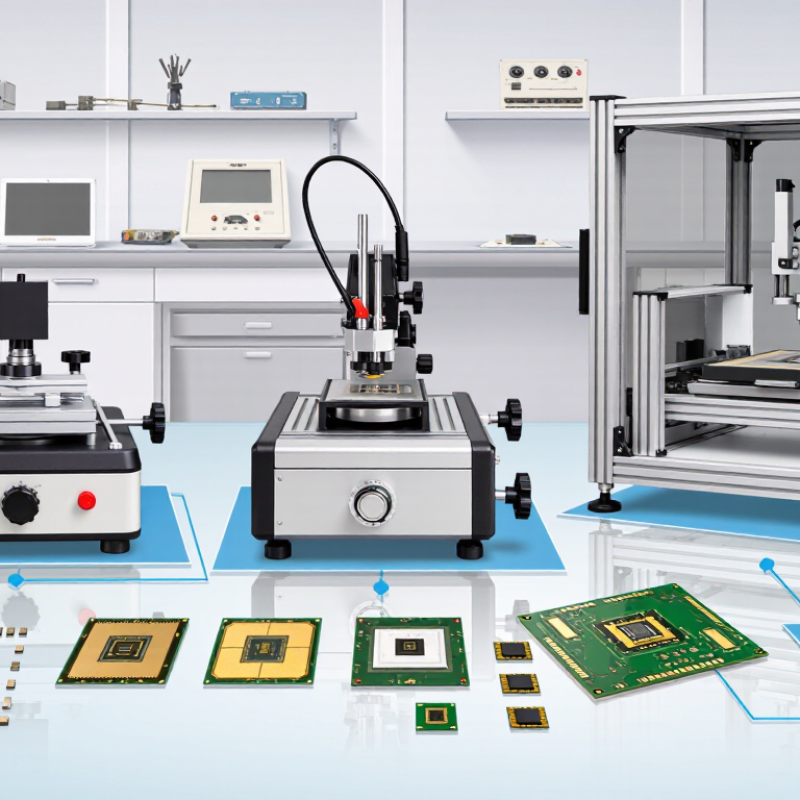
Manual die probers remain useful for failure analysis, device characterization, and small engineering lots. An operator places each die, aligns its pads under a microscope, and controls contact with the probe needles. Small lots matter. These systems offer flexibility, but operator skill and repeated positioning can limit consistency.

Semi-automatic probers add motorized stages and controlled test routines, while an operator still handles some loading or alignment. They suit laboratories and pilot lines that need repeatable measurements without full production automation.

Fully automatic die probers combine automated handling, alignment, electrical testing, and data logging. They fit higher-volume workflows, where stable contact force and quick changeovers matter. Optical inspection may support alignment or surface checks, but it is not a separate automation class.

Still, this neat division is imperfect: actual capabilities overlap, and a fast platform can disappoint if its test recipe or handling process is poorly tuned.

SEMI’s June 2025 equipment forecast projected global semiconductor manufacturing equipment sales of $138.1 billion in 2026. That figure covers the wider equipment market, not die probers alone; it signals investment context, not a die-prober market estimate.

For selection, compare die size, pad layout, contact method, throughput, and the measurements required. A careful trial on representative devices is often more revealing than a headline speed figure.

Typical Applications for Each Die Prober Type

What Are the Top Die Prober Types in 2026?

Typical Applications for Each Die Prober Type

Manual die probers suit failure analysis, device characterization, and small engineering lots. Operators position each die under a microscope and adjust the probe needles by hand. This hands-on control helps when pads are tiny or test points need careful inspection. Best for small lots. Setup and alignment can take time, and results may vary between operators.

Semi-automatic systems are common in research labs and pilot production. They automate wafer or die movement while an operator handles loading, alignment checks, and test setup. This balance is useful when engineers change devices often but still need repeatable positioning. They can also support temperature testing with a heated or cooled chuck. Contact still matters. A poor probe mark or unstable needle can distort measurements, even on a well-equipped system.

Fully automatic die probers fit higher-volume testing, where repeatable handling and throughput are priorities. They can index multiple dies, apply stored test recipes, and record pass or fail results for process review. Production teams may use them for known-good-die screening before packaging. Thermal options help characterize performance across specified temperature ranges. Not always. Automation does not remove the need to verify contact resistance, alignment, and test limits. In practice, a slower setup may be more suitable when devices are unusually fragile or test conditions change frequently.

How to Choose a Die Prober for a Specific Testing Need

Choosing a die prober starts with the device and test conditions, not the headline throughput. SEMI’s December 2024 forecast put global semiconductor test-equipment sales at about $8.8 billion for 2024, rising to $10.5 billion in 2026. That growth signals expanding test demand, but it does not identify the right tool for a particular lab. Small lots need flexibility. A manual or semi-automatic prober can suit engineering samples, frequent setup changes, and limited budgets. For high-volume production, an automated system can reduce handling time and keep alignment more consistent.

Match the configuration to the measurements. For hot or cold testing, check chuck temperature range, stability, and time to reach setpoint. For fine-pitch contacts, inspect alignment accuracy, camera resolution, probe-card compatibility, and contact-force control. RF or high-speed devices may need low-noise connections and carefully controlled signal paths. Ask suppliers for repeatability data using a representative die and test recipe, not only a best-case specification. A tiny alignment error can turn a good die into a false failure.

Throughput matters, but so does the cost of changing a setup. Consider die size, wafer or tray handling, test-cell interfaces, and operator skill. A fully automated system can be excessive for prototypes; a manual unit can become a bottleneck on repetitive lots. There is no perfect setup. I would also leave room for doubt: published accuracy figures may not predict performance with your probe card, thermal profile, or fragile die. Test those conditions before committing.

Article Source:

Shopping Cart
Scroll to Top

Search for...

The Duravant family of operating companies serve the food processing, packaging and material handling segments.