
What Are the Top Industrial Filling Machine Types in 2026?

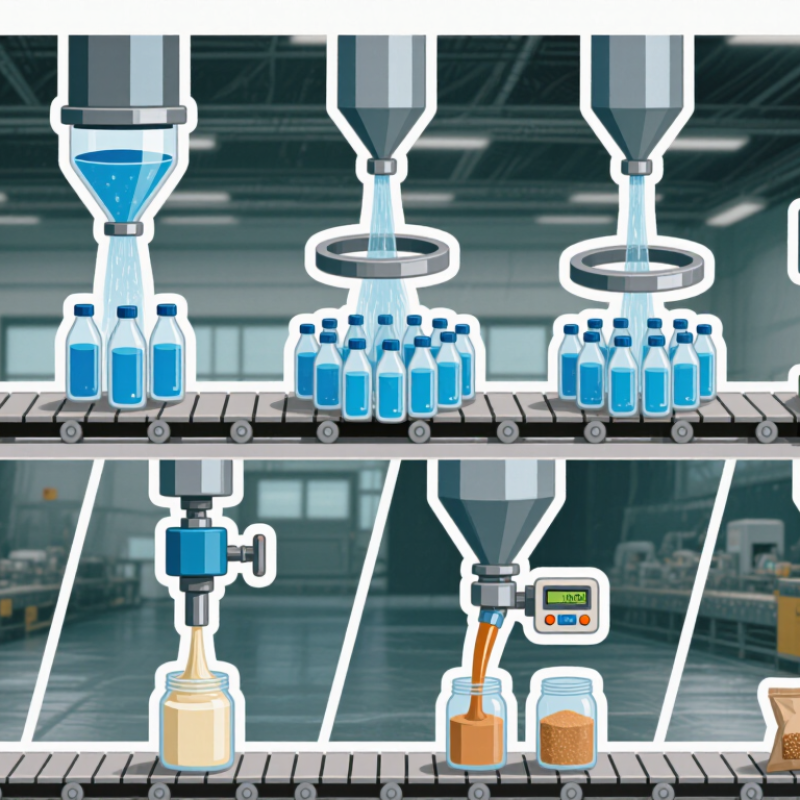
Choosing a filling system is not just a matter of matching a machine to a container. An Industrial Filling Machine must handle the product’s flow, target volume, package shape, and required production speed. In 2026, common options include piston, gravity, overflow, pump, vacuum, net-weight, and auger fillers. Each uses a different method, and the differences matter on the production floor.

Thin liquids, such as water or cleaning solutions, may suit gravity or overflow systems. Thick sauces and pastes often need piston or pump fillers. Powders and granules call for auger or net-weight designs, depending on the material and accuracy requirements. A few milliliters of variation can become noticeable across a long run. Still, product temperature, viscosity, and foaming behavior can change how a machine performs. A brochure rarely captures every variable.

Buyers should compare contact materials, changeover time, cleaning access, controls, and container compatibility alongside rated output. Ask suppliers for a product trial using representative containers and actual operating conditions. Check how they define accuracy; stated figures may rely on specific test setups. In 2026, automation and data monitoring are increasingly relevant, but added features do not guarantee a better fit. The sections ahead examine the main filler types, their practical strengths, and where each may fall short. There is no universal winner. A careful test can expose assumptions that look sound on paper.
What Are the Top Industrial Filling Machine Types in 2026?

How Industrial Filling Machines Measure and Dispense Products

Industrial filling machines measure products in different ways. Timed-flow systems open a valve for a set period, so pressure changes can shift the dose. Volumetric piston fillers move a defined chamber volume, making them useful for thicker products. Flow-meter fillers count liquid passing through a sensor.

Check the product’s viscosity and temperature. They matter.

For powders, auger fillers meter material by screw rotation, while net-weight systems fill over a scale and stop at a target mass. NIST Handbook 44 specifies test requirements and tolerances for commercial weighing equipment; it does not set one universal accuracy figure for every filler. Calibration must match the device and operating conditions.

PMMI’s 2024 State of the Industry report estimated U.S. packaging-machinery shipments at about $10.9 billion in 2023, reflecting the scale of investment in packaging equipment—not a guarantee of fill accuracy. In practice, operators should compare fill samples across a production run, record drift, and recheck after product or temperature changes.

A clean calibration log can still miss a sticky nozzle. That part is easy to overlook.

Which Filling Machine Types Lead Industrial Use in 2026

In 2026, piston, volumetric, and net-weight filling machines remain common choices across industrial production. Each handles a different balance of speed, accuracy, and product behavior. Piston fillers suit thick liquids such as sauces and creams. Their measured strokes can handle products that do not flow easily, though sticky residue may slow cleaning between runs.

Volumetric systems dispense a set volume per cycle, making them practical for repeatable runs with free-flowing liquids. Gravity and overflow fillers are often used for thin beverages and similar products. Overflow designs help bottles look consistently filled, even when container capacity varies slightly. Net-weight machines measure each dose by weight, which can be valuable for costly ingredients or products with changing density. They may run more slowly, depending on the setup.

It depends.

Rotary machines lead where output volume matters: multiple containers are filled as a rotating table moves them through stations. Inline machines take up less complex floor space and can suit smaller or changing production runs. The right choice also depends on foam, particulates, container shape, and cleaning requirements. A small test with the actual product can reveal splashing, slow cut-off, or trapped material. Specifications alone can miss these details.

Not always.

How Product Properties Shape Filling Technology

Product properties, not machine labels, should drive filler selection. A water-like liquid may run well through gravity or overflow systems. A thick sauce often needs piston filling, especially when it contains small, soft pieces. Foaming products call for controlled flow and bottom-up filling. Tiny differences matter: a cold syrup can pour slowly, while a warm one may foam more. Test it.

PMMI’s 2023 State of the Industry report valued U.S. packaging machinery shipments at about $10.2 billion in 2022. That figure covers packaging machinery broadly, not filling equipment alone. Still, it shows the scale of investment behind production decisions. For a specific product, trial runs reveal what a brochure cannot: splashing, drips, settling particles, or inconsistent fill levels. I would test at the actual operating temperature, not just room temperature. That detail is easy to miss.

Shear-sensitive creams may lose texture under aggressive pumping. Peristaltic systems can limit product contact with machine parts, while piston fillers handle heavier products well. Neither is automatically right. Cleaning time, changeovers, and nozzle access also affect daily output. A perfect fill rate on paper means little if operators struggle to clean the hopper. I would not overtrust a single viscosity reading. Test the real product, through the real line.

Top Industrial Filling Machine Types in 2026

How product properties shape filling technology selection

How to read: This qualitative compatibility guide rates each technology from 0 (not intended) to 5 (strong fit). Gravity and overflow fillers suit free-flowing liquids; piston fillers handle thicker products and some particulates; peristaltic fillers are suited to controlled liquid dosing; auger fillers are designed for powders. Actual performance depends on product formulation, container, nozzle, and machine configuration.

Where Different Filling Machine Types Are Used

What Are the Top Industrial Filling Machine Types in 2026?

Where Different Filling Machine Types Are Used

A filling machine should match the product, container, and production pace. Thin liquids, thick sauces, and dry powders behave differently at the nozzle. PMMI’s 2024 State of the Industry report valued U.S. packaging machinery shipments at $10.9 billion in 2023. That figure covers packaging machinery overall, not filling machines alone, but it shows the scale of equipment investment.

Gravity fillers suit free-flowing liquids such as water or light cleaning solutions. They can fill bottles gently, with fewer moving parts. Overflow fillers are common when a consistent visible fill line matters, especially in clear containers. For viscous products, piston fillers push measured portions of sauces, lotions, or pastes into jars. They need careful cleaning. Residue can hide in valves and seals.

Auger fillers meter powders into tubs or bags, while net-weight fillers suit products where accurate mass matters more than a fixed volume. Rotary systems fit high-output beverage lines, but they need enough floor space and a steady supply of containers. Real plants are less tidy than product charts suggest. A sauce may thicken during a shift, changing fill accuracy. PMMI’s report is useful context, but site trials remain essential before selecting equipment.

What to Consider When Choosing a Filling Machine in 2026

Choosing an industrial filling machine in 2026 starts with the product, not the advertised speed. Is the liquid thin like water, or thick like syrup? Gravity fillers suit free-flowing liquids; piston systems handle heavier products. Foaming, particulates, and temperature can change the result. Test with your actual product and containers. A clean-looking sample run is not enough.

Capacity matters, but so does changeover time. PMMI’s 2024 State of the Industry report put U.S. packaging machinery shipments at approximately $10.9 billion in 2023, reflecting continued investment across the sector. Grand View Research valued the global filling-machines market at $7.71 billion in 2022 and projected a 4.8% compound annual growth rate through 2030. These figures signal demand, not a guarantee that a faster line will suit your operation. Check fill accuracy, reject rates, cleaning steps, operator access, and compatibility with existing conveyors.

Ask suppliers to demonstrate several container sizes and your slowest, thickest product. Measure changeover with the people who will actually perform it. Review spare-part availability, maintenance access, utility needs, and controls integration. Small details matter. A machine that fits the floor plan may still create awkward cleaning or bottlenecks downstream. One trade-off is easy to underestimate: automation can reduce repetitive work, yet add setup and maintenance demands. Record those demands before comparing purchase prices.

What Are the Top Industrial Filling Machine Types in 2026? — What to Consider When Choosing a Filling Machine in 2026
Filling Machine Type How It Works Typical Product Fit Key Advantages Limitations to Consider Choosing Factors for 2026
Gravity Filler Product flows from a supply tank into containers under gravity, usually through timed or level-controlled valves. Free-flowing, low-viscosity liquids such as water, some beverages, and non-foaming solutions. Relatively simple operation and a practical option for products that flow easily. Less suitable for thick, particulate, or highly foaming products; fill performance depends on consistent product flow. Check product viscosity, foaming behavior, container opening, target fill level, and required changeover flexibility.
Overflow Filler A nozzle fills each container to a set level; excess product returns to the supply system. Thin liquids in containers where a consistent visible fill height is important. Can provide a uniform-looking fill level across containers with different internal capacities. May generate foam with some products and is generally not the best fit for viscous liquids or products with large particles. Evaluate container shape and neck finish, foam control, product return design, and cleaning requirements.
Piston Filler A piston draws a measured volume into a cylinder and dispenses it into the container. Viscous products such as sauces, creams, gels, pastes, and some products containing particulates. Handles thicker products well and delivers a measured volume per stroke. Product-contact components may need disassembly or specialized cleaning; product texture and particle size can affect configuration. Confirm viscosity range, particle size, piston and valve design, clean-in-place or clean-out-of-place needs, and dose range.
Peristaltic Pump Filler Rotating rollers compress flexible tubing to move a controlled amount of product without product contacting the pump mechanism. Small-volume, sensitive, sterile, corrosive, or high-purity liquids, depending on tubing compatibility. Product contacts the tubing only, which can simplify product isolation and tubing replacement. Tubing is a wear item and must be compatible with the product, cleaning process, and operating conditions. Assess tubing material, replacement frequency, dose accuracy needs, sanitation approach, and chemical compatibility.
Gear or Lobe Pump Filler A positive-displacement pump moves product through the filling system at a controlled rate or volume. Viscous liquids and products requiring controlled transfer, subject to pump and product compatibility. Can support steady, repeatable delivery and can be integrated into automated filling lines. Shear sensitivity, particulates, seals, and cleaning access must be considered; pump choice depends on the product. Review shear sensitivity, viscosity, particle handling, seal materials, cleanability, and whether the pump is suitable for the product.
Net-Weight Filler Load cells measure the weight of product dispensed into each container, with the fill stopping at the target weight. Products sold or controlled by mass, including liquids, powders, and some bulk or variable-density products. Measures product mass directly and can help compensate for density variation when configured correctly. Container handling, vibration, settling time, and environmental conditions can affect weighing performance and throughput. Specify target weight and tolerance, container tare handling, line speed, scale environment, and applicable measurement rules.
Auger Filler A rotating screw meters powder or granules from a hopper into a container. Powders and fine granules, including ingredients that can be dispensed by controlled screw rotation. Provides controlled dosing for many dry products and can be integrated with dust-control equipment. Bulk density, flowability, particle size, and dustiness can affect dose consistency and equipment selection. Test the actual material; consider dust extraction, hopper agitation, product bridging, dose range, and cleaning access.
Volumetric Cup Filler Adjustable cups collect a preset volume of product and discharge it into containers. Free-flowing granules, seeds, and other dry products with reasonably consistent bulk characteristics. Mechanically straightforward and suitable for products that fill cups consistently. It meters volume rather than mass, so changes in bulk density or product flow can change the weight delivered. Check bulk-density variation, particle shape, target weight tolerance, product flow, and ease of cup adjustment.

Selection note: Compare machines using the actual product, container, target dose, required line speed, sanitation procedure, and changeover frequency. Filling accuracy and throughput depend on the specific product and equipment configuration.

Shopping Cart
Scroll to Top

Search for...

The Duravant family of operating companies serve the food processing, packaging and material handling segments.