2026 Top Meat Processing Equipment Trends You Should Know?
As we move toward 2026, the meat processing equipment industry is set to undergo significant changes. The global meat processing equipment market is projected to reach $24 billion, according to recent industry reports. Technological advancements play a vital role in this growth, influencing efficiency and production quality. Automation and digitalization drive many of these trends.
Consumer demand for high-quality, traceable meat is reshaping equipment needs. Meat processing plants are integrating advanced cooking and packaging technologies to ensure freshness and safety. However, the industry faces challenges, such as rising operational costs and the need for sustainable practices. These pressures force companies to rethink their strategies and equipment choices.
As businesses navigate these shifts, staying informed about the latest meat processing equipment trends becomes essential. Companies must adapt to new technologies while addressing environmental concerns. Balancing innovation with sustainability presents a dilemma that requires careful consideration and reflection. Understanding these dynamics is crucial for navigating the future of meat processing effectively.

Innovative Automation Technologies in Meat Processing Equipment for 2026
In 2026, innovative automation technologies will reshape meat processing equipment. Key trends include robotics, AI integration, and smart sensors. According to a recent industry report, the global meat processing equipment market is projected to reach $18 billion by 2026. Automation could increase efficiency by up to 30%, reducing labor costs.
Robotic systems are becoming more common in meat processing plants. These systems can handle heavy lifting and repetitive tasks. They reduce the risk of human injury and ensure consistent quality. However, reliance on robots raises concerns about job displacement. There are still challenges to overcome regarding maintenance and integration with existing systems.
AI technologies are also making waves in meat processing. Smart machines can analyze data from the production line, leading to optimized operations. They predict equipment failures before they happen. This predictive maintenance approach can save costs. Yet, companies must invest in training for workers to work alongside these technologies. Balancing human skills and automation remains a critical issue. These advancements demand reflection on their broader implications for the workforce and industry.
Sustainability Trends Driving Meat Equipment Design and Production
In recent years, sustainability trends have emerged as a key driver in meat processing equipment design and production. A report by Global Meat Insights indicates that 63% of meat processing companies are prioritizing eco-friendly practices. This shift not only minimizes waste but also improves energy efficiency. Companies are now investing in equipment that reduces water usage and enhances energy conservation.
With new technologies, organizations can incorporate advanced features like solar power systems and biodegradable materials in their operations. These innovations help reduce carbon footprints significantly. However, some businesses struggle with the transition due to high initial costs. This highlights a need for careful planning and assessment of long-term benefits versus upfront investments.
**Tip:** Consider conducting a cost-benefit analysis before making equipment upgrades. This can clarify potential savings over time.
Another challenge is the adaptation to changing regulations, which often emphasize sustainability. Many companies face difficulties in meeting these new standards. It’s crucial to foster a culture of continuous learning and adaptation in the workplace. Employee training can facilitate the effective use of sustainable practices.
**Tip:** Regularly update your team on best practices. Knowledge-sharing can promote innovative solutions and drive sustainable growth.
2026 Top Meat Processing Equipment Trends
The Impact of AI and Machine Learning on Meat Processing Efficiency
Artificial Intelligence (AI) and machine learning are transforming meat processing. These technologies enhance efficiency and accuracy in various production stages. For example, AI can analyze data from previous processing batches to optimize new production runs. This leads to reduced waste and improved yield.
However, integrating AI isn’t without challenges. Many facilities face technical hurdles when implementing these systems. Staff training is crucial for maximizing the benefits. If workers aren’t on board, the technology may not reach its full potential. There’s also a concern about reliance on automated systems. Over-dependence can create vulnerabilities if systems fail.
Maintaining quality while adopting new technologies is essential. AI can help in monitoring meat quality in real time. Yet, it cannot replace the human touch entirely. Quality inspection still requires experienced personnel. Balancing technology and human skill ensures better outcomes for the industry overall. Meat processors must navigate these complexities thoughtfully.
Emerging Food Safety Standards and Their Influence on Equipment Innovation
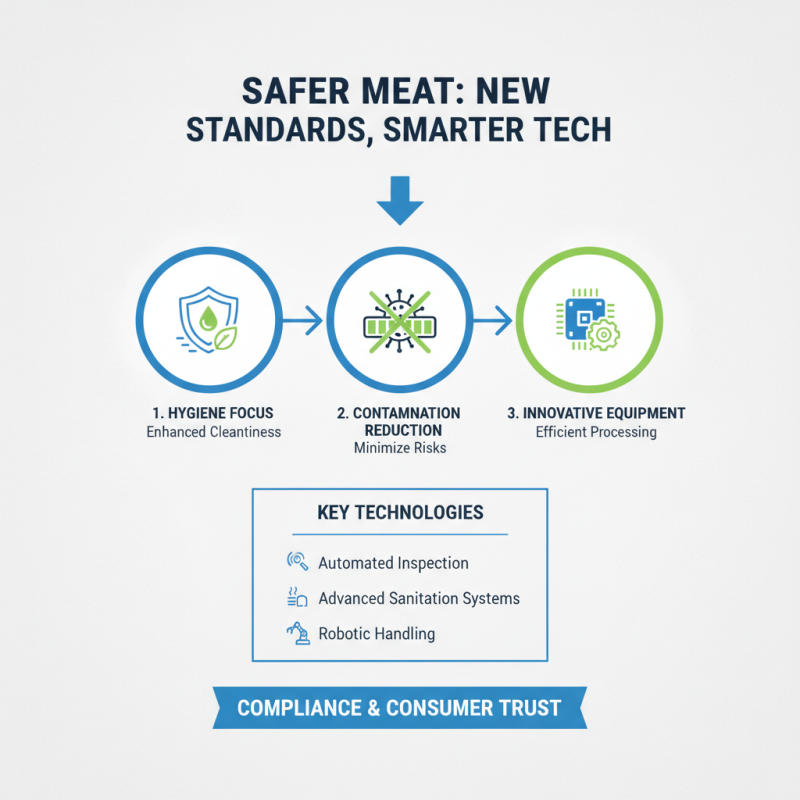
Emerging food safety standards are reshaping the landscape of meat processing equipment. These standards aim to enhance food hygiene and minimize contamination risks. As a result, manufacturers are innovating more efficient systems. New technologies are crucial in ensuring compliance with these evolving regulations.
Intelligent sensors and monitoring systems are being integrated into equipment. These tools track temperature and humidity, ensuring optimal conditions. They provide real-time data to staff, allowing immediate adjustments. However, understanding how to use this technology efficiently poses challenges. Many facilities struggle to train employees adequately.
Moreover, automation is becoming increasingly important in meat processing. Automated systems reduce human contact, addressing safety concerns. Yet, the shift towards automation raises questions about job displacement and skills gaps. Equipment design must also accommodate future upgrades, ensuring longevity and adaptability. Balancing innovation with practicality remains a complex issue.
Market Growth Projections for Meat Processing Equipment Through 2026
The meat processing equipment market is projected to experience significant growth through 2026. According to industry reports, the market is expected to reach a valuation of approximately $18 billion by the end of that year. This expected increase highlights the ongoing demand for efficiency and innovation within the industry. The rise in meat consumption globally plays a key role in this expansion.
Technological advancements are driving this trend. Automated processing machines, for instance, improve productivity while reducing labor costs. A report by a leading research firm mentions that automation could increase processing rates by up to 30%. However, as companies embrace these innovations, there are concerns about job displacement and training needs for workers. Balancing efficiency with workforce stability remains a crucial challenge.
Sustainability is another driving force. Increased consumer demand for ethically sourced products pushes companies to adopt eco-friendly practices. Biomass and water recycling systems are gaining traction. However, integrating such technologies often requires substantial investment, which can be a hurdle for smaller businesses. The industry's challenge lies in finding sustainable solutions that are also cost-effective.