

Best Steel Light Pole Manufacturers in China?
Urban growth is raising the stakes for dependable road and public-space lighting. UN DESA’s World Urbanization Prospects: The 2018 Revision projects that 68% of the world’s population will live in urban areas by 2050. That projection does not guarantee a construction boom in every market. It does, however, underline why durable lighting infrastructure matters.
A steel light pole must do more than hold a luminaire. Wall thickness, steel grade, galvanizing quality, weld consistency, base-plate design, and wind-load calculations all affect service life and safety. The U.S. Department of Energy’s 2016 report on LED street-lighting adoption discusses the energy-saving potential of LED conversions. Yet efficient lamps cannot compensate for poor pole fabrication. The support structure still matters.
Details matter.
For buyers comparing manufacturers in China, a supplier’s catalogue is only a starting point. Ask for material certificates, coating specifications, dimensional inspection records, and project references that match your climate and installation requirements. Check how the manufacturer handles drawings, packaging, export documentation, and replacement parts. These checks are practical, not glamorous. I have to admit, comparing vendors from a distance can still leave gaps; photographs rarely reveal weld quality or coating thickness. This guide will examine manufacturers through verifiable capabilities rather than unsupported rankings, helping readers judge which steel light pole suppliers merit closer review.
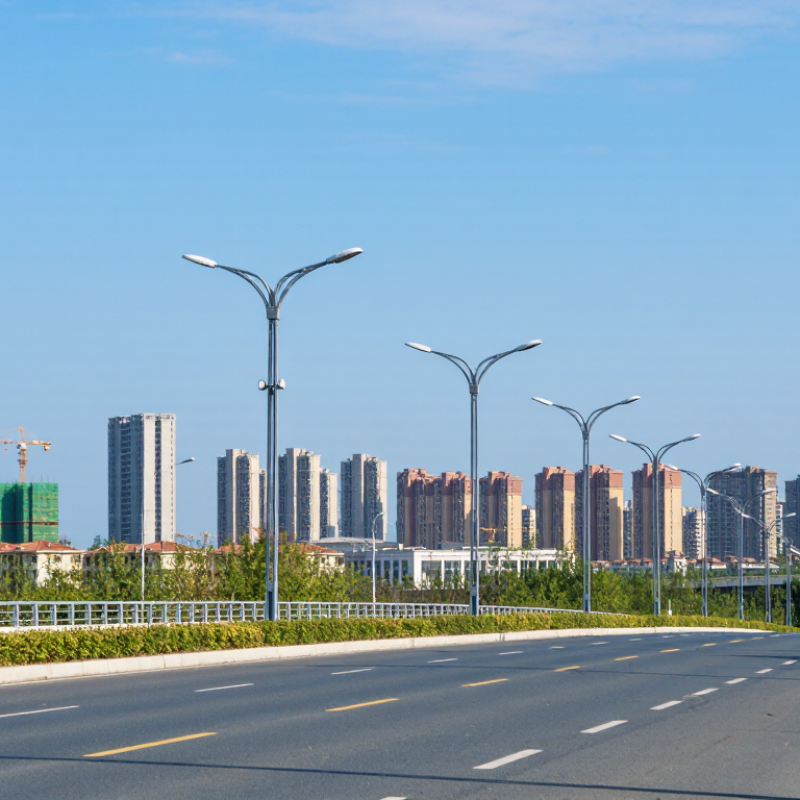
Steel Light Pole Manufacturing in China: Industry Overview
China’s steel light pole industry draws on a vast domestic steelmaking base. The World Steel Association reported that China produced about 1,005 million tonnes of crude steel in 2024. This figure describes raw steel production, not light pole output. Still, it helps explain the availability of plate, fabrication capacity, and industrial supply networks.
Manufacturing typically starts with steel plate cutting and rolling into tapered or straight shafts. Weld seams, pole doors, base plates, and mounting arms need close dimensional checks. Hot-dip galvanizing helps protect exposed steel from corrosion, while coatings add another layer of defense. Small details matter. A poorly aligned anchor bolt pattern can complicate installation, even when the pole itself looks sound.
Factories may serve road, public-space, and industrial lighting projects, with designs adjusted for height, wind exposure, and luminaire loads. Buyers should review material certificates, weld inspection records, coating thickness, and packaging plans—not just quoted prices. China’s steel scale is an advantage, but it does not guarantee consistent pole quality. That distinction is easy to overlook. I would also be cautious about treating one factory sample as proof of every production run; batch control deserves its own scrutiny.
Best Steel Light Pole Manufacturers in China? - Steel Light Pole Manufacturing in China: Industry Overview
| Dimension | Industry overview | Practical considerations |
|---|---|---|
| Product types | Common products include roadway, highway, area-lighting, high-mast, and decorative poles. Designs may be single-arm, multi-arm, or designed for a specified luminaire arrangement. | Confirm the application, luminaire configuration, mounting height, and project drawings before comparing quotations. |
| Pole construction | Steel poles are commonly made from formed steel plate with longitudinal welding. Tapered polygonal and circular shafts are both used; base plates, access openings, and brackets are specified to suit the design. | Request drawings that show shaft geometry, wall thickness, weld details, base-plate dimensions, and connection locations. |
| Steel materials | Structural carbon and low-alloy steels are used, with grade selection depending on the design and applicable specification. Chinese standards include GB/T 700 for carbon structural steel and GB/T 1591 for high-strength low-alloy structural steel. | Specify the required grade and ask for material certificates and traceability appropriate to the project. |
| Manufacturing sequence | A typical process includes plate cutting, forming, longitudinal welding, fabrication of attachments, surface preparation, protective finishing, and final inspection. | The exact process and inspection plan vary with the pole design, coating system, and order specification. |
| Corrosion protection | Hot-dip galvanizing is a commonly specified corrosion-protection method for outdoor steel poles. GB/T 13912 covers hot-dip galvanized coatings on fabricated iron and steel articles. | State coating requirements, inspection method, and any additional paint or duplex system in the project specification. |
| Structural design | Pole design depends on factors such as wind loading, pole height, projected area of mounted equipment, site conditions, and foundation arrangement. | Provide the design wind criteria, equipment details, and foundation interface requirements; do not select a pole based on height alone. |
| Quality checks | Project inspection may cover dimensions, material documentation, weld quality, coating condition, and fit-up of interfaces. | Agree on acceptance criteria, inspection records, and any required third-party inspection before production. |
| Customization and logistics | Pole dimensions, arm arrangements, access features, base connections, and finish can be specified for individual projects. Shipping plans depend on pole length, packaging, and destination requirements. | Confirm interface drawings, packing method, shipment dimensions, and delivery terms as part of the purchase specification. |
| Supplier comparison | A useful comparison focuses on compliance with the project specification, documented manufacturing controls, material and coating records, and the supplier’s ability to meet delivery requirements. | Compare like-for-like technical offers rather than relying only on unit price or general product descriptions. |
Note: Requirements vary by project and destination. Confirm applicable standards and design criteria in the project documents.