What Is an Aluminum Spacer Used For?
An Aluminum Spacer is a narrow component placed between panes of glass in many insulated glazing units. It helps maintain an even gap and holds the panes apart. That gap matters. It can contain air or insulating gas, depending on the unit’s design. Along the spacer, desiccant helps absorb moisture trapped inside the sealed space.
“Small changes in spacer design can affect how an entire window performs,” says Daniel Reed, a fictional composite fenestration specialist created for this introduction. This is an illustrative quotation, not a verified statement from a real industry expert. In practice, engineers and manufacturers assess spacer materials, dimensions, sealants, and edge construction together. Aluminum is strong, stable, and easy to form into precise profiles. But it also conducts heat readily, so some designs use thermal breaks or compare aluminum with less conductive materials.
Look closely at a window’s edge. The spacer is usually hidden behind the frame, yet its choices can influence heat transfer, condensation risk, and long-term seal performance. It is not the only factor. Glass type, installation quality, climate, and frame design all matter. A spacer cannot fix a poorly installed window. This guide explains what an Aluminum Spacer does, where it is used, and which trade-offs deserve attention. Some details vary by product, and that is worth checking against manufacturer specifications rather than assuming every spacer works the same way.
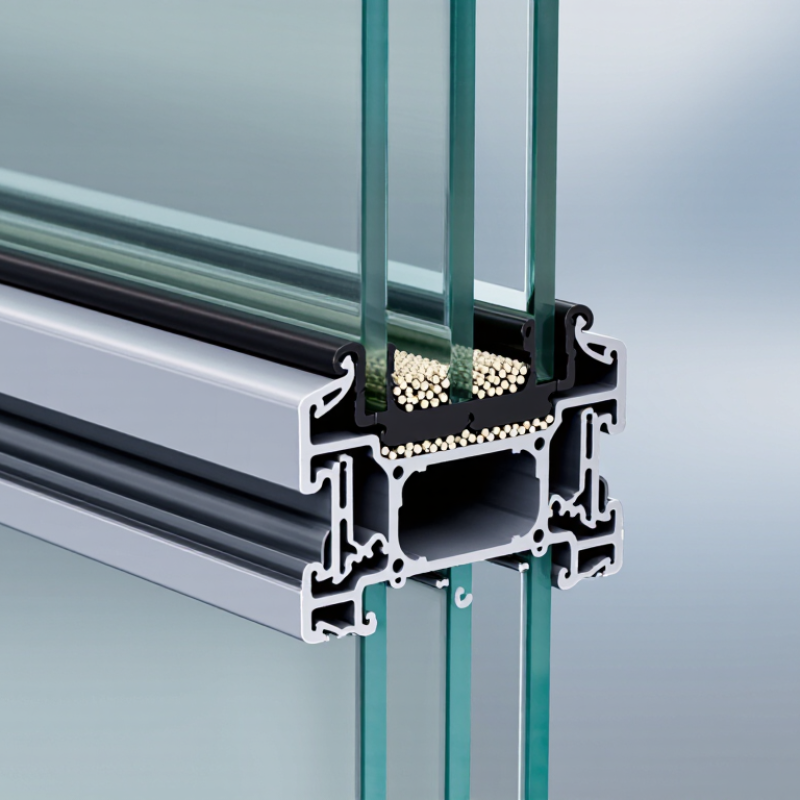
Aluminum Spacer Bars: Definition and Role in Insulating Glass Units
An aluminum spacer bar is the narrow frame between the panes of an insulating glass unit (IGU). It sets the gap, helping maintain a consistent cavity across the window. That space matters. It affects heat transfer, sound reduction, and the room available for gas filling. The bar also commonly contains desiccant, which absorbs residual moisture inside the sealed unit. In fabrication, workers join the spacer at its corners, apply sealants, and assemble it with the glass. Small alignment errors can leave the cavity uneven, so careful handling counts.
The spacer is part of a larger sealing system, not a seal by itself. A primary seal limits moisture and gas movement at the glass-to-spacer edge; a secondary seal adds support and protection. Aluminum is rigid and easy to form, but it conducts heat more readily than many insulating materials. This can create a colder edge around the glass, sometimes contributing to condensation in chilly conditions. Thermal-break designs can reduce that effect, though performance depends on the whole unit, installation, and local climate. I would not judge an IGU by spacer material alone. Its width, desiccant, corner construction, and seal quality all deserve attention, and some details are difficult to assess from the finished window.
How Spacers Maintain Common 6–20 mm Glass Cavity Widths
An aluminum spacer is the narrow frame that separates two panes in an insulated glass unit. It helps maintain a consistent cavity, often specified at 6–20 mm, though the right width depends on the glazing design. A 12 mm cavity, for example, needs a spacer sized to hold that gap around the pane, including at the corners. Small parts matter.
The cavity width affects more than appearance. It influences the space available for insulating gas and contributes to the unit’s thermal and acoustic performance. A wider gap is not automatically better; performance depends on the glass, seals, gas, and overall unit design. Aluminum is rigid and helps keep the panes aligned, but it also conducts heat more readily than some alternative spacer materials.
The detail is less tidy than a catalog drawing suggests. Corner joints, sealant depth, and glass tolerances can all affect the finished cavity. During fabrication, a small deviation may leave the gap uneven, especially around corners. For that reason, spacer width should be checked against the specified unit dimensions rather than chosen by habit. In practice, careful assembly matters as much as the nominal millimeter measurement.
How Hollow Aluminum Spacers Hold Desiccant to Control Moisture
What Is an Aluminum Spacer Used For?
How Hollow Aluminum Spacers Hold Desiccant to Control Moisture
In an insulated glass unit, an aluminum spacer separates two panes and helps define the sealed air space between them. Many spacers are hollow. Their narrow inner channel can hold desiccant, a drying material that absorbs water vapor from the trapped air. Small openings facing the cavity let moisture reach the desiccant while it remains inside the spacer. This helps lower humidity and reduce the risk of condensation forming between the panes.
The details matter. The desiccant has limited capacity, and the spacer’s moisture control depends on sound seals around the glass unit. If moisture enters faster than the desiccant can absorb it, fogging may eventually appear inside the cavity. A spacer alone cannot correct a failed seal. In practice, edge construction and careful assembly are just as important as the hollow profile. It is easy to overlook that.
Tips: Check that the spacer’s openings face the glass cavity and are not blocked by sealant. Keep desiccant dry before assembly, and follow the unit maker’s specifications for filling and sealing. Small steps help. They do not replace proper quality checks.
Why Aluminum’s 160–200 W/(m·K) Conductivity Creates an Edge Thermal Bridge
An aluminum spacer sits between panes of an insulated glass unit, keeping them evenly separated and supporting the sealed edge. Its hollow profile may also hold desiccant, which helps absorb moisture inside the unit. A simple metal strip can look harmless. Yet aluminum conducts heat at roughly 160–200 W/(m·K), so it can carry warmth across the window edge much more readily than the trapped gas between panes.
This creates an edge thermal bridge. In cold weather, indoor heat can travel through the spacer toward the exterior, leaving the inner glass edge cooler than its center. A chilly edge may encourage condensation when indoor air is humid. The effect depends on the frame, glazing design, installation, and local conditions; the spacer is only one part of the assembly. Details matter.
Aluminum remains useful because it is strong, lightweight, easy to form, and helps maintain consistent pane spacing. Designers may reduce heat flow with thermally improved spacer designs or less conductive materials. Those options can change cost, durability, and manufacturing requirements. I would not judge a window by spacer material alone. Even a well-designed spacer cannot compensate for a poor seal or a badly fitted frame.
How EN 1279 and ASTM E2190 Assess Insulating-Glass Unit Durability
An aluminum spacer keeps the panes of an insulating-glass unit evenly separated and supports the edge seal. Its hollow cavity often holds desiccant, which absorbs moisture trapped during assembly. Aluminum is sturdy and easy to shape, but it conducts heat readily. That edge detail matters.
EN 1279 and ASTM E2190 assess the durability of the complete insulating-glass unit, not the spacer by itself. The EN 1279 series covers matters such as moisture penetration, gas retention, and production control. ASTM E2190 sets performance criteria for insulating-glass units using specified test methods, including accelerated weathering and checks for fogging or moisture-related failure. The exact route depends on the applicable standard and product configuration.
In practice, testing exposes sealed units to controlled conditions that challenge the edge seal over time. A spacer that looks sound on a bench may still be part of a unit that fails if sealant application, corner joints, or desiccant handling is poor. A lab result offers useful evidence, not a promise that every installed window will perform identically. Installation, climate, and maintenance still matter. That distinction is easy to miss.