What Is Tantalum Sheet Used For?
tantalum sheet is valued for a combination that few metals offer: strong corrosion resistance, high-temperature stability, and useful formability. These properties make it relevant in demanding equipment, not just in laboratory demonstrations. A thin sheet may line a vessel exposed to aggressive chemicals, form part of a heat exchanger, or serve as a component in specialized electronic and industrial systems. The exact application depends on the grade, thickness, fabrication method, and operating conditions.
That distinction matters. Tantalum can resist many corrosive environments, but it is not immune to every chemical or process condition. Engineers must consider temperature, contaminants, weld quality, and contact with other materials before specifying it. The metal is also dense and costly, so a lighter or less expensive alloy may be more practical where its performance is unnecessary. In electronics, tantalum is widely associated with capacitors, though sheet products have different roles and should not be confused with every tantalum component.
This guide examines where Tantalum Sheet is used, what properties support those uses, and what buyers should check before choosing a product. It also considers fabrication and service limitations. Small details matter. A mismatch between sheet grade and working environment can undermine an otherwise sound design. And sometimes, the best material choice is not tantalum at all.
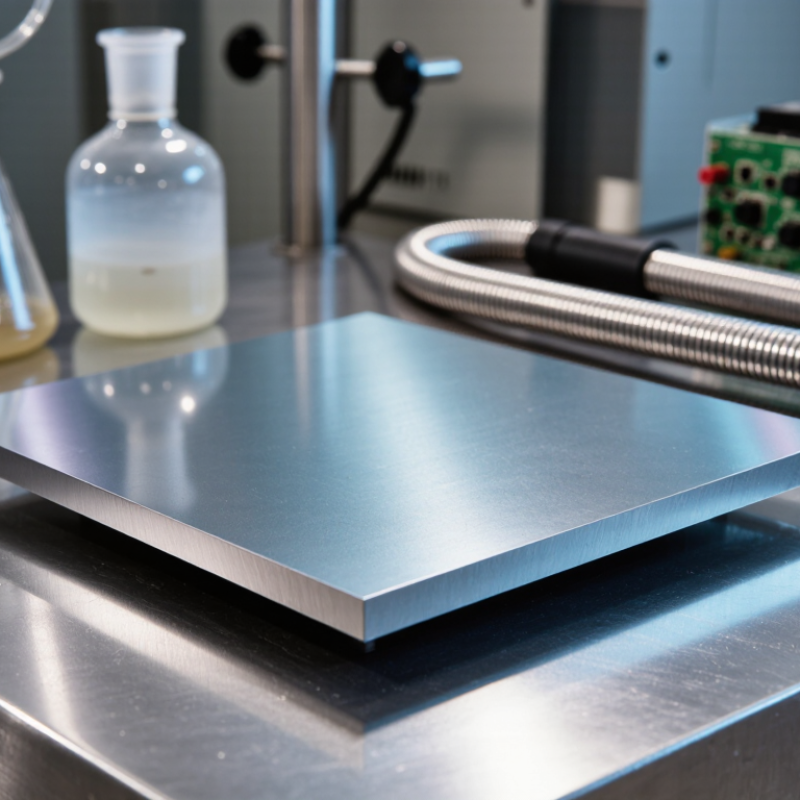
Key Properties That Make Tantalum Sheet Useful
Tantalum sheet is valued for staying stable in places where heat and corrosive chemicals challenge ordinary metals. Its natural oxide layer helps protect the surface from many acids, including hydrochloric acid under suitable conditions. The metal melts at about 3,017°C and has a density near 16.7 grams per cubic centimeter, according to NIST reference data. Those properties make thin sheet useful for linings, heat-exchanger parts, and vessels in chemical-processing equipment. Very durable. But not indestructible: performance depends on temperature, chemical concentration, weld quality, and exposure time.
Tantalum is also workable into sheet and can be formed into components without losing its useful corrosion resistance. In practice, engineers may choose it for a small, highly exposed surface rather than an entire vessel, because its high density and limited supply affect weight and cost. The USGS Mineral Commodity Summaries 2024 estimated global tantalum mine production at about 2,100 metric tons in 2023, illustrating why careful material selection matters. Tantalum sheet also serves in some medical and electronic applications, where corrosion resistance and reliable performance are important. Still, no alloy or metal is a shortcut around testing. A compatibility check using the actual process chemistry is essential.
How Tantalum Sheet Is Used in Chemical Processing
What Is Tantalum Sheet Used For?
How Tantalum Sheet Is Used in Chemical Processing
In chemical plants, tantalum sheet often protects equipment exposed to highly corrosive liquids. Fabricators use it as a lining inside steel vessels, where the steel provides strength and tantalum provides a resistant process surface. It can also form parts of heat exchangers, evaporators, and transfer piping. Tantalum’s stable oxide layer helps it withstand many acids, including hydrochloric and nitric acid, under suitable conditions. That protection is valuable when contamination from corrosion must be kept low.
The sheet must be selected and fabricated with the actual process in mind. Temperature, acid concentration, weld quality, and cleaning procedures can all affect service life. Tantalum is not resistant to every chemical; hydrofluoric acid and some hot alkaline solutions can attack it. Thin sheet also needs careful handling, since dents or poorly made joints can create weak spots. On a plant drawing, the material may look like a simple liner. In practice, detailing the seams is often the harder part.
Tips: Confirm chemical compatibility at operating temperature, not just at room temperature. Inspect welds and transitions before startup. Keep tantalum surfaces free from embedded steel particles, which may cause localized corrosion nearby. Document process changes, too; a small shift in concentration can matter. Compatibility charts help, but they do not replace a qualified materials review.
Applications in Electronics and Semiconductor Manufacturing
Tantalum sheet supports demanding electronics and semiconductor processes because it combines heat resistance with strong corrosion resistance. The U.S. Geological Survey’s Mineral Commodity Summaries 2025 identifies electronic capacitors among tantalum’s important uses. In fabrication settings, tantalum can also be made into sputtering targets, shields, and process fixtures. A target can supply a thin tantalum film, helping form barrier layers in semiconductor interconnect structures. These components face heat, reactive chemicals, and repeated cleaning cycles. Small material defects matter.
The market context is expanding, but it should not be mistaken for direct tantalum demand. SEMI reported that global semiconductor manufacturing equipment sales reached $117.1 billion in 2024, a record for the industry. That figure indicates the scale of equipment investment, not how much tantalum sheet manufacturers consume. A practical choice depends on purity, thickness tolerance, surface finish, and the process environment. Not every tool needs it. And sheet is not automatically the right form: target geometry and fabrication requirements can change the specification. Engineers should verify material certificates and test performance under actual process conditions; published properties alone cannot predict every production result.
Uses in Medical Devices and Aerospace Components
Tantalum sheet is useful where corrosion resistance and reliable performance inside the body matter. Its biocompatibility and visibility on medical imaging support surgical implants and custom components, including plates and parts used in orthopedic reconstruction. Sheet can be cut and formed into precise shapes, but it is not a universal implant material; design, surface finish, and clinical use all matter. A useful reference point is the U.S. Geological Survey’s Mineral Commodity Summaries 2024, which estimated global tantalum mine production at about 2,000 metric tons in 2023. That is a small supply base for a metal serving several high-specification industries.
In aerospace, tantalum sheet is suited to specialized components exposed to heat or aggressive environments, such as protective liners and selected propulsion-system hardware. Its very high melting point is attractive, yet tantalum is dense and can oxidize rapidly at elevated temperatures in air. Engineers therefore assess coatings, surrounding materials, and operating conditions rather than treating it as a simple drop-in solution. Not a broad aircraft skin material.
The material’s value is often in a small, carefully engineered part, not in its size. USGS supply figures also underline a practical concern: sourcing and material traceability deserve attention when specifications are tight. A reflective caveat: impressive laboratory properties do not automatically guarantee long service life in a real device or flight environment. Testing the finished component remains essential.
Factors for Selecting Tantalum Sheet for Industrial Applications
What Is Tantalum Sheet Used For?
Factors for Selecting Tantalum Sheet for Industrial Applications
Selecting tantalum sheet starts with the process environment, not the metal’s reputation. Its protective oxide layer supports corrosion resistance in many demanding chemical applications, including heat exchangers and vessel linings. But compatibility is not universal. Confirm performance against the actual chemicals, concentrations, temperatures, and cleaning cycles. A coupon test can reveal problems that a general material chart misses.
Thickness and fabrication matter just as much. Thin sheet can reduce material use, yet it may wrinkle during forming or distort during welding. Check the required flatness, tolerances, surface finish, and joining method before specifying a grade. Tantalum is also dense: the Royal Society of Chemistry lists a density of 16.69 g/cm³. That affects handling and finished-part weight. Consider supply, too. The US Geological Survey’s Mineral Commodity Summaries 2024 estimated global mine production at 2,100 metric tons in 2023, a small market by industrial-material standards. Availability and lead times deserve scrutiny. Cost comparisons can be misleading if they omit fabrication and service life. Still, long-term savings should be tested against real operating data, not assumed.
What Is Tantalum Sheet Used For? Factors for Selecting Tantalum Sheet for Industrial Applications
Melting point of selected refractory metals (°C)
Tantalum sheet is used in applications such as corrosion-resistant chemical-processing equipment, heat exchangers, and high-temperature components. Its high melting point makes it suitable for demanding environments, but material selection should also account for corrosion conditions, required sheet thickness, formability, and cost. Melting point alone does not determine a component’s maximum service temperature.
Approximate melting points: niobium 2,477°C, molybdenum 2,623°C, tantalum 3,017°C, and tungsten 3,422°C.



















