
Why Choose HDPE Floater for Global Marine Projects?
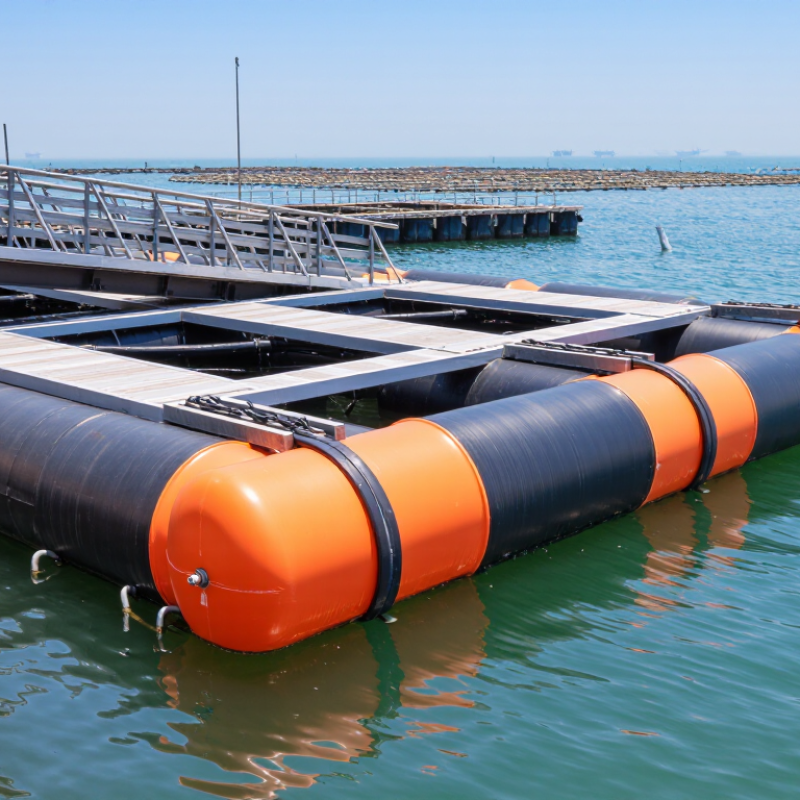
Global marine projects demand flotation systems that withstand saltwater, heavy loads, changing tides, and repeated impact. An HDPE Floater offers a practical balance of buoyancy, corrosion resistance, and long service life. Unlike steel components, it does not rust when exposed to seawater. Its tough polyethylene body can absorb minor collisions around marinas, aquaculture farms, floating walkways, and offshore work platforms.
Marine materials specialist Dr. Elena Marovic explains, “A reliable floater must survive daily movement, not just pass a laboratory test.” This view reflects field experience. Engineers should inspect wall thickness, welding quality, UV stabilization, connector strength, and load distribution before approving a design. A bright, well-finished float may look impressive. Performance matters more.
HDPE Floater systems can be configured for different water depths, climates, and project scales. Modular units simplify transport and replacement. They also reduce installation disruption in remote coastal areas. However, HDPE is not automatically the best choice for every site. Poor anchoring, unsuitable fittings, or underestimated wave loads can create serious failures. That part deserves honest attention.
The strongest designs combine material testing, hydrodynamic assessment, and local installation knowledge. Operators should review manufacturer data, maintenance records, and applicable marine standards. Real conditions are rarely perfect. Sediment, algae, ice, and careless handling may reduce service life. Choosing an HDPE Floater, therefore, is not simply a product decision. It is a disciplined engineering decision built around safety, evidence, and long-term reliability.
HDPE Floater Basics and Role in Marine Infrastructure
Why Choose HDPE Floater for Global Marine Projects?
HDPE floater basics begin with buoyancy, stability, and controlled displacement. Typical HDPE grades have densities near 0.94–0.97 g/cm³, according to ASTM D792 testing methods. Water is denser, so sealed HDPE chambers can provide useful reserve buoyancy. This principle supports floating walkways, work platforms, aquaculture frames, and temporary access systems. UNCTAD’s Review of Maritime Transport 2023 states that over 80% of global merchandise trade by volume moves by sea. Marine infrastructure must therefore perform across busy ports, exposed coastlines, and changing climates. That matters offshore.
Design details decide reliability. Engineers should calculate dead load, live load, wave action, current, wind, and accidental impact. DNV-RP-C205 provides methods for evaluating environmental loads, while PIANC guidance emphasizes site-specific floating-structure design. HDPE resists seawater corrosion, but it is not maintenance-free. UV exposure can reduce long-term performance without suitable stabilization. Welded seams, connection pins, and fasteners also need regular inspection. Small defects can become expensive failures.
Field experience often reveals an uncomfortable truth. A larger floater is not always safer. Excessive freeboard can increase wind loading and walking instability. Insufficient freeboard creates spray, fatigue, and unsafe access. Designers should test joint movement and reserve buoyancy, not only static capacity. Keep records. Performance may change after storms, repairs, or unauthorized modifications. That reflection is sometimes missing from early project planning.

Key Material Properties of HDPE Floaters
Why Choose HDPE Floater for Global Marine Projects?
HDPE floaters combine low density with strong resistance to seawater, impact, and routine handling. Their density is typically 0.94–0.97 g/cm³, according to material data aligned with ISO 1183. That difference from seawater creates useful reserve buoyancy. ASTM D570 testing commonly records water absorption below 0.01% after 24 hours. This matters when pontoons remain wet, loaded, and exposed for years. HDPE also tolerates many salts, acids, and alkalis, although compatibility still requires project-specific testing. Do not treat it as indestructible.
For marine structures, toughness is often more valuable than extreme stiffness. ISO 527 data for common HDPE grades show tensile strength frequently ranging from 20 to 37 MPa. The material can deform before sudden failure, helping absorb impacts from small vessels and floating debris. UV-stabilized grades are essential in open-water projects; guidance from PIANC on floating structures stresses environmental exposure, fatigue, connections, and inspection planning. Field engineers should also check creep, thermal expansion, weld quality, and ballast behavior. A 10-metre module may expand several centimetres under strong temperature changes. That detail is easy to overlook. The OECD’s 2022 Global Plastics Outlook also highlights the need for responsible plastic recovery, so end-of-life planning belongs in the design file. Freshwater performance is not automatically equal to offshore performance.
How HDPE Floaters Perform in Global Marine Environments
HDPE floaters perform reliably across many global marine environments because their material properties match harsh coastal conditions. They resist saltwater corrosion, moisture absorption, and many common marine chemicals. Their smooth surfaces also reduce fouling compared with rougher materials. In tropical zones, UV exposure can weaken plastics over time, so UV stabilizers and proper wall thickness matter. In colder regions, HDPE remains flexible and handles repeated temperature changes without becoming dangerously brittle.
Wave action is often the real test. A well-designed floater must provide stable buoyancy while moving with currents, tides, and passing vessels. Modular units can simplify transport and replacement at remote sites. However, connection pins, hinges, and anchoring systems deserve equal attention. A strong float with weak fittings still creates a poor installation. Load calculations should consider wind, wave height, equipment weight, and changing water levels. Field teams should inspect abrasion points, cracks, fasteners, and displaced anchors regularly. Small damage grows.
Tips: Match buoyancy to the full operating load, not the average load. Check UV protection for exposed surfaces. Use corrosion-resistant fittings. Allow movement between connected units. Keep inspection records with dates and photographs. Local conditions can surprise even experienced engineers. A sheltered harbor and an open-water platform should never share the same assumptions. Testing helps, but real maintenance feedback remains essential.
Why Choose HDPE Floater for Global Marine Projects? - How HDPE Floaters Perform in Global Marine Environments
| Performance Dimension | Typical HDPE Floater Data | Value in Global Marine Environments | Technical Notes |
|---|---|---|---|
| Material Density | Approximately 0.94–0.97 g/cm³ | Lower than seawater, allowing the floater to provide positive buoyancy when properly designed. | Actual system performance depends on wall thickness, internal structure, fittings, ballast and payload. |
| Reference Seawater Density | Approximately 1.020–1.030 g/cm³ | Provides the density basis for buoyancy calculations in coastal, offshore and brackish-water applications. | Design calculations should use the site-specific water density, temperature and salinity. |
| Buoyant Force Principle | Net buoyancy is based on displaced water weight minus floater and equipment weight. | Supports floating docks, aquaculture walkways, marina systems, offshore platforms and floating solar structures. | A suitable reserve-buoyancy margin is required for waves, wind, live loads, equipment and water accumulation. |
| Water Absorption | Very low; commonly reported at less than 0.01% by weight for HDPE under standard test conditions. | Helps maintain stable mass and buoyancy during long-term immersion. | Seams, penetrations and damaged surfaces must still be designed to prevent water ingress into hollow components. |
| Corrosion Resistance | Not susceptible to rust; generally resistant to seawater, dilute acids, alkalis and many salts. | Reduces corrosion-related maintenance in saltwater, estuarine and humid tropical environments. | Chemical compatibility should be checked for fuels, solvents, concentrated oxidizers and site-specific pollutants. |
| UV and Weathering Protection | UV-stabilized grades commonly use carbon black or other approved stabilizers. | Improves resistance to sunlight exposure in high-UV regions and open-water installations. | UV resistance depends on resin formulation, stabilizer content, color, thickness and exposure conditions. |
| Operating Temperature | Typical continuous service range is approximately −40°C to +60°C, subject to design and grade. | Suitable for many cold-water, temperate, tropical and subtropical marine locations. | Thermal expansion, low-temperature impact performance and elevated-temperature loads must be assessed for each project. |
| Impact Resistance | High impact toughness compared with many rigid materials, particularly at moderate and low temperatures. | Helps absorb accidental contact from service vessels, floating debris and handling operations. | Impact performance varies with geometry, wall thickness, weld quality, temperature and loading rate. |
| Flexibility and Fatigue Behavior | Flexible thermoplastic behavior with good resistance to repeated, moderate deformation when correctly designed. | Can accommodate wave-induced movement and cyclic loading in floating structures. | Connections, hinges, anchors and concentrated loads often govern fatigue design more than the HDPE shell itself. |
| Surface Fouling | Smooth, low-surface-energy surface; marine growth can still occur during prolonged immersion. | May simplify cleaning compared with rough or corroded surfaces and supports easier inspection. | Fouling rates depend on water temperature, nutrient levels, current, immersion depth and local ecology. |
| Joining and Fabrication | Can be joined by butt fusion, electrofusion or extrusion welding using qualified procedures. | Enables modular construction, sealed chambers and repairable assemblies near project sites. | Joint alignment, heating parameters, surface preparation and operator qualification affect weld integrity. |
| Maintenance Requirements | Generally low routine maintenance; periodic inspection remains necessary. | Can reduce repainting and corrosion-control work across remote or difficult-to-access marine sites. | Inspection should cover cracks, abrasion, deformation, welds, fasteners, anchors, ballast and connection hardware. |
| Environmental Considerations | Recyclable thermoplastic material; life-cycle performance depends on design, use and end-of-life handling. | Supports material recovery and component replacement strategies for long-term marine infrastructure. | Prevent plastic loss, collect damaged components and follow local waste, recycling and marine-protection regulations. |
| Design and Compliance Basis | Project-specific calculations should address buoyancy, stability, wind, waves, currents, berthing and mooring loads. | Helps adapt the floater system to different seas, climates, water depths and operational requirements. | Relevant standards and authority requirements may include ISO, ASTM, EN, local maritime rules and project specifications. |
The values shown are typical engineering ranges or generally accepted material characteristics, not guaranteed product specifications. Final selection should be based on site-specific environmental data, structural calculations, material certification and applicable marine regulations.
Installation, Maintenance, and Lifecycle Management
HDPE floaters are selected for many global marine projects because they handle moisture, impact, and repeated movement with limited corrosion risk. Their performance, however, depends heavily on installation quality. Before deployment, engineers should review water depth, wave exposure, tidal movement, loading, and local environmental conditions. A clear site survey prevents costly adjustments later. Small details matter.
Installers should check connector alignment, anchor positions, and float spacing before securing each section. Uneven loading can twist a walkway or place stress on joints. Heat fusion and mechanical connections require trained personnel, suitable tools, and documented inspections. Field work is rarely perfect. A minor alignment error may remain unnoticed until changing tides expose it. Teams should record measurements, photographs, and corrective actions during installation.
Maintenance begins with regular visual inspections, especially after storms, heavy traffic, or unusual water levels. Inspectors should look for cracks, loose fasteners, damaged connectors, excessive movement, and marine growth around submerged parts. Cleaning schedules should match local conditions rather than follow a fixed calendar. UV exposure and temperature changes also deserve attention. Replacing one damaged module early may protect the surrounding system. That is not always the cheapest decision today, but it can reduce disruption later.
Lifecycle management should include inspection records, load reviews, spare components, and planned renewal intervals. Operators need clear responsibility for each task. A practical maintenance plan is better than an ambitious document nobody uses. Conditions change, so the plan should be reviewed after major repairs or severe weather.
Applications and Selection Criteria for Marine Projects
HDPE floaters suit marine projects that need corrosion resistance, low maintenance, and controlled buoyancy. They support floating walkways, pontoon bridges, aquaculture platforms, marina systems, and temporary work decks. UNCTAD’s Review of Maritime Transport 2023 reports that over 80% of global trade by volume moves by sea, increasing demand for reliable coastal infrastructure. HDPE typically has a density near 0.94–0.97 g/cm³, according to ASTM D4976 material classifications. Seawater is denser, at roughly 1.025 g/cm³. That difference creates useful buoyancy, but not unlimited capacity.
Selection should begin with load calculations, not appearance. Engineers need to assess passengers, equipment, wave action, currents, wind, fuel, and possible water accumulation. A floater must retain adequate freeboard after uneven loading. Project teams should also check wall thickness, compartment design, connection strength, and welding quality. ISO 12215 principles for small-craft structural assessment can help organize these checks, although large floating systems may require additional engineering review. UV exposure matters in tropical waters. Stabilizers and suitable UV protection may extend service life.
Site conditions change the answer. A sheltered marina may need a different module from an exposed work platform. Temperature, abrasion, tidal range, and impact from vessels deserve practical testing. Field experience shows that connectors often fail before the plastic body. That detail is easy to miss. Designers should request buoyancy certificates, material traceability, test records, and maintenance guidance. Still, published performance data may not match local waves perfectly. Conservative assumptions are sensible, but excessive safety margins can increase cost and handling difficulty.