

Why Choose Silicone Automotive Hose?

Silicone Automotive Hose is valued in demanding engine bays, where heat, vibration, and tight bends challenge ordinary rubber tubing. The choice matters. OICA’s 2023 production statistics report approximately 93.5 million motor vehicles produced worldwide. That figure shows the scale of the automotive supply chain, though it does not measure hose demand or prove one material is best. For material context, engineers should also consult SAE technical literature and vehicle manufacturers’ specifications.

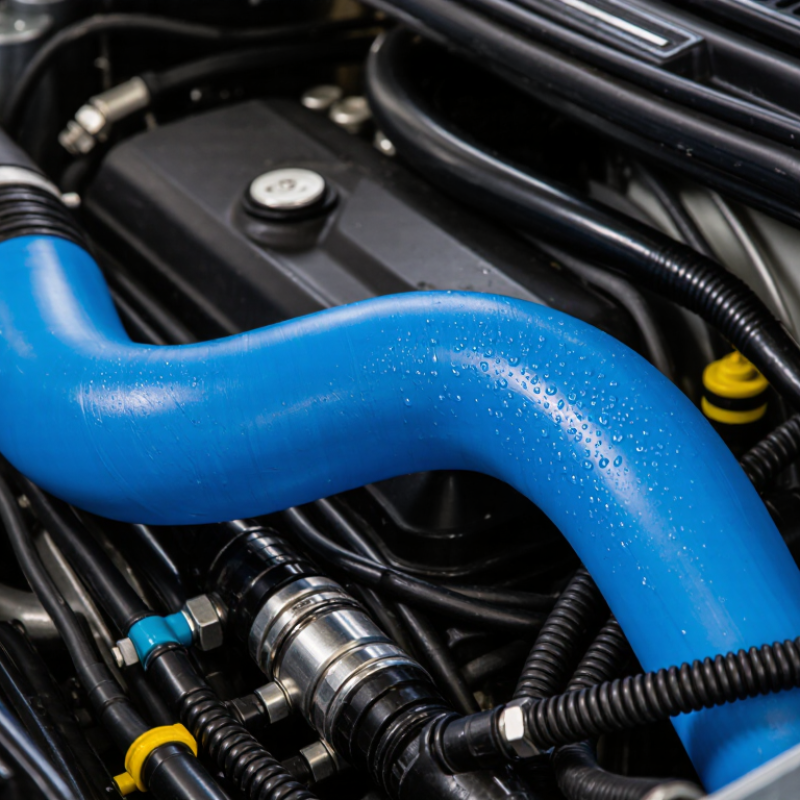
Silicone hoses can retain flexibility across a broad temperature range and resist ozone and weathering. Their smooth inner walls and bright colors are visible in many performance and coolant-system installations. Yet appearance is not proof of suitability. A hose must match the fluid, pressure, temperature, bend radius, and connection design of its application. The U.S. EPA’s Automotive Trends Report tracks changes in vehicle efficiency and technology, but it is not a hose-performance study. Buyers should avoid treating broad industry trends as product-specific evidence. Fit still matters. A poorly matched silicone hose may leak, soften, or fail early, especially when exposed to incompatible fluids. Review the manufacturer’s technical data, inspect clamps and contact points, and check the hose during service. Silicone Automotive Hose can be a strong choice when its verified specifications suit the system. That distinction is easy to overlook.
Why Choose Silicone Automotive Hose?

Silicone Hose Construction: Elastomer Tubes, Plies, and Reinforcement

Why Choose Silicone Automotive Hose?

A silicone automotive hose is a layered component, not simply a tube made from one material. The inner elastomer tube carries coolant, while the outer layer protects the hose from abrasion, moisture, and engine-bay exposure. Between them, reinforcing plies help the hose retain its shape under pressure and repeated heat cycles. A cut section makes the construction easy to see.

Ply material and placement matter. Woven polyester is common in many coolant hoses; other reinforcement choices suit different pressure, temperature, and flex requirements. Some designs add a wire helix where vacuum resistance or collapse control is needed. That layer matters.

Silicone can tolerate demanding heat, but it is not automatically suitable for every fluid, especially oil or fuel. Check the hose specification against the actual service conditions. Look for even ply coverage, cleanly formed ends, and no exposed fibers. Small details count.

More layers do not always mean better performance; overly stiff construction can make routing and installation difficult. A careful match between elastomer, reinforcement, and operating conditions is the useful choice.

Typical Temperature Ratings: About −50°C to +200°C, Varying by Grade

Silicone automotive hose is often chosen for its broad heat tolerance, but the headline range needs context. Typical ratings are about −50°C to +200°C, varying by grade. That is a guide, not a guarantee for every hose. SAE J20 sets performance requirements for engine-coolant hoses, while ASTM D2000 classifies rubber materials by properties and test conditions. Neither makes one temperature range suitable for every construction or installation.

Details matter. A hose near a hot turbocharger may face radiant heat, pressure pulses, and vibration at once. At low temperatures, the same hose must stay flexible enough to handle movement without cracking. Reinforcement, wall thickness, fluid compatibility, and exposure time can all affect service life. A temperature rating alone does not predict how long a hose will last. Small detail, big consequence. Check the grade’s technical data and confirm its limits for the actual fluid, pressure, and heat exposure. Temperature figures are useful, but they are not the whole story.

Pressure Performance: Compare Working and Burst Ratings in bar or kPa

Silicone automotive hose is valued for heat tolerance and flexibility, but pressure ratings deserve closer attention. SAE J20 defines performance requirements for automotive coolant hoses, yet it does not give every hose one universal working-pressure limit. ISO 1402:2021 describes hydrostatic testing for hose proof and burst pressure. These are different measures. Working pressure is the stated limit for normal service; burst pressure is the pressure at which a test sample fails. A high burst figure does not make continuous operation at that pressure safe.

Compare ratings in the same units: 1 bar equals 100 kPa. For example, a hose rated at 3 bar (300 kPa) working pressure and 12 bar (1,200 kPa) burst pressure has a 4:1 ratio. This is an illustration, not a standard rating. Check the exact hose construction, temperature range, and pressure notes on its technical data sheet. A warm engine bay can soften materials, while pressure pulses may briefly exceed a system’s steady reading. That detail is easy to miss. I would also question any rating quoted without test temperature or reinforcement details. Silicone suits many coolant applications, but it is not automatically the right choice for oil exposure or every routing condition.

Coolant-Hose Standards: Assess SAE J20 Requirements and Test Categories

Silicone automotive hose selection starts with the duty, not the material label. SAE J20 sets coolant-hose requirements by hose type and service conditions. Its tables address dimensions, pressure performance, temperature exposure, and resistance to coolant. A hose passing one category is not automatically suitable for every radiator or heater circuit. Check the exact SAE J20 classification and test data on the specification sheet. Details matter.

Testing should reflect real stresses: hot coolant, pressure cycling, engine vibration, and repeated thermal changes. SAE J20 and ASTM D380 provide industry methods and requirements for evaluating hose performance, including pressure-related and physical properties. Compare results only when the hose category, test method, and conditions match. A burst-pressure figure alone says little about long-term service life. Look for supporting data on heat aging, coolant compatibility, flexibility, and dimensional stability. Then check that fittings and bend radii suit the vehicle layout. Even careful selection has limits: installation quality and clamp load can still affect sealing.

Application Selection: Compare Silicone with EPDM for Heat and Coolant Exposure

Why Choose Silicone Automotive Hose?

When choosing a hose for heat and coolant exposure, compare the actual operating conditions, not just the material name. Silicone often stays flexible in high under-hood temperatures, especially near turbochargers or tightly packed engine parts. Its temperature rating varies by hose construction, though, and it may cost more than EPDM.

EPDM is widely used for coolant systems because it handles hot water and common glycol-based coolants well. It can be a practical choice for a standard radiator or heater hose. Silicone may suit demanding heat conditions, but coolant compatibility, pressure rating, and fitting design still need checking. A temperature advantage does not automatically mean a longer service life. I’ve seen installation details matter just as much as material choice.

Tips: Check the hose maker’s coolant and temperature specifications. Match the inner diameter and pressure rating, and inspect bends for kinks after installation. Use suitable clamps, then look for seepage after the first heat cycle. Fit matters. Sometimes the “better” hose is simply the one that fits correctly and matches the system.

Why Choose Silicone Automotive Hose? — Application Selection: Compare Silicone with EPDM for Heat and Coolant Exposure

Selection Factor Silicone Hose EPDM Hose Practical Application Guidance
Typical temperature capability Many automotive silicone hose compounds are rated for continuous service around −50°C to +200°C; some formulations permit higher temperatures. The exact limit depends on compound, construction, pressure, and exposure time. Many automotive EPDM coolant hose compounds are rated for continuous service around −40°C to +150°C, with some formulations rated higher. Limits vary by hose specification and operating conditions. Silicone is often selected when sustained high temperatures or temperature cycling exceed the capability of a suitable EPDM hose. Confirm the specific hose maker’s published rating.
Hot water and glycol coolant Generally suitable for many water- and glycol-based engine coolants when the hose is specifically designed and rated for coolant service. Generally offers very good resistance to hot water and common ethylene-glycol or propylene-glycol coolant mixtures; widely used for automotive cooling-system hoses. Both materials can work in coolant circuits. EPDM is a common choice for standard coolant service; silicone may be preferred for higher heat or specialized packaging, subject to coolant and hose compatibility.
Coolant formulation considerations Compatibility can vary with coolant chemistry, additives, concentration, temperature, and hose construction. Compatibility can also vary with coolant chemistry, additives, concentration, temperature, and hose construction. Check the hose manufacturer’s compatibility guidance for the exact coolant in use, including long-life and specialty formulations. Do not assume every hose compound suits every coolant.
Oil and fuel exposure Generally has poor resistance to petroleum oils and fuels; prolonged contact can cause swelling or loss of properties. Generally has poor resistance to petroleum oils and fuels as well, although resistance depends on the specific formulation. Neither standard silicone nor standard EPDM coolant hose should be selected for oil or fuel service unless the product is explicitly designed and approved for that fluid.
Flexibility and cold-weather behavior Usually remains flexible across a broad temperature range, including very low temperatures, depending on formulation. Typically remains flexible in cold conditions; the low-temperature limit depends on compound and hose construction. Compare the specified minimum service temperature with the vehicle’s cold-start and storage conditions rather than relying on the material name alone.
Pressure, reinforcement, and fit Pressure capability depends on reinforcement, wall construction, diameter, temperature, and bend radius; a high-temperature rating does not automatically mean a high-pressure rating. Pressure capability likewise depends on reinforcement, construction, diameter, temperature, and bend radius. Use a hose specified for the system’s pressure and temperature, with compatible fittings and clamps. Avoid kinks, excessive stretching, and bends tighter than the stated minimum radius.
Typical selection Often considered for hot-side plumbing, demanding under-hood temperature environments, and applications requiring broad temperature capability. Often used for radiator, heater, and other coolant hoses in standard automotive operating conditions. Choose by the complete duty profile—fluid, temperature, pressure, vibration, routing, service life, and applicable vehicle or hose specification—not by temperature range alone.

Note: Temperature ranges are typical industry ranges, not universal ratings or a substitute for product specifications. Verify the exact hose’s coolant compatibility, pressure rating, and applicable automotive requirements before installation.

Shopping Cart
Scroll to Top

Search for...

The Duravant family of operating companies serve the food processing, packaging and material handling segments.







