Why Choose Special Shaped Silicone Tubes?
In real equipment, tubing rarely follows a perfect, open path. It may pass around a bracket, fit inside a narrow housing, or connect two parts with different shapes. A round tube can leave unused space or press against nearby components. A Special-Shaped Silicone Tube offers another option: its cross-section can be designed around the available space and the job it must perform. Oval, D-shaped, and multi-channel profiles are examples, not guarantees of a better fit. Small details matter.
The benefits depend on the application. A shaped profile may help guide airflow or fluid, support a seal, or reduce movement inside an assembly. Silicone is valued in many applications for flexibility and resistance to a range of temperatures, but the right compound depends on the operating conditions and media. Check the supplier’s technical data rather than assuming every silicone tube behaves the same. Wall thickness, bend radius, compression, and manufacturing tolerances can all affect performance.
A custom shape also brings trade-offs. Tooling, inspection, and replacement may be more involved than with standard round tubing. That can be easy to overlook. Before choosing a profile, share clear drawings and operating details with the manufacturer, then review samples in the actual assembly. A tube that looks right on paper may still kink or sit unevenly when installed. This guide explains where special-shaped tubing can help, what to verify, and when a simpler standard tube may be the more practical choice.
What Are Special Shaped Silicone Tubes?
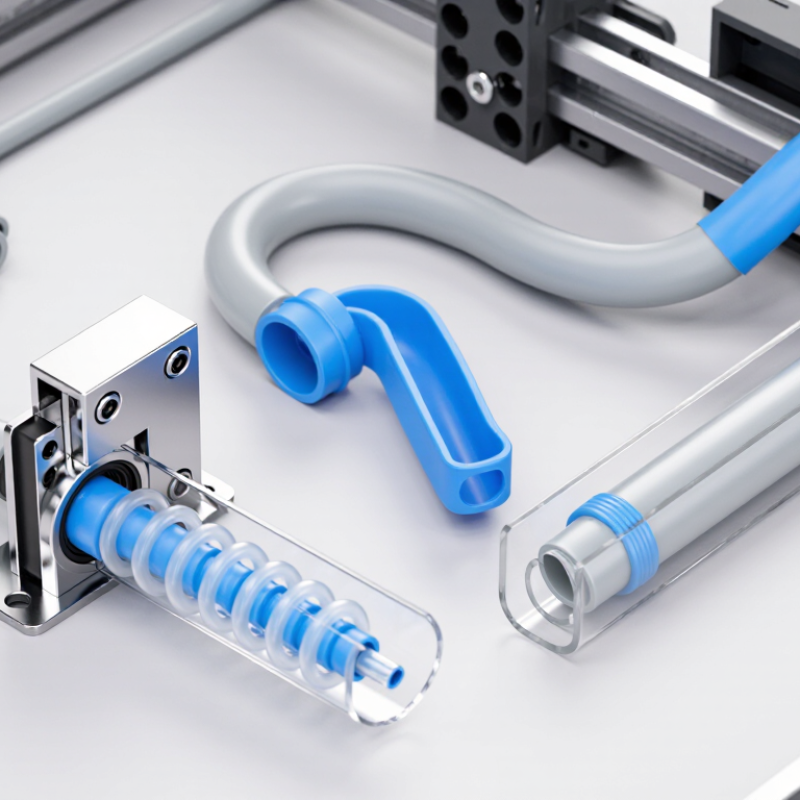
Special shaped silicone tubes are flexible silicone profiles with a cross-section designed for a specific fit or function. Unlike standard round tubing, they may be oval, D-shaped, ribbed, or formed with several internal channels. The profile is created during extrusion, then cured to help it retain its shape. Small details matter.
A flat-sided tube can sit against a panel, while a grooved profile may fit into a narrow channel. Multi-lumen designs keep separate pathways within one piece. These shapes can help with routing, cushioning, or sealing, but the result depends on the dimensions and application. Silicone flexibility is useful, yet it does not make every profile suitable for every temperature, pressure, or fluid.
When evaluating a tube, check its inner and outer dimensions, wall thickness, bend radius, and compression under load. A sample can reveal whether it twists, pinches, or slips from its intended slot. It is also worth checking how easily the shape can be cleaned, if that matters for the use. Sometimes the first drawing is wrong. A small adjustment to a corner or channel can change how the tube performs.
Why Choose Special Shaped Silicone Tubes? Their profiles can be tailored to fit specific spaces and functional requirements. This chart compares the calculated silicone material area in three example hollow cross-sections. The dimensions are illustrative, not industry standards or product specifications.
How Are Their Profiles Designed and Manufactured?
Special-shaped silicone tubes start with a cross-section designed for a specific task: sealing gaps, guiding cables, or carrying fluid. Designers map the profile in CAD, setting its width, wall thickness, ribs, lips, and hollow chambers. Small details matter. A sharp inside corner can concentrate stress, while a thin wall may collapse during bending. Not every curve helps. The profile must suit the installation path, temperature range, and expected compression—not merely look precise on a screen.
Manufacturing often begins with a custom extrusion die shaped to form the selected profile. Silicone compound passes through the die and is cured under controlled heat to hold its geometry. Die dimensions, material flow, and curing conditions can affect the finished shape, so early samples are measured rather than assumed correct. Calipers check accessible dimensions; a fit test can reveal interference a drawing misses. This takes iteration. A prototype may need a softer compound, thicker web, or wider sealing lip. Such changes can improve performance but complicate assembly. Production checks typically compare the cross-section and cut length with agreed tolerances.
Which Properties Set Them Apart from Standard Tubes?
Special-shaped silicone tubes are formed with profiles such as oval, D-shaped, or multi-channel cross-sections. Their geometry can match a groove or opening more closely than a standard round tube. This may help position the tube and create a more consistent seal when parts are assembled. Fit still depends on accurate dimensions and suitable compression. Small differences matter.
Silicone remains flexible across a broad range of temperatures, but performance depends on the specific compound and operating conditions. A shaped profile can also distribute pressure differently, which may reduce gaps in an uneven joint. For example, a flattened section can sit against a panel while a rounded edge fills the adjoining space. That is useful, but not automatic. Testing with the actual mating parts is wise.
Compared with standard tubing, a custom profile may need dedicated tooling and can be less convenient to replace from general stock. Its shape may also make cleaning or inspection harder if it includes narrow channels. These trade-offs deserve attention early. Measure the joint, check chemical exposure, and test compression after repeated use. A special shape is valuable when it solves a real fit problem, not simply because it looks different.
Where Are Special Shaped Silicone Tubes Commonly Used?
Special-shaped silicone tubes are useful when a round hose would kink, waste space, or miss a sealing surface. In medical equipment, custom profiles can guide fluid around compact pump housings and provide soft contact at patient interfaces. The World Health Organization reported global health spending of US$9.8 trillion in 2021, showing the scale of the healthcare systems that depend on reliable equipment. That figure is not tubing-market data, but it gives useful context.
Fit matters here.
Food and beverage machinery uses shaped tubing around tight bends, filling heads, and washdown areas. In vehicles, molded profiles can route coolant or air through crowded engine bays. The IEA’s Global EV Outlook 2024 reports nearly 14 million electric-car sales in 2023, around 18% of global car sales. This shift increases demand for compact thermal-management layouts, though it does not prove demand for silicone tubes specifically.
Small details matter.
A custom shape may reduce pinching, yet it can make inspection and cleaning harder. Engineers should test flow, pressure, temperature, and repeated flexing in the actual assembly.
A tidy drawing is not enough.
What Factors Guide the Selection of a Silicone Tube Profile?
Selecting a silicone tube profile starts with its job, not its appearance. Map the required flow, pressure, bend radius, and available installation space. A flat, multi-lumen, or asymmetric profile can save space, but may restrict flow if its narrow sections are poorly sized. Check performance at operating temperature, not only on a drawing.
Grand View Research’s Medical Tubing Market report estimated the global market at USD 9.4 billion in 2022, with projected growth through 2030. This points to rising demand for tubing, but it does not determine the right profile for a particular assembly. Material grade, hardness, wall thickness, and exposure to heat, cleaning agents, or fluids still need project-specific review. Small details matter.
Consider how the tube will be made and inspected. Tight corners and uneven walls can complicate extrusion and create weak spots; ask the manufacturer about achievable tolerances. Then test a sample in the real fixture. Measure flow, compression recovery, and fit after repeated bending. A neat CAD profile can still disappoint in use. That is easy to miss. Pilot testing may reveal that a slightly larger bend radius or simpler cross-section works better.



















