

Why Choose Steel Rebar for Global Construction Projects?
Steel Rebar remains a practical foundation for bridges, towers, ports, and transport networks worldwide. It strengthens concrete where tensile forces create hidden risks, especially around columns, joints, and foundations. A dense reinforcement cage can turn brittle concrete into a more ductile structural system.
The demand is substantial. The Global Infrastructure Hub estimates that global infrastructure investment may reach approximately US$94 trillion by 2040, leaving a potential US$15 trillion shortfall. These projects require materials that are strong, standardized, and widely available. World Steel Association data reported crude steel production of about 1.88 billion tonnes in 2023, demonstrating the industry’s enormous manufacturing capacity. Steel Rebar also supports circular construction because steel can be recovered and recycled repeatedly. It is not a perfect solution.
Steel production still creates significant carbon emissions. The International Energy Agency identifies steelmaking as responsible for roughly 7% to 9% of global energy-related carbon dioxide emissions. This weakness deserves attention, not marketing silence. Lower-emission production, recycled scrap, and efficient detailing can improve the material’s overall impact.
Edwin Basson, Director General of the World Steel Association, has described steel as “an essential material for modern life.” His observation reflects construction experience: rebar is familiar to engineers, available through established supply chains, and supported by mature design standards. However, project teams must verify grade, corrosion protection, weldability, and traceability. The safest choice depends on exposure, loading, workmanship, and local standards—not simply price. Practical evidence matters. That is why Steel Rebar continues to earn consideration for complex global projects.
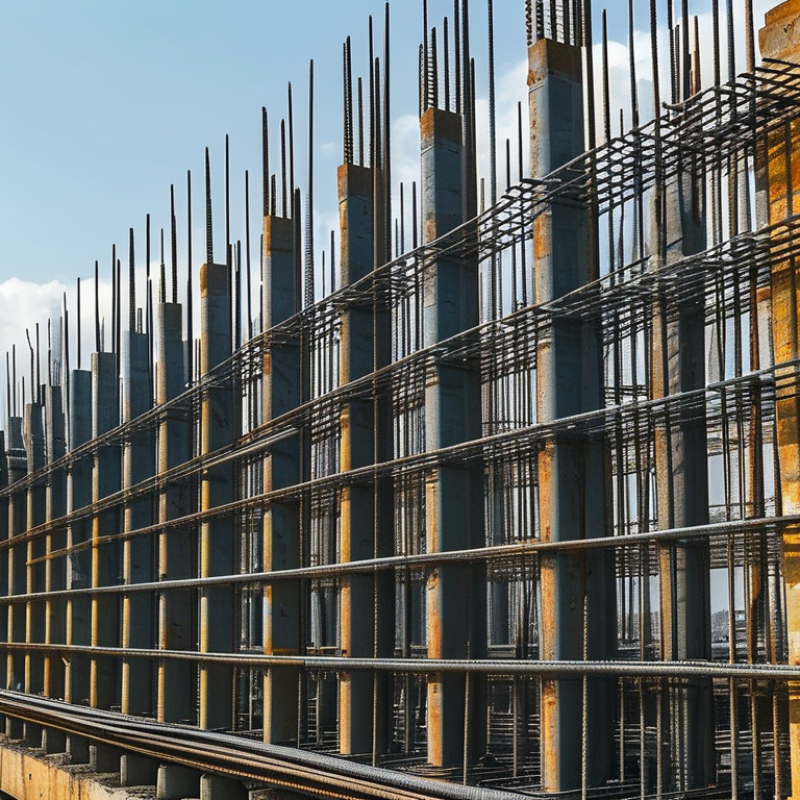
What Is Steel Rebar and How Is It Used in Construction?
Steel rebar, short for reinforcing bar, is a ribbed steel rod placed inside concrete. Concrete handles compression well, but it performs poorly under tension. Rebar carries those pulling forces and helps control cracking. Its raised ribs improve grip with surrounding concrete. It is usually cut, bent, and tied before concrete placement. Details matter.
According to the World Steel Association’s 2024 Steel Facts, construction uses roughly half of global steel demand. This scale reflects steel’s practical value in foundations, columns, beams, slabs, bridges, and tunnels. On site, workers position bars with spacers to maintain concrete cover. They also use lap lengths or mechanical connections when bars cannot span the full structure. Correct spacing is critical. A small installation error can reduce structural performance.
Designers select bar diameter, grade, spacing, and coating according to loads, exposure, seismic conditions, and local codes. The American Concrete Institute’s structural code emphasizes development length, anchorage, and corrosion protection. These requirements vary between regions, so a global project cannot rely on one drawing template. Steel rebar is strong and adaptable, but it is not maintenance-free. Moisture, chloride exposure, and inadequate cover can initiate corrosion. The USGS Mineral Commodity Summaries 2024 reported approximately 1.9 billion metric tons of crude steel production in 2023, showing the material’s vast industrial base. Yet availability does not guarantee quality. Inspection records, mill certificates, bar markings, and site checks remain essential. Mistakes happen. Good engineering anticipates them.

Which Properties Make Steel Rebar Suitable for Structural Reinforcement?
Why Choose Steel Rebar for Global Construction Projects?
Which Properties Make Steel Rebar Suitable for Structural Reinforcement?
Steel rebar strengthens concrete by carrying tensile forces that concrete handles poorly. Its high tensile strength supports beams, slabs, columns, retaining walls, and foundations under changing loads. Ribbed surfaces improve mechanical bonding, helping the steel and concrete act as one structural system. It is predictable.
Ductility is another important property. Properly specified rebar can bend and deform before failure, giving structures valuable warning during earthquakes, impacts, or overloads. Its thermal expansion is also reasonably compatible with concrete, reducing internal stress during temperature changes. On active sites, workers can cut, bend, and place rebar efficiently when drawings and bending schedules are accurate.
Steel rebar also offers measurable quality control. Engineers can review grade markings, mill certificates, tensile results, bend tests, and dimensional tolerances before installation. Local standards still matter, because strength classes, welding rules, and inspection procedures differ between regions. Good practice requires checking spacing, concrete cover, lap lengths, and rust condition rather than trusting appearance alone. Details matter.
Steel is not flawless. Unprotected reinforcement may corrode when moisture, chlorides, or carbonation reach it. Durable design therefore depends on sufficient cover, suitable concrete quality, drainage, and careful site handling. Coated or corrosion-resistant options can help, but they require compatibility checks and disciplined installation. A small placement error can reduce durability, so final inspection deserves the same attention as material selection.
How Does Steel Rebar Support Global Construction Projects?
Why Choose Steel Rebar for Global Construction Projects?
How Does Steel Rebar Support Global Construction Projects?
Steel rebar gives concrete the tensile strength it lacks. This combination supports bridges, towers, foundations, tunnels, and industrial floors. On busy sites, workers place bars into columns, beams, and slabs before concrete is poured. The steel must match approved drawings, bar sizes, spacing, lap lengths, and cover requirements. Small errors can weaken performance.
It works well across different climates and structural demands. Properly detailed rebar helps buildings resist gravity, wind, traffic vibration, and earthquake forces. In coastal areas, protective concrete cover and suitable corrosion controls become especially important. Rebar can also be cut, bent, and tied using common construction methods. That practicality supports projects with different labor skills and supply conditions.
Field experience still exposes weaknesses. Steel is not a perfect answer. Poor storage can leave bars muddy or heavily rusted. Incorrect bends may create installation problems. Congested reinforcement can prevent concrete from flowing around the bars. Site inspectors should check bar diameter, spacing, cleanliness, anchorage, and connections before each pour. Clear inspection records improve accountability between designers, contractors, and suppliers. Testing certificates also help verify mechanical properties and production consistency.
Plans can fail.
Global projects need more than strong materials. They need careful coordination, realistic schedules, and trained crews. When engineers review constructability early, rebar supports safer installation and more predictable structural performance.
Why Choose Steel Rebar for Global Construction Projects? How Does Steel Rebar Support Global Construction Projects?
| Performance Dimension | Typical Data or Range | How Steel Rebar Supports Construction | Global Project Relevance |
|---|---|---|---|
| Yield Strength | Approximately 400–600 MPa | Allows reinforced concrete members to resist significant tensile and bending forces before permanent deformation occurs. | Generic strength classes can be selected to meet different structural codes and design requirements. |
| Tensile Strength | Approximately 500–700 MPa | Provides additional resistance after yielding and supports ductile structural behavior under heavy loading. | Useful in buildings, bridges, foundations, tunnels, industrial facilities, and infrastructure exposed to dynamic loads. |
| Elastic Modulus | Approximately 200 GPa | Helps engineers predict reinforcement stress, cracking behavior, and structural deflection with reliable calculations. | The relatively consistent value simplifies design comparisons across different regions and construction standards. |
| Density | Approximately 7,850 kg/m³ | Provides substantial mass and strength in a compact cross-section, while allowing reinforcement quantities to be calculated accurately. | Standard density supports dependable shipping, weight estimation, lifting plans, and structural quantity takeoffs. |
| Common Bar Diameters | Approximately 6–40 mm; larger sizes are also available | Offers flexibility for distributing reinforcement in slabs and walls or carrying concentrated loads in beams and columns. | A broad diameter range accommodates both low-rise construction and large-scale civil engineering projects. |
| Unit Mass Calculation | About 0.006165 × d² kg/m (d = bar diameter in mm) | Enables rapid estimation of reinforcement weight, transport requirements, material quantities, and project cost. | The formula is widely used for preliminary planning when detailed mill-specific mass tables are not yet available. |
| Thermal Expansion | Approximately 11.7 × 10⁻⁶ per °C | Has thermal expansion behavior broadly compatible with concrete, helping reduce internal stress caused by temperature changes. | Supports performance in climates ranging from cold regions to hot, high-temperature environments. |
| Ductility and Elongation | Often approximately 12–20% minimum elongation, depending on grade and standard | Allows reinforcement to deform and absorb energy before fracture, improving warning behavior and structural resilience. | Important for seismic zones, impact-prone structures, wind-sensitive buildings, and infrastructure subject to cyclic loading. |
| Concrete Bond | Ribbed bars provide mechanical interlock with concrete | Improves force transfer between steel and concrete and helps control crack widths along reinforced members. | Ribbed reinforcement is adaptable to common reinforced-concrete construction methods used worldwide. |
| Fire Performance | Steel melts at approximately 1,370–1,540°C; strength decreases at elevated temperatures | When adequately enclosed by concrete cover, reinforcement contributes to the fire resistance of structural members. | Designers can adjust concrete cover, member dimensions, and fire protection according to local fire regulations. |
| Corrosion Consideration | Requires adequate concrete cover, quality control, and environmental protection | Proper detailing and durable concrete limit moisture and chloride access to the reinforcement. | Additional measures may be selected for marine, coastal, de-icing-salt, or chemically aggressive environments. |
| Recyclability | Steel is recyclable at the end of its service life | Recovered steel can be processed into new steel products, reducing the need for disposal and supporting material recovery. | Recyclability supports circular-material strategies and sustainability targets in infrastructure development. |
| Dimensional Standardization | Produced in standardized diameters, lengths, grades, and rib patterns | Improves fabrication accuracy, reinforcement scheduling, inspection, and installation efficiency. | Standardized specifications help coordinate contractors, engineers, fabricators, and inspectors across international projects. |
| Design Versatility | Suitable for beams, columns, slabs, walls, foundations, piles, bridges, and tunnels | Can be cut, bent, spliced, and arranged to meet different structural load paths and detailing requirements. | One reinforcement material can support a wide range of building and civil engineering applications. |
| Quality Verification | Common tests include tensile strength, yield strength, elongation, bend, rebend, and dimensional checks | Testing verifies whether reinforcement meets the specified mechanical and geometric requirements. | Documented inspection and testing support compliance with applicable national and international construction standards. |
Note: Values are typical engineering ranges for ordinary carbon-steel reinforcing bars. Actual requirements depend on the specified grade, applicable construction standard, exposure conditions, and structural design.
What Types and Grades of Steel Rebar Are Commonly Used?
Steel rebar remains central to global construction because it combines tensile strength, availability, and familiar installation practices. The World Steel Association reported approximately 1.89 billion tonnes of crude steel production in 2023. That scale supports broad access to reinforcement products, although local certification still matters.
Common rebar types include plain round bars and deformed bars. Deformed surfaces improve mechanical anchorage within concrete. ASTM A615 Grade 60 provides a minimum yield strength of 60 ksi, or about 420 MPa. ASTM A706 Grade 60 offers controlled chemistry and improved weldability for seismic or heavily detailed structures. Welding A615 bar without checking its chemistry can create avoidable risks.
European projects often specify B500B or B500C reinforcement under EN 10080 and related national standards. Both typically provide a 500 MPa characteristic yield strength. B500C has higher ductility, which suits seismic design and demanding load reversals. ISO 6935-2 also recognizes B500 grades for concrete reinforcement. Grade labels can look similar across markets. They are not automatically interchangeable. Engineers should verify mill certificates, elongation, bend performance, bar diameter, and design code requirements. A stronger bar is not always the better choice. Sometimes, detailing and reliable placement matter more. Suppliers may claim compliance, but independent testing remains wise.
What Factors Should Guide Steel Rebar Selection and Application?
Why Choose Steel Rebar for Global Construction Projects?
What Factors Should Guide Steel Rebar Selection and Application?
Steel rebar selection should begin with structural demand, not price alone. Engineers must check yield strength, ductility, bend performance, weldability, and fatigue resistance. These properties should match the governing design code and local seismic conditions. A high-strength bar may reduce congestion, but it can complicate bending and field repairs. Small details matter.
Corrosion exposure deserves equal attention. Marine air, deicing salts, and humid soil can shorten service life without suitable protection. Options may include epoxy-coated, galvanized, stainless, or corrosion-resistant alloy reinforcement. The choice should follow exposure data, cover depth, crack-control design, and maintenance expectations. Site teams should also verify mill certificates, heat numbers, bar markings, and independent test results. A certificate is useful, but it cannot replace inspection.
Carbon performance is now part of responsible procurement. The International Energy Agency reports that iron and steel production creates about 7–9% of global energy-related carbon dioxide emissions. The World Steel Association’s World Steel in Figures 2024 records approximately 1.892 billion tonnes of crude steel production in 2023. That scale makes recycled content, energy sources, transport distance, and environmental product declarations relevant selection factors. Local supply can reduce delivery risk, though it may not always provide the lowest carbon option. I would not pretend the perfect bar exists. A practical decision balances design safety, verified quality, constructability, durability, and credible environmental data.