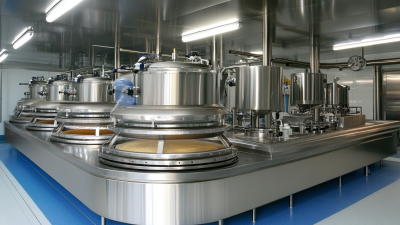

How to Choose Pet Food Processing Equipment in 2026?

Choosing Pet Food Processing Equipment in 2026 requires more than comparing machine prices. A reliable line must match the recipe, production volume, ingredient behavior, and quality targets. Kibble, wet food, freeze-dried products, and treats demand different processing paths. Moisture changes everything. So does fat.

Dr. Greg Aldrich, a recognized pet food scientist, offers a useful principle: “Processing should preserve the value created by the formula.” This idea deserves attention. An efficient extruder cannot rescue poor ingredient preparation or weak process control. Buyers should examine grinding performance, mixing accuracy, extrusion stability, drying uniformity, coating precision, and cooling capacity. A small moisture variation can affect texture, shelf life, and package weight.

The best Pet Food Processing Equipment also supports hygienic design and practical maintenance. Look for smooth contact surfaces, accessible inspection points, dependable sensors, and documented cleaning procedures. Ask the supplier for test data using ingredients similar to yours. A factory trial may reveal problems that brochures hide. Sometimes, the cheaper machine becomes expensive through energy use, downtime, or difficult servicing.

I would not pretend that one equipment package fits every producer. It does not. A growing plant may need modular expansion, while a specialist brand may value gentle handling over maximum speed. Operators should calculate capacity, utility demand, spare-part access, training needs, and total ownership cost. Automation helps, but it cannot replace informed supervision. The final decision should be evidence-based, adjustable, and honest about production limitations.

How to Choose Pet Food Processing Equipment in 2026?

Pet Food Processing Equipment: Types, Functions, and Production Applications

How to Choose Pet Food Processing Equipment in 2026?

Pet food processing equipment must match the recipe, moisture level, and production scale. Grinders reduce meat or cereal ingredients to a consistent size. Mixers distribute nutrients, oils, and additives evenly. Extruders shape and cook dry kibble through controlled heat, pressure, and moisture. Dryers reduce water activity, while coating systems add fats after cooking. Wet-food lines need filling, sealing, retorting, or sterilization equipment. Treat production may require forming, baking, or freeze-drying units. According to the American Pet Products Association, U.S. pet industry sales reached about $150.6 billion in 2024. That growth increases pressure for reliable, flexible production lines.

Application changes the equipment decision. A dry-kibble plant needs stable extrusion and drying control. A wet-food facility needs accurate filling and thermal processing. Small treats may need faster recipe changeovers than large-scale diets. In practice, sanitation access matters as much as output. Operators must inspect dead corners, gasket quality, drainage, and cleaning time. Food safety systems should support traceability and documented controls. The Food and Agriculture Organization also emphasizes hygienic design and contamination prevention across feed production. Bigger is not always better. Oversized equipment can waste energy and reduce batching accuracy.

Tips: Compare hourly capacity, moisture range, temperature control, and cleaning procedures. Request trial runs using your real formula. Check spare-part availability and operator training. Do not trust a brochure alone. Measure noise, dust, product loss, and energy use during testing. APPA data shows strong market demand, but demand alone should not justify expensive automation. A smaller modular line may be wiser when recipes remain uncertain.

How to Match Equipment With Pet Food Ingredients and Product Formats

Choosing pet food processing equipment in 2026 should begin with the recipe, not a machine catalogue. Ingredients react differently to heat, pressure, moisture, and shear. High-starch kibble usually needs uniform grinding, accurate mixing, extrusion, drying, and controlled fat coating. Meat-rich formulas may require stronger grinding and gentler thermal treatment. Added fibers can change water absorption and flow.

Wet food requires another equipment path. A chunk-in-gravy product needs careful particle handling, sauce mixing, filling, sealing, and validated thermal processing. Pâté needs smooth emulsification and stable viscosity. Treats may need forming, baking, drying, or freeze-drying, depending on texture and moisture targets. Small details matter. A pump suitable for thin gravy may struggle with dense paste. An oversized mixer can damage delicate inclusions.

Equipment trials should use the actual ingredients and target format. Measure temperature, residence time, moisture, density, texture, and cleaning performance. Review hygienic design, inspection access, and batch repeatability before purchase. Pilot testing reveals problems that brochures often hide. It is also wise to check whether the line can handle future recipes without excessive changeover time.

A common mistake is choosing maximum capacity too early. Higher output can reduce control when formulas vary. No setup is perfect. Even experienced teams may underestimate fat buildup around dies or uneven drying near the chamber walls. Record these failures, adjust the process, and verify results through documented quality checks. Reliable equipment is not simply powerful; it must match the ingredients, format, operators, and daily production reality.

Key Performance, Safety, Hygiene, and Automation Requirements

How to Choose Pet Food Processing Equipment in 2026?

Choose equipment by measuring real production needs, not only catalog capacity. A machine rated for 2,000 kilograms per hour may slow sharply with sticky recipes. Test the actual ingredients, moisture levels, and batch sizes before purchasing. Check motor load, mixing consistency, temperature control, and energy use during continuous operation. Small trials often reveal problems that brochures hide.

Safety must be designed into every moving and heated section. Look for guarded drives, emergency stops, secure access doors, and clear operator controls. Product-contact surfaces should resist corrosion and have smooth welds. Avoid hidden gaps where fat, dust, or moisture can collect. Cleaning should be practical, not merely possible. Drainage matters. Standing water can undermine an otherwise careful hygiene program.

Automation can improve repeatability through recipe control, sensor feedback, automatic dosing, and production records. Useful systems also provide alarms that operators understand quickly. Data is valuable only when it is accurate and easy to review. Include manual override functions for abnormal conditions, because automation is not flawless. Equipment should support documented cleaning checks, maintenance alerts, and batch traceability. One overlooked issue is training: advanced controls still fail when workers cannot interpret a warning or safely stop the line.

How to Evaluate Capacity, Energy Use, Maintenance, and Total Cost

How to Choose Pet Food Processing Equipment in 2026?

Capacity should be measured against real operating conditions, not brochure output. A line rated at 1,000 kilograms per hour may produce only 700 to 800 kilograms with high-moisture recipes. Check changeover time, cleaning cycles, and seasonal demand. The American Pet Products Association’s 2025–2026 National Pet Owners Survey reports pet ownership in about 95 million U.S. households. That supports growth, but it does not justify oversized equipment. Measure the real load. Leave practical headroom, not excessive capacity.

Energy use needs a process-level audit. Record motor loads, steam consumption, drying temperature, and compressed-air pressure during a full shift. The U.S. Department of Energy notes that compressed-air leaks can waste 20% to 30% of system output. Small leaks matter. Variable-speed drives, insulated lines, and heat recovery may reduce consumption, but savings depend on operating patterns. I would not trust a forecast based only on laboratory figures. Factory dust, frequent starts, and uneven feed rates change the result.

Maintenance cost often decides total cost of ownership. Request service intervals, spare-part prices, cleaning access, and average repair time. A five-minute inspection window can prevent hours of downtime. Include labor, water, electricity, rejected batches, and lost production in the calculation. The U.S. DOE’s Industrial Assessment Center guidance supports evaluating energy and maintenance together. My own caution is simple: the cheapest machine can become expensive when operators avoid difficult cleaning points. Document assumptions, then test them during a pilot run.

How to Choose Pet Food Processing Equipment in 2026? - How to Evaluate Capacity, Energy Use, Maintenance, and Total Cost

The following figures are representative engineering ranges for planning purposes. Actual results depend on recipe composition, moisture level, product shape, operating hours, utility prices, automation level, and local installation conditions.

Equipment Type Typical Throughput Best-Fit Product Electricity Use Thermal Energy Consideration Routine Maintenance Typical Annual Maintenance Budget Indicative Installed Cost Range Capacity Flexibility Key Selection Criteria
Single-Screw Extruder 0.3–3.0 metric tons/hour Dry kibble, semi-moist pet food, simple formulas 80–160 kWh per metric ton of finished product, electricity only Steam or preconditioner heat is normally required; thermal demand varies with moisture and cooking intensity Moderate; inspect screw, barrel liners, cutter, seals, bearings, and gearbox Approximately 3%–6% of equipment purchase price per year US$150,000–US$600,000 for the core extruder package Moderate; economical for stable product families Choose based on target capacity, recipe shear, moisture range, expansion ratio, and changeover frequency
Twin-Screw Extruder 0.5–8.0 metric tons/hour Complex dry kibble, high-meat formulas, high-fiber recipes, frequent product changes 100–190 kWh per metric ton of finished product, electricity only Usually requires steam, water, and controlled preconditioning; greater process control may improve product consistency Moderate to high; more wear parts and a more complex drive and screw configuration Approximately 4%–8% of equipment purchase price per year US$300,000–US$1,200,000 for the core extruder package High; suitable for a wider recipe and output range Evaluate screw configuration, torque rating, wear protection, sanitation access, and recipe-changeover time
Batch Mixer 0.2–2.5 metric tons per batch Dry premixes, supplements, treats, and recipes with controlled batch production 8–25 kWh per metric ton mixed Normally low thermal demand; heating or cooling may be added for special recipes Low to moderate; inspect paddles, seals, discharge gates, and load cells Approximately 2%–4% of equipment purchase price per year US$30,000–US$250,000 depending on volume and automation Moderate; batch size limits minimum economical production Check mixing uniformity, coefficient of variation, residual hold-up, dust control, and cleaning access
Continuous Mixer 1.0–15.0 metric tons/hour Large-volume dry kibble or treat production with stable formulations 5–18 kWh per metric ton mixed Usually low thermal demand; liquid addition and conditioning systems may require additional utilities Moderate; inspect mixing elements, seals, feeders, and control instrumentation Approximately 2%–5% of equipment purchase price per year US$100,000–US$600,000 depending on feeders and controls High for continuous production, but less convenient for very small batches Prioritize feeder accuracy, residence-time control, formulation changeover, and dust containment
Hot-Air Belt Dryer 0.3–5.0 metric tons/hour of wet feed entering the dryer Extruded kibble, baked treats, and products requiring moisture reduction 25–80 kWh per metric ton of water removed, excluding fuel or steam Thermal energy is usually the largest cost; gas, steam, or electric heating efficiency should be compared separately Moderate; inspect belts, fans, burners, heat exchangers, filters, and seals Approximately 3%–7% of equipment purchase price per year US$250,000–US$1,500,000 depending on belt area and heat-recovery systems High; adjustable air temperature, velocity, and residence time Compare moisture uniformity, heat recovery, insulation, airflow balance, cleaning time, and access for belt replacement
Coating and Vacuum Coating System 0.5–10.0 metric tons/hour Dry kibble with fat, digest, oil, powder, or flavor coating 5–20 kWh per metric ton coated Heating may be required to keep fats or liquid coatings pumpable Moderate; clean pumps, nozzles, filters, vacuum seals, and product-contact surfaces Approximately 3%–6% of equipment purchase price per year US$80,000–US$700,000 depending on coating method and automation High; suitable for multiple coating rates and recipes Evaluate coating uniformity, liquid-loss control, nozzle design, cleanability, and allergen changeover procedures
Wet Food Cooker and Retort Line 0.5–12.0 metric tons/hour Moist pet food in cans, trays, pouches, or sealed containers 30–90 kWh per metric ton, electricity only High thermal demand for cooking and sterilization; steam generation and retort efficiency strongly affect total energy cost High; inspect pressure vessels, valves, pumps, seals, instrumentation, and safety systems Approximately 5%–10% of equipment purchase price per year US$500,000–US$4,000,000 for cooker, filling, sealing, and retort-related equipment Moderate; product and container changes may require validation Confirm thermal-process validation, pressure-vessel compliance, hygienic design, cooling-water demand, and traceability
Freeze Dryer 0.05–1.5 metric tons/hour of finished product, depending on moisture removal Premium freeze-dried meat, treats, and limited-ingredient products 400–1,200 kWh per metric ton of water removed is possible, depending on loading and cycle design Refrigeration and vacuum systems create a high energy demand; heat recovery and cycle optimization are important High; inspect vacuum pumps, refrigeration circuits, door seals, shelves, sensors, and condenser surfaces Approximately 6%–12% of equipment purchase price per year US$400,000–US$3,000,000 depending on chamber size and automation Moderate; batch cycles can limit responsiveness Compare cycle time, condenser capacity, vacuum stability, product loading density, and available maintenance skills
Pellet Mill for Treats 0.3–5.0 metric tons/hour Pelletized treats and selected dry snack products 30–90 kWh per metric ton produced Steam conditioning may be required for binding, durability, and die performance Moderate; inspect dies, rollers, bearings, knives, feeders, and drive components Approximately 3%–7% of equipment purchase price per year US$100,000–US$700,000 depending on die size and automation Moderate; die changes affect product size and operating cost Review die life, compression ratio, product density, steam conditioning, and changeover time
Automated Weighing and Packing Line 20–80 bags/minute, depending on package size and format Retail bags, pouches, cartons, and multi-format finished products 3–15 kWh per 1,000 packages Usually negligible thermal demand; compressed air consumption can be significant Moderate; inspect load cells, sealing jaws, belts, sensors, printers, and pneumatic components Approximately 2%–5% of equipment purchase price per year US$150,000–US$1,200,000 depending on bagger, checkweigher, metal detector, and case packer High when recipe, package, and format changeovers are designed correctly Evaluate weighing accuracy, packaging speed, reject handling, compressed-air quality, and digital traceability
How to use this table for a 2026 investment decision:
  • Compare energy on the same basis. Separate electricity, steam, gas, compressed air, water, and cooling costs before calculating total operating cost.
  • Calculate annual capacity as: effective hourly throughput × operating hours × planned availability × yield. Use effective throughput rather than the machine’s maximum rated capacity.
  • For total cost of ownership, include purchase price, installation, utilities, labor, spare parts, sanitation, validation, training, downtime, financing, and end-of-life value.
  • Request a factory acceptance test using the actual recipe or a representative formulation. Confirm throughput, moisture, bulk density, product temperature, energy use, and changeover time.
  • Typical maintenance percentages are planning ranges, not guarantees. Wear rate is strongly affected by meat content, mineral content, fiber level, abrasive ingredients, operating hours, and cleaning practices.
  • For a fair energy comparison, define the system boundary and product basis, such as kWh per metric ton of finished product at the target moisture level.

A Step-by-Step Guide to Selecting and Validating Your Equipment Line

How to Choose Pet Food Processing Equipment in 2026?

Start with the product, not the machine. APPA’s 2025 State of the Industry Report recorded $62.4 billion in U.S. pet food and treat sales in 2024. That scale increases pressure on consistency, hygiene, and throughput. Write a product matrix covering recipes, moisture, fat content, particle size, batch weight, and target capacity. Include wet, dry, and semi-moist products separately. One line rarely suits everything.

Map each operation. Grinding, dosing, mixing, extrusion, drying, coating, cooling, and packing need compatible controls. Check thermal load, residence time, air volume, and cleaning access. FEDIAF’s 2024 Facts and Figures reported European pet food sales of €29.3 billion, showing why scalable equipment matters. Ask suppliers for documented performance data, not attractive brochures. Confirm energy use at your planned load. Small gaps become expensive.

Validate the line in stages. Review drawings and hygienic design first. Then conduct factory and site acceptance tests using representative recipes. Measure output, moisture, water activity, bulk density, kibble durability, metal detection, and changeover time. Keep retained samples. Record every deviation. No line is perfect. My own caution: a successful empty-run test proves very little. Real validation needs full recipes, trained operators, sanitation checks, and repeated production cycles. Review spare-part access and data traceability before signing approval.

Shopping Cart
Scroll to Top

Search for...

The Duravant family of operating companies serve the food processing, packaging and material handling segments.