What Is Meat Butcher Equipment A Global Buyers Guide?

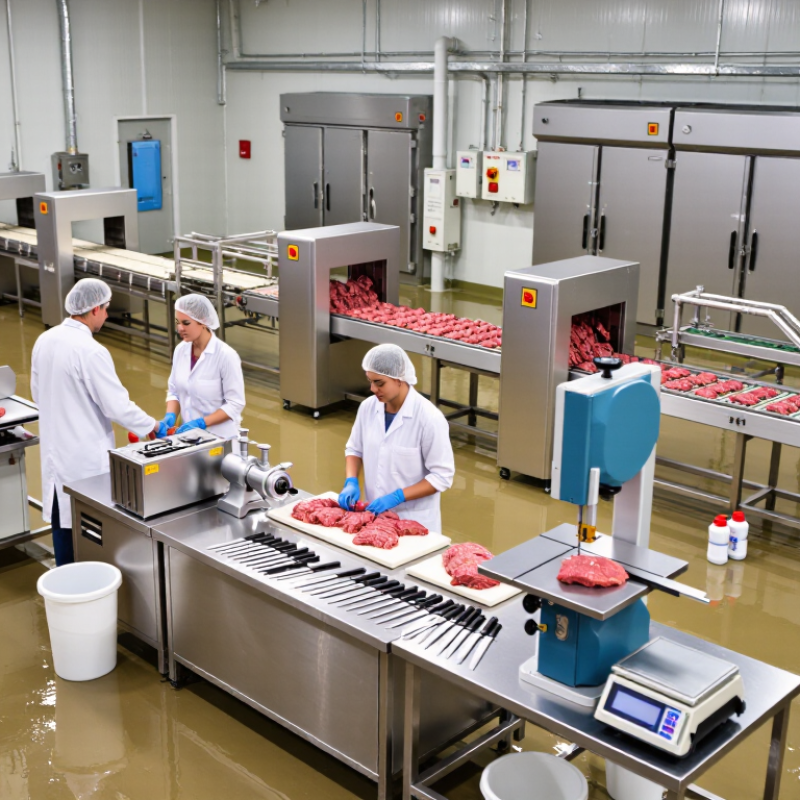
Buying Meat Butcher Equipment is not simply a matter of choosing the largest machine. A professional buyer must connect equipment with production volume, product type, workplace layout, and staff experience. A small retail butcher shop may need a reliable bandsaw, mincer, slicer, vacuum packer, and stainless-steel preparation tables. A high-volume facility may require automated cutting lines, conveyor systems, portioning machines, and stronger refrigeration support.

Dr. Temple Grandin has repeatedly emphasized a practical handling principle: “Equipment should make it easy for animals to move forward.” That idea also matters after processing. Good equipment should guide products smoothly, reduce unnecessary handling, and help workers maintain consistent hygiene. Sharp blades, guarded moving parts, washable surfaces, emergency stops, and clear maintenance access deserve close attention. They are not decorative details.

This global buyers guide examines the main categories of Meat Butcher Equipment, from cutting and grinding tools to packaging, chilling, weighing, and cleaning systems. It considers capacity, energy use, spare parts, operator training, and after-sales service. Regional conditions can change the best decision. Import procedures, voltage, water quality, and service availability may affect total cost more than the purchase price.

Some choices remain difficult. The cheapest machine may become expensive when downtime begins. The most advanced system may overwhelm a small team. Buyers should measure real workflow, not imagined growth. A wet floor, a crowded cutting table, or a missing replacement blade can reveal weaknesses quickly. Practical experience still matters. Specifications help, but careful observation often exposes the truth.

What Is Meat Butcher Equipment A Global Buyers Guide?

Defining Meat Butcher Equipment and Its Core Functions

Meat butcher equipment refers to the machines and tools used to prepare animal carcasses for sale or further processing. Core functions include cutting, deboning, trimming, grinding, portioning, weighing, and controlled packaging. A bandsaw separates bone efficiently, while a grinder converts trimmed meat into consistent mince. Slicers create uniform portions for retail counters or food-service kitchens. These functions appear simple, but accuracy affects yield, labor time, and food safety.

The scale is substantial. The FAO Statistical Yearbook 2023 reports global meat production above 350 million tonnes annually. The OECD-FAO Agricultural Outlook 2024–2033 projects global meat consumption to increase by about 12% by 2033. This growth makes reliable equipment more important for processors of different sizes. In practice, buyers should examine blade adjustment, motor load, cleaning access, emergency controls, and spare-part availability. A powerful machine is not automatically a suitable machine.

Hygiene is central.

The Codex General Principles of Food Hygiene emphasizes effective cleaning, temperature control, and prevention of cross-contamination. Equipment should therefore use food-contact materials that resist corrosion and allow visible inspection. Smooth surfaces help, but hidden joints can still trap residue. I have seen specifications focus heavily on output while underestimating washdown time. That is a costly oversight. Operators also need training, because even well-designed equipment can create inconsistent cuts when settings, maintenance, or handling practices are poorly controlled.

Categorizing Equipment by Preparation, Processing, and Storage Tasks

Meat butcher equipment is best understood by the task it performs. Preparation tools handle inspection, trimming, weighing, and portion control. Typical items include cutting tables, knives, scales, and bone saws. A stable table should resist movement during repeated cuts. Smooth, cleanable surfaces matter more than appearance.

Processing equipment changes the product’s form. Grinders, mixers, stuffers, slicers, and vacuum systems support different production goals. The OECD-FAO Agricultural Outlook 2024-2033 projects global meat production to rise about 12% by 2033. That growth may increase demand for faster, more consistent processing. Still, higher speed can create rushed inspection points. A practical buyer should compare throughput, batch size, cleaning time, and operator safety. Bigger is not always better.

Storage equipment protects quality after processing. Chillers, freezers, insulated rooms, racks, and temperature monitoring systems all play separate roles. The UNEP Food Waste Index Report 2024 estimated 1.05 billion tonnes of food waste in 2022. Reliable storage cannot solve every waste problem, but it can reduce temperature-related losses. Buyers should review recovery time after door openings, airflow, insulation, drainage, and alarm visibility. The categories overlap. A weighing station may support preparation and inventory control. A perfect equipment list does not exist; workflow, product type, facility size, and staff skill can change the decision.

Identifying Essential Tools for Different Butchery Operations

Meat butcher equipment varies with the operation, product, and production volume. A small retail counter may need a stainless-steel worktable, boning knives, cutting boards, a meat grinder, and a reliable scale. These tools support portioning, trimming, labeling, and daily cleaning. A sharp knife matters more than an oversized machine. It improves control and reduces unnecessary waste.

High-volume facilities require heavier equipment. Band saws handle bone-in cuts, while bowl cutters process emulsified products. Vacuum packaging machines help protect portions during chilled storage and transport. A powerful mixer supports sausage production, but its capacity must match the batch size. Too large can increase cleaning time. Too small can overwork the motor. That choice is easy to underestimate.

Buyers should examine guard design, emergency controls, washable surfaces, spare-part access, and operator training. Equipment should suit the available power supply, room layout, drainage, and local food-safety requirements. Temperature monitoring tools are equally important for chilled rooms and display cases. Digital controls look convenient, but they may become difficult to service in remote areas. I have seen purchasing plans focus on speed while ignoring cleaning routines. That is a costly blind spot. A practical checklist should include noise, maintenance time, blade replacement, and staff reach. The best setup is not always the most advanced one. It is the one workers can operate safely, clean thoroughly, and inspect consistently.

What Is Meat Butcher Equipment? A Global Buyers Guide

Essential tool categories for different butchery operations

The chart counts distinct essential equipment categories commonly used in each workflow. Core requirements include cutting knives, saws, hooks, food-grade work surfaces, weighing equipment, temperature-control equipment, cleaning tools, and personal protective equipment. Actual purchasing lists vary by product type, production volume, local food-safety rules, and automation level.

Evaluating Safety, Hygiene, Materials, and Performance Standards

Meat butcher equipment must be judged beyond cutting speed. A fast machine is still a poor choice if operators cannot control it safely. Look for stable frames, guarded blades, emergency stops, and controls that remain accessible during wet work. Protective parts should resist accidental removal during normal operation. Small details matter. Rounded edges reduce hand injuries and simplify daily cleaning.

Hygiene depends on design, not promises. Inspect welds, joints, seals, and drainage points closely. Food-contact surfaces should be smooth, nonporous, corrosion-resistant, and suitable for repeated washing. Stainless steel is common, but its grade and finishing quality still require verification. Equipment should allow tool-free or simple disassembly where sanitation procedures demand it. Hidden gaps can collect fat and protein residues. They are easy to miss.

Performance testing should match the buyer’s real workload. Measure cutting consistency, motor heat, noise, vibration, throughput, and recovery after continuous use. Ask for material certificates, electrical documentation, cleaning instructions, and maintenance records. Suppliers should explain measurable limits rather than offer vague claims. In practical evaluations, a machine may perform well during a short demonstration but struggle after several hours. That weakness matters. Operators also influence results through loading habits and cleaning discipline. A polished surface can still conceal poor engineering. Reviewers should document these uncertainties instead of treating every specification as proven.

Choosing Equipment Based on Capacity, Workflow, and Global Requirements

What Is Meat Butcher Equipment A Global Buyers Guide?

Choosing equipment starts with capacity, not catalogue photos. FAOSTAT reported global meat production at approximately 361 million tonnes in 2022. The OECD-FAO Agricultural Outlook 2024–2033 projects about 12% growth in global meat consumption by 2033. These figures suggest rising demand, but they do not justify oversized machinery. A small shop may need a 300-kilogram daily line, while a regional processor may require continuous grinding, mixing, chilling, and packing.

Workflow decides the equipment sequence. Raw meat should move from receiving to cold storage, cutting, grinding, weighing, and dispatch with minimal backtracking. A butcher saw needs safe clearance and easy cleaning access. A grinder needs stable power during peak loads. Chillers must match production speed, not just room size. Small details matter.

Global requirements complicate purchasing. Electrical frequency, voltage, drainage, water pressure, and language requirements vary between markets. Food safety systems based on HACCP and ISO 22000 principles also demand cleanable surfaces, temperature records, and controlled separation between raw and finished products. USDA’s Livestock and Poultry: World Markets and Trade reports show how trade flows shift by region, so export-oriented facilities need adaptable capacity. My practical mistake was focusing on hourly output first. Maintenance access and operator training deserved equal weight. A machine can be powerful, yet still unsuitable.

What Is Meat Butcher Equipment? A Global Buyers Guide — Choosing Equipment Based on Capacity, Workflow, and Global Requirements

Indicative equipment-selection data for butcher shops, foodservice operations, and small-to-medium meat-processing facilities. Actual output depends on product type, operator skill, layout, temperature, and cleaning procedures.
Equipment Type Primary Workflow Typical Capacity or Output Best-Fit Operation Key Product and Process Factors Utilities and Installation Hygiene and Safety Requirements Global Buying Considerations
Butcher Block and Cutting Table Portioning, trimming, deboning, and general preparation Manual workstations; commonly one operator per table. Output varies widely by cut and skill level. Retail butcher shops Foodservice kitchens Small processors Choose a non-porous, impact-resistant work surface with adequate depth for whole-muscle cuts and comfortable working height. Usually no power or water connection at the table; allow floor clearance and nearby hand-washing facilities. Use smooth, cleanable surfaces; maintain separate raw-meat and ready-to-eat work areas; provide stable footing and safe knife storage. Confirm food-contact material compliance, local sanitation rules, corrosion resistance, and compatibility with local cleaning chemicals.
Meat Grinder Grinding beef, pork, poultry, and other boneless meat Approximately 50–300 kg/hour for compact commercial units; larger units may exceed 500 kg/hour. Custom grinding Sausage production Retail preparation Capacity depends on plate diameter, feed design, meat temperature, particle size, and frequency of regrinding. Single-phase or three-phase power is common; provide stable flooring, clearance for loading, and drainage for washdown. Use removable food-contact components where possible; disassemble, clean, sanitize, and chill product promptly after grinding. Verify voltage, frequency, plug format, motor protection, spare-part availability, and accepted electrical certification in the destination market.
Bandsaw Cutting bone-in meat, frozen blocks, ribs, chops, and primal sections Often 200–1,000 kg/hour, depending on cut size, blade speed, operator loading, and product temperature. Butcher shops Wholesale cutting Frozen-meat operations Consider throat opening, table size, blade length, cutting height, and whether the machine handles chilled or frozen product. Electrical connection required; install on a level, non-slip floor with sufficient clearance for safe feeding and cleaning. Blade guards, emergency stop controls, push tools, interlocks, and operator training are essential; never hand-feed near the blade. Check machine guarding rules, electrical approvals, documentation language, local service capability, and replacement-blade availability.
Meat Slicer Uniform slicing of cooked, cured, smoked, or chilled meat Approximately 20–80 slices/minute for manual or semi-automatic models; product throughput varies by slice thickness and loaf size. Delicatessens Retail counters Catering production Match blade diameter and carriage size to product dimensions; adjustable thickness is important for mixed product ranges. Typically requires electrical power and a stable counter or stand; keep away from splash zones unless rated for washdown. Use blade guards and food-safe lubricants; clean the blade, carriage, pusher, and product-contact surfaces according to the sanitation schedule. Review regional electrical specifications, guarding requirements, food-contact declarations, and availability of sharpening or servicing support.
Sausage Filler Filling natural, collagen, or synthetic casings Manual units may handle about 20–80 kg/hour; hydraulic or pneumatic systems commonly reach 200–1,000 kg/hour. Artisan sausage lines Butcher shops Small processors Evaluate hopper volume, filling pressure, portioning accuracy, casing diameter range, and the required product texture. Manual models need no power; powered models may require electrical, hydraulic, or compressed-air connections. Minimize air pockets, keep meat cold, use removable stainless-steel parts, and clean the filling tube and hopper after each production cycle. Confirm metric or imperial fittings, power compatibility, pressure ratings, casing-tool availability, and local requirements for pressure equipment.
Vacuum Packaging Machine Removing air and sealing retail or wholesale meat packs Tabletop chamber machines: commonly 2–6 cycles/minute; double-chamber systems can support higher continuous throughput. Fresh meat packaging Portion control Extended chilled distribution Choose chamber dimensions, pump capacity, seal-bar length, bag format, and gas-flush capability where required. Electrical power is required; some gas-flush applications need a regulated food-grade gas supply and suitable ventilation. Use approved packaging materials, prevent seal contamination, maintain cold-chain control, and verify seal integrity during production. Check packaging-material regulations, gas standards, voltage, language requirements, calibration support, and export-market labeling needs.
Tray Sealer Sealing prepared meat portions in rigid trays Approximately 5–25 packs/minute for semi-automatic equipment; automatic lines may exceed this range. Retail-ready packs Modified-atmosphere packaging Central kitchens Match tooling to tray dimensions, film type, sealing temperature, and whether vacuum or modified-atmosphere packaging is required. Electrical power is required; gas-flush systems need a controlled gas supply and adequate operating space. Use clean trays and films approved for food contact; monitor seal temperature, pressure, dwell time, and package leakage. Verify local packaging and atmosphere requirements, film availability, machine language, voltage, and compatibility with regional tray formats.
Smokehouse or Cooking Chamber Smoking, cooking, drying, and thermal processing Small chambers may process approximately 30–150 kg/batch; larger chambers can handle several hundred kilograms per batch. Cured meats Cooked products Specialty production Assess chamber volume, trolley or rack format, temperature range, humidity control, airflow, smoke generation, and data logging. May require electricity, steam, water, drainage, ventilation, and fuel or smoke-generation connections depending on configuration. Validate time-temperature processes, prevent cross-contamination, clean condensate areas, and use documented cooking records. Review local pressure-vessel, gas, emissions, fire-safety, wastewater, and process-validation requirements before installation.
Blast Chiller or Rapid Cooler Rapidly reducing product temperature after cooking or processing Common small and medium capacities range from 50–300 kg per batch, depending on product load and target temperature. Cooked meat production Foodservice Cold-chain operations Size the unit by product load, tray spacing, initial temperature, target core temperature, and required cooling time. Requires electrical power, condensate drainage, ventilation clearance, and a room capable of managing heat rejection. Use calibrated probes, avoid overloading, maintain airflow around products, and record cooling results for food-safety verification. Check refrigerant regulations, energy efficiency requirements, climate suitability, service access, and local electrical standards.
Cold Room or Walk-In Chiller Short-term storage of raw materials, finished goods, and hanging carcasses Storage volume is project-specific; practical loading should allow airflow and safe product access rather than filling the entire room. All production scales Wholesale storage Retail backrooms Determine usable volume from daily intake, dispatch frequency, hanging space, packaging format, and required temperature zones. Requires refrigeration equipment, insulated panels, lighting, drainage, door clearance, and suitable floor loading. Use washable insulated surfaces, maintain temperature monitoring, separate raw and ready-to-eat products, and apply stock rotation controls. Consider ambient climate, refrigerant rules, energy costs, door hardware, insulation standards, and local construction regulations.
Meat Tenderizer or Dicer Tenderizing, strip cutting, cube cutting, and portion preparation Approximately 100–800 kg/hour for compact commercial machines; output depends on feed size and cut specification. Prepared foods Kebab and stir-fry products Institutional kitchens Specify finished dimensions, product temperature, maximum feed size, blade or roller configuration, and changeover frequency. Usually electrical; provide stable installation, safe access for loading, and drainage or washdown facilities where permitted. Use guards and interlocks, prevent hand access to cutting zones, and clean shafts, blades, rollers, and product-contact surfaces thoroughly. Confirm guarding certification, electrical compatibility, metric or imperial sizing, spare cutting sets, and cleaning requirements in the destination country.
Meat Mixer Blending ground meat, seasonings, binders, and ingredients Typical batch sizes range from 25–300 kg for small and medium operations. Ground products Sausage mix Marinated meat Evaluate batch size, paddle or ribbon design, mixing time, discharge method, and whether vacuum mixing is needed. Manual, electrical, or hydraulic configurations are available; allow space for loading, discharge, and complete cleaning. Prevent ingredient buildup in corners and seals; use removable contact parts where practical and maintain product temperature control. Check voltage, motor rating, lifting requirements, food-contact documentation, local guarding rules, and transport access to the site.
Weighing and Labeling System Portion control, price calculation, traceability, and package identification Manual bench systems may support dozens of packs per hour; integrated lines can process several hundred packs per hour. Retail packs Traceability programs Wholesale dispatch Define accuracy, weighing range, label format, barcode requirements, product database, and integration with inventory software. Requires electrical power and a stable, level surface; network connectivity may be needed for centralized data management. Protect scales and printers from water and meat residue; verify calibration and maintain accurate lot, date, and storage information. Label content, allergens, units of measure, barcode formats, language, date conventions, and legal metrology rules vary by market.
Buyer’s planning note: Select equipment by combining peak hourly demand, product mix, available labor, room layout, sanitation time, utility capacity, cold-chain requirements, and destination-country regulations. Capacity figures are indicative planning ranges rather than guaranteed production rates.
Shopping Cart
Scroll to Top

Search for...

The Duravant family of operating companies serve the food processing, packaging and material handling segments.