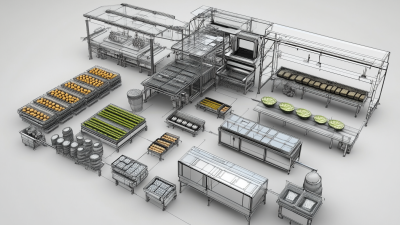

What Are the Top Processing Equipment Suppliers in China?
China’s Processing Equipment sector is expanding beyond low-cost machinery. Buyers now examine automation, hygiene, energy use, after-sales service, and documented compliance. The right supplier must perform reliably beside a production line, not merely present a polished catalogue.
The International Federation of Robotics reported 276,288 industrial robot installations in China during 2023. That represented about 51% of global installations. This figure signals strong automation capacity, although robotics data does not measure every Processing Equipment category. PMMI’s recent industry reporting also identifies automation, labor efficiency, and sustainability as major equipment priorities. These trends help explain China’s growing influence in food, beverage, chemical, pharmaceutical, and general manufacturing equipment.
Food-processing specialist Peter Fellows writes, “Food processing is the transformation of raw materials into food products.” That simple definition highlights a practical truth: equipment quality affects yield, safety, consistency, and operating cost. A mixer that leaves dry pockets, or a heat exchanger with unstable temperature control, can create expensive production problems.
This guide compares leading Chinese suppliers through experience-based criteria. These include engineering depth, factory capability, certifications, customization, spare-parts support, and customer evidence. Supplier rankings remain imperfect. Market reports often use different definitions, and company claims require verification. Buyers should request test results, factory references, maintenance records, and clear warranty terms.
The strongest suppliers are not always the largest. Some excel at complete production lines. Others specialize in filling, drying, conveying, separation, or process automation. The following overview helps readers identify which Chinese manufacturers fit their technical, commercial, and compliance requirements.
Defining Processing Equipment and Its Role in Industry
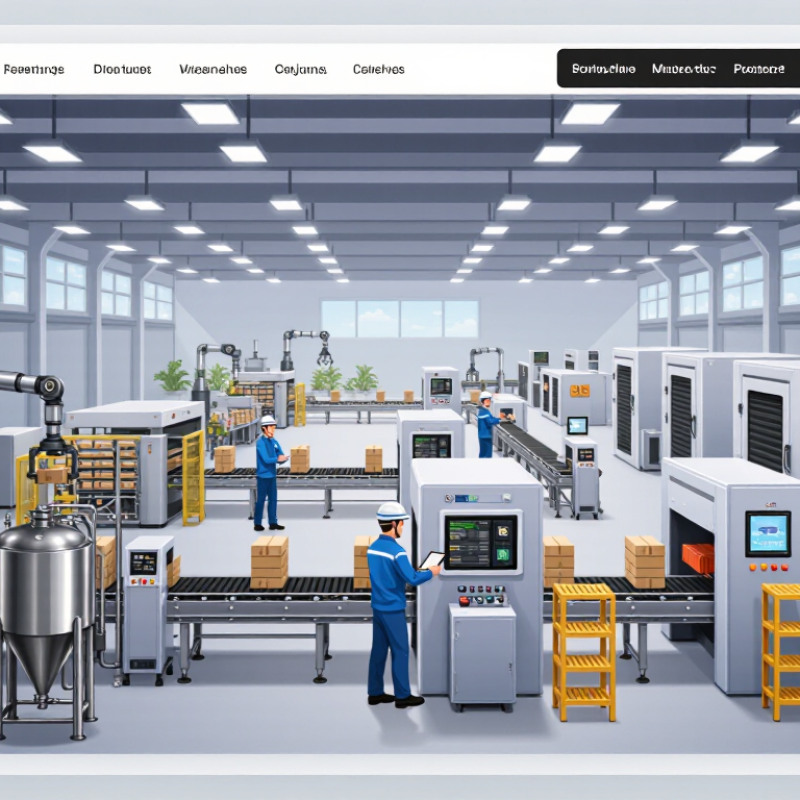
Processing equipment is the machinery that changes raw materials into usable products. It can mix, heat, cut, dry, separate, press, or package materials. In a food plant, stainless steel tanks may blend ingredients while pumps move materials through filtered lines. In a chemical or mineral facility, crushers, reactors, screens, and dryers manage different stages. The equipment is not merely hardware. It connects labor, energy, measurement, and safety controls.
Its industrial role is practical and measurable. Stable equipment improves batch consistency, reduces waste, and supports safer working conditions. Sensors can track temperature, pressure, flow, and moisture before small deviations become costly failures. Equipment selection should match material behavior, production volume, cleaning needs, and local maintenance skills. A machine that looks efficient on paper may perform poorly with sticky feedstock or unstable power. Small details matter.
When comparing processing equipment suppliers in China, buyers should request material certificates, test records, service procedures, and spare-parts plans. Factory acceptance tests can reveal vibration, leakage, noise, or difficult controls. Ask how the supplier handles design changes. That answer often shows more than a polished brochure. I have learned that low purchase cost is not the same as low operating cost. This point is easy to forget. Reliable sourcing still needs independent inspection, clear specifications, and honest discussion of limitations. No supplier gets everything perfect.
Key Types of Processing Equipment Made in China
China’s processing equipment sector covers many industrial needs. Common types include mixing tanks, reactors, heat exchangers, dryers, separators, and filling machines. Food manufacturers often choose stainless steel mixers, pasteurization systems, and hygienic conveyors. Chemical plants may require pressure-rated reactors, filtration units, and precise dosing equipment.
For powder handling, suppliers produce ribbon blenders, spray dryers, granulators, and dust-control systems. Liquid processing commonly uses pumps, emulsifiers, homogenizers, and clean-in-place equipment. Pharmaceutical applications demand smoother welds, controlled environments, validated sensors, and traceable materials. Packaging lines can include weighing machines, sealing units, labeling systems, and automated inspection devices. Small details matter. A poorly positioned valve can slow cleaning and increase maintenance time.
Selecting a capable supplier requires more than comparing catalog prices. Buyers should review material certificates, test procedures, installation records, and after-sales response times. Factory audits can reveal welding quality, calibration practices, and spare-parts organization. Ask for process data, not only attractive photographs. Equipment should match viscosity, temperature, pressure, throughput, and cleaning requirements. A supplier may offer a technically impressive machine that performs poorly with your actual product. This is an easy mistake. Pilot testing reduces that risk, although it adds time and cost. I would also check electrical standards, documentation language, operator training, and remote support before approving the final design.
Leading Chinese Processing Equipment Suppliers by Industry
China’s leading processing equipment suppliers are often organized by industry, not by one universal ranking. Food processors usually seek hygienic mixers, filling lines, heat exchangers, and stainless-steel storage tanks. Suppliers serving this sector should provide clean-in-place designs, food-grade materials, and clear sanitation records. Small details matter.
Pharmaceutical manufacturers need tighter control. Their equipment may include granulators, tablet presses, sterile filling systems, and drying units. Reliable suppliers can support qualification documents, process validation, surface testing, and controlled factory acceptance tests. Chemical plants require corrosion-resistant reactors, filtration systems, pumps, and automated dosing units. Material selection must match temperature, pressure, and chemical exposure. Guesswork is expensive.
Mining and mineral processors often purchase crushers, separators, conveyors, and dewatering systems. Heavy-duty suppliers should show field experience, maintenance plans, spare-parts availability, and measured energy performance. Packaging companies usually compare labeling, sealing, inspection, and palletizing solutions. Site visits can reveal more than polished brochures. I have found that response speed and drawing accuracy often predict project quality. Still, supplier claims need independent checking. A technically strong factory may have weak documentation or slow overseas support. Buyers should compare trial results, inspection reports, warranty terms, and operator training before signing. No supplier fits every plant. That is the difficult part.
What Are the Top Processing Equipment Suppliers in China?
Leading Chinese processing equipment suppliers serve industries that are rapidly increasing automation and production efficiency.
China’s industrial robot density increased from 187 to 470 robots per 10,000 manufacturing employees between 2019 and 2023. This sustained rise indicates growing demand for advanced processing, handling, inspection, packaging, and factory-automation equipment across Chinese manufacturing industries. Source: International Federation of Robotics, World Robotics reports.
How to Evaluate Chinese Equipment Suppliers and Their Capabilities
Evaluating Chinese processing equipment suppliers requires more than comparing quotations. Start with production evidence. Request factory videos, machine serial records, process-flow drawings, and recent factory acceptance test results. The supplier should explain material choices, tolerances, cleaning methods, and maintenance intervals without vague promises.
The International Federation of Robotics reported that China installed 276,288 industrial robots in 2023, representing about 51% of global installations. This scale suggests strong manufacturing capacity, but capacity is not the same as process control. Check whether critical parts are traceable. Review calibration certificates and nonconformance records. Ask for a sample inspection report. Small details matter.
ISO 9001 evidence also deserves careful review. The ISO Survey 2023 identifies China as the largest national base of ISO 9001 certificates. Yet a certificate alone proves limited capability. During a supplier audit, observe incoming inspection, welding areas, software testing, and final packing. Measure response times. Test a change request. A reliable supplier should document revisions and accept reasonable technical questions. I would also request references for equipment operating under similar temperature, viscosity, or cleaning demands. No scorecard is perfect. A spreadsheet may look complete while a weld finish fails inspection. Price remains useful, but it should never outweigh validation data, spare-parts planning, operator training, and transparent after-sales support. unerquicklich
What Are the Top Processing Equipment Suppliers in China? - How to Evaluate Chinese Equipment Suppliers and Their Capabilities
| No. | Evaluation Dimension | Measurable Indicator | Strong Supplier Benchmark | Recommended Verification Evidence | Weight |
|---|---|---|---|---|---|
| 1 | Industry and Application Experience | Relevant equipment delivered for the same process, material, capacity, and regulatory environment. | At least 5 years of relevant project experience and multiple comparable installations. | Anonymized project list, process references, operating parameters, and customer reference calls. | 12% |
| 2 | Engineering and Customization | Ability to adapt equipment design to throughput, viscosity, temperature, pressure, particle size, or material-handling requirements. | In-house mechanical, electrical, process, and automation engineering with documented design controls. | General arrangement drawings, process-flow diagrams, load calculations, design-change records, and engineering staffing data. | 15% |
| 3 | Manufacturing and Production Capacity | Workshop capability, production capacity, machining resources, assembly space, and production-control system. | Dedicated assembly area, documented production planning, traceable work orders, and capacity aligned with the required delivery schedule. | Factory audit, equipment register, production schedule, capacity statement, and sample manufacturing records. | 12% |
| 4 | Quality Management | Control of incoming materials, welding, machining, assembly, testing, nonconformities, and corrective actions. | ISO 9001-certified quality system or equivalent documented controls, with inspection records for critical components. | Valid certificate, quality manual, inspection and test plan, material certificates, calibration records, and corrective-action reports. | 15% |
| 5 | Performance Testing and Acceptance | Availability of factory acceptance testing, site acceptance testing, performance guarantees, and measurable acceptance criteria. | Written FAT and SAT procedures covering capacity, product quality, energy use, safety functions, noise, and operating stability where applicable. | Sample FAT protocol, test instruments, recorded test results, acceptance certificate, and guarantee terms. | 12% |
| 6 | Compliance and Safety | Conformity with destination-country machinery, electrical, pressure, sanitary, hazardous-area, and environmental requirements. | Compliance requirements identified during design, with a complete technical file and risk assessment for the target market. | Risk assessment, electrical schematics, safety-circuit validation, material declarations, certificates, and user manuals. | 12% |
| 7 | Automation and Digital Integration | PLC/HMI capability, data logging, remote diagnostics, communication protocols, recipe management, and integration with plant systems. | Documented control architecture supporting commonly used industrial communication standards and secure service access. | Control philosophy, I/O list, network diagram, software backup procedure, cybersecurity measures, and demonstration test. | 8% |
| 8 | After-Sales Service and Spare Parts | Installation support, commissioning, operator training, response time, warranty coverage, and spare-parts availability. | Defined service process, multilingual technical documentation, remote support, and a documented spare-parts list with lead times. | Service organization chart, warranty policy, response-time commitment, training plan, spare-parts quotation, and service records. | 8% |
| 9 | Supply Chain and Component Traceability | Control of critical materials, purchased components, subcontractors, delivery risks, and replacement-part compatibility. | Approved-vendor process, traceability for safety-critical parts, and documented contingency planning for long-lead components. | Approved supplier list, bills of materials, certificates of origin, traceability samples, and risk-mitigation plan. | 6% |
| 10 | Commercial Reliability and Total Cost | Price transparency, payment terms, delivery schedule, operating cost, maintenance cost, and lifecycle value. | Itemized quotation with clear exclusions, realistic lead time, defined liquidated damages where appropriate, and total-cost analysis. | Commercial quotation, cost breakdown, delivery milestone plan, warranty exclusions, energy estimates, and five-year maintenance projection. | 10% |
| Total Evaluation Weight | 100% | ||||
Buying Considerations for Quality, Compliance, and After-Sales Support
Choosing among processing equipment suppliers in China requires more than a low quotation. Ask for drawings, material certificates, factory acceptance test records, and references from similar installations. A credible supplier explains tolerances, output limits, cleaning access, and expected maintenance. Request a live video inspection or visit the workshop when practical. Look closely at welds, cable routing, guarding, and surface finish. Small details reveal production discipline. They often do.
Compliance should match the destination market and application. Confirm applicable standards before approving technical specifications. Check pressure ratings, electrical protection, food-contact requirements, documentation, and traceability. Independent inspection can verify critical measurements before shipment. Do not accept certificates without checking their scope, issuer, and validity. Paperwork can look flawless. It may still miss a required test. Ask who accepts responsibility when supplied components change during production.
After-sales support deserves contractual detail, not friendly promises. Define installation duties, commissioning support, training hours, response times, warranty exclusions, and spare-parts availability. Ask whether engineers can troubleshoot through photographs, operating data, or secure video calls. Keep a recommended spare-parts list for seals, sensors, and wear components. Test the escalation process before a breakdown occurs. My caution is simple: the cheapest offer may become expensive after the first failed shipment. A supplier that documents problems honestly may be safer than one promising perfection.
Related Posts
-
Comprehensive Blueprint for Selecting Food Processing Equipment
-
Top 10 Beef Processing Equipment Manufacturers from China at the 137th Canton Fair
-
10 Essential Tips for Choosing Industrial Food Equipment?
-
10 Best Food Portioning Equipment for Perfectly Measured Servings?
-
Exploring the Latest Innovations in Meat Equipment Technology for Enhanced Food Safety and Quality
-
Best Commercial Food Processing Equipment from China?