

2026 Top Meat Equipment Suppliers for Global Buyers
Choosing a meat-processing partner involves more than comparing catalogues or advertised production speeds. Meat Equipment must fit the product, plant layout, cleaning routines, and workforce—not just the target output. A line designed for large batches may be inefficient for a small operation. Small details matter: the space around a slicer, access to washdown points, and how quickly a worn belt can be replaced.
This 2026 guide introduces suppliers serving global buyers and the equipment categories they offer, from cutting and mixing to packaging and handling. It considers practical factors such as installation support, spare-parts access, operator training, and documented hygiene features. Shortlist claims are not proof of performance. Ask for relevant customer references, clear specifications, and a demonstration using materials similar to your own. Then check whether service coverage reaches your facility. Details count.
Supplier information can change, and a broad overview cannot confirm that a machine suits every plant. Buyers should verify local requirements and assess equipment with qualified staff before purchase. A polished brochure may still leave questions about cleaning time or downtime. Those questions deserve attention. The strongest choice is usually the one that fits daily production reliably, not the one with the longest feature list. Some comparisons remain imperfect; site conditions and support quality are difficult to judge from public information alone. That is worth keeping in mind.
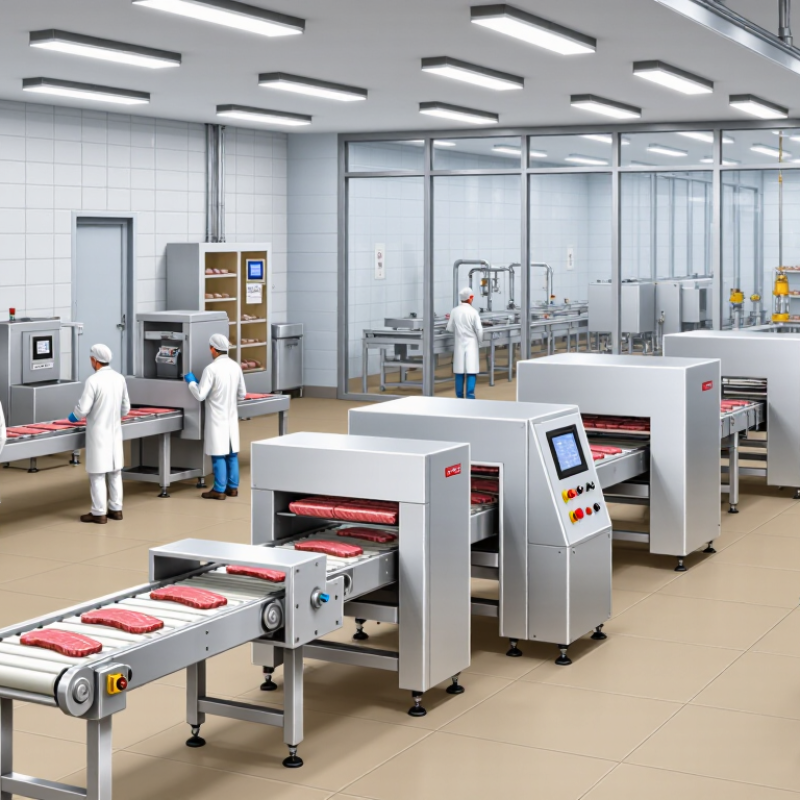
Types of Meat Processing Equipment and Their Applications
2026 Top Meat Equipment Suppliers for Global Buyers
Types of Meat Processing Equipment and Their Applications
Meat processing equipment covers several stages, from portioning raw cuts to packing finished products. Bandsaws and portioning machines handle chilled or frozen meat, helping operators produce consistent sizes for retail packs or food service. The right setup depends on the product, daily volume, and available floor space.
Grinders reduce meat to a chosen texture for sausages, patties, and fillings. Mixers then blend meat with seasonings and other permitted ingredients, while vacuum tumblers help distribute marinades through selected cuts. Stuffers shape sausage mixtures into casings. Slicers and dicing machines prepare cooked or cured products for trays and further processing. Small details matter. Blade condition and feed speed can affect both cut quality and yield.
Packaging equipment, such as vacuum sealers and tray sealers, helps protect products during storage and transport. Cleanable surfaces, accessible guards, and straightforward changeovers are practical selection criteria. Buyers should also check capacity claims against actual product type and shift conditions; figures on paper may not match a busy line. No machine fixes a poor workflow. Equipment placement, operator training, and cleaning routines deserve equal attention, though they are easy to underestimate.
Criteria for Evaluating Meat Equipment Suppliers
Choosing a meat equipment supplier takes more than comparing purchase prices. Match the machine’s capacity to your actual daily output, product range, and available floor space. Ask how it handles changes in product size and operating temperature. Details reveal the difference. Inspect food-contact surfaces, welds, guards, and drainage points for practical cleanability, not just polished photographs.
Request technical drawings, electrical requirements, material specifications, and clear operating instructions. Ask suppliers how they verify performance before delivery, including throughput, temperature control, and safety functions. If possible, witness a factory test using conditions close to your own process. A fast demonstration is useful, but it may not reflect a full production shift. Check references from facilities with similar volumes and equipment demands.
After-sales support matters when a line stops unexpectedly. Confirm response times, technician availability, spare-parts lead times, and training for operators and maintenance staff. Clarify what is included in installation and what may create extra costs. A supplier’s answers should be specific and documented. Even a careful checklist can miss a difficult maintenance task; ask who will perform routine adjustments and how long they usually take. A site visit can reveal practical issues that a sales call cannot.
2026 Top Meat Equipment Suppliers for Global Buyers
Criteria for Evaluating Meat Equipment Suppliers
Suggested buyer-defined evaluation weights, totaling 100 points—not results from a supplier survey. Adjust the weights to match your products, facility, and applicable food-safety requirements. Verify food-contact compliance and equipment performance for your destination market.
Leading Meat Equipment Suppliers in 2026
Choosing a meat equipment supplier involves more than comparing machine prices. Buyers should examine processing capacity, cleaning access, operator safety features, and the availability of replacement parts. A cutter that handles a busy shift but takes hours to clean may slow the whole line. Small details count.
Reliable suppliers can explain how equipment performs under specific production conditions, not just share a polished specification sheet. Ask for clear operating limits, maintenance schedules, installation requirements, and staff training options. Where possible, review equipment in operation and speak with existing users. A detailed answer is useful; a vague promise is not.
Service matters after delivery. Check response times, technician coverage, spare-parts lead times, and remote support arrangements in the regions where your facility operates. These details can affect downtime as much as machine performance. No supplier is perfect, and a low-maintenance claim deserves practical questions. I would also compare cleaning time and changeover steps, though these are easy to overlook during a sales presentation. The best choice is the one that fits your workflow, support needs, and verified production goals—not simply the most advanced model.
2026 Top Meat Equipment Suppliers for Global Buyers - Leading Meat Equipment Suppliers in 2026
Supplier landscape by equipment category. These categories are not a company ranking; capabilities and suitability vary by supplier and project.
| Supplier Category | Typical Equipment Scope | Common Buyer Fit | Key Points to Verify |
|---|---|---|---|
| Slaughter and primary-processing equipment | Species-specific slaughter-line equipment, carcass handling, dressing and inspection-area systems | New plants and facilities upgrading primary processing | Local animal-welfare and food-hygiene requirements, line layout, cleaning access, installation and commissioning scope |
| Cutting and deboning equipment | Saws, portioning systems, conveyors, deboning aids and cutting-room equipment | Processors seeking consistent cuts, improved workflow or reduced manual handling | Product and species compatibility, operator safeguards, washdown design and availability of spare parts |
| Grinding, mixing and forming equipment | Grinders, mixers, emulsifiers, stuffers and patty or nugget forming machines | Ground-meat, sausage and further-processing operations | Recipe and product range, target output validated with the actual product, changeover time and sanitation procedures |
| Thermal-processing equipment | Smokehouses, cookers, ovens, chillers and related temperature-control systems | Producers of cooked, smoked or otherwise heat-treated meat products | Process validation, temperature uniformity, recording and control features, utilities and cleaning requirements |
| Packaging equipment | Vacuum and modified-atmosphere packaging machines, tray sealers, thermoformers and labellers | Processors packaging fresh, frozen or prepared meat products | Pack format and film compatibility, seal integrity, line integration, local electrical requirements and service response |
| Refrigeration and cold-room systems | Industrial refrigeration, chill rooms, freezers and temperature-monitoring systems | Facilities requiring controlled chilling, frozen storage or cold-chain expansion | Site-specific heat-load design, applicable refrigerant and safety rules, energy use, monitoring and maintenance support |
| Hygiene and sanitation systems | Foam and washdown stations, boot and hand hygiene equipment, cleaning tools and sanitation systems | Plants establishing or improving hygiene controls and cleaning workflows | Compatibility with the facility’s sanitation programme, chemical handling, water use and documented cleaning procedures |
| Automation and inspection systems | Conveyors, weighing and portion control, checkweighers, metal detection, X-ray inspection and production data systems | Processors integrating multiple production stages or adding in-line quality checks | Integration with existing controls, product-specific test protocols, data handling, operator training and ongoing calibration |
| Buyer note: There is no single global certification or standard that applies to every meat-processing machine. Confirm applicable market regulations, hygienic-design requirements, machine-safety obligations, documentation and service coverage for the installation country. Request references and validate stated capacity using the intended product and operating conditions. | |||
Regional Markets, Standards, and Supplier Support
For global buyers, regional fit matters as much as cutting speed or hourly capacity.
A line designed for a cool, dry plant may struggle in a humid room with frequent washdowns. Ask suppliers how equipment handles local voltage, water pressure, drainage, and sanitation routines. Small details matter: hose reach, floor clearance, and whether guards can be removed without special tools.
Standards differ by destination and product category. Request current conformity documents, food-contact material specifications, and clear cleaning instructions. Check that controls, labels, and safety notices suit the operators who will use them. Do not rely on a certificate alone; compare its scope with the actual machine configuration. This takes time.
Supplier support is regional, too. Confirm who installs the equipment, how quickly common wear parts can ship, and whether technicians can train a night shift. Ask for a spare-parts list with part numbers and realistic lead times. A remote video call may solve a setup issue, but it cannot replace every hands-on repair. Test response quality before purchase with a practical question about blade changes or sensor calibration. Support promises sound reassuring. Get them in writing, then check that the service plan matches the plant’s staffing and production schedule. One uncomfortable question remains: will support still be available after commissioning?
How Global Buyers Compare Suppliers and Choose Equipment
2026 Top Meat Equipment Suppliers for Global Buyers
How Global Buyers Compare Suppliers and Choose Equipment
Global buyers should compare equipment against their actual line conditions, not brochure capacity alone. A cutter rated for high output may still create bottlenecks if loading, cleaning, or downstream chilling cannot keep pace. FAO’s November 2024 Food Outlook projected global meat production at 373 million tonnes in 2024, up 1.4% from 2023. That scale makes dependable throughput important, but local product mix and batch size matter more when choosing a machine.
Ask suppliers for test results using products similar to yours. Compare usable capacity, changeover time, cleaning access, energy and water use, and the availability of wear parts. Request a factory acceptance test and written service response targets. Check that operating manuals, training, and spare-parts lists are clear for your site. A polished demonstration is useful, but it rarely reflects a rushed shift. That gap deserves attention.
Tips: Bring a sample product and a real production schedule to supplier trials. Record downtime, yield, cleaning time, and operator feedback. Compare total ownership cost, not purchase price alone. Some figures will be estimates; label them clearly and revisit them after installation.
Related Posts
-
2026 Top Beef Processing Equipment for Global Buyers
-
What Is Meat Butcher Equipment A Global Buyers Guide?
-

The Evolution of Meat Processing Equipment for Global Buyers
-
Top 10 Beef Processing Equipment Manufacturers from China at the 137th Canton Fair
-
Maximize Your Meat Butcher Equipment Sales at the Record Breaking 137th Canton Fair 2025
-

How to Choose the Best Meat Butcher Equipment for Your Business Needs










