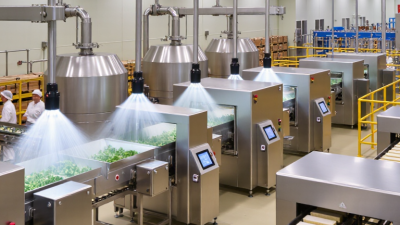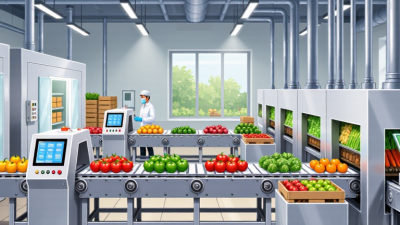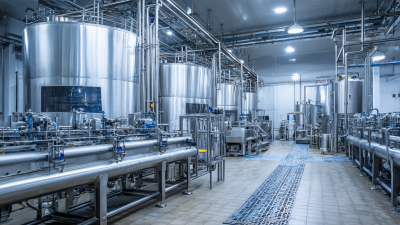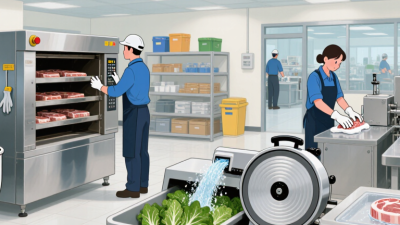

How to Choose Food Processing Industry Equipment in 2026?

Choosing Food Processing Industry Equipment in 2026 starts with the product, not the catalog. A machine suited to dry flour may struggle with sticky dough or delicate fruit. Define the ingredients, batch size, target output, and changes in production before comparing models. Small details matter: a narrow conveyor, awkward valve, or hard-to-reach seal can slow cleaning and maintenance.

Capacity is only one measure. Check how equipment performs at typical and peak loads, and ask suppliers for documented specifications, operating limits, and service requirements. Consider food-contact materials, cleanability, temperature control, automation, energy use, and spare-parts availability. Ask to see a demonstration using a product similar to yours, if possible. Real product behavior can differ from a brochure.

Keep the full production line in view. A fast slicer cannot increase output if the washer or packaging machine becomes a bottleneck. Compare installation, training, cleaning time, maintenance, and expected downtime alongside the purchase price. No checklist is perfect. A forecast may miss seasonal demand, and a promising trial may not represent every shift. Record assumptions, involve operators and qualified technical staff, and verify that proposed equipment fits your facility and applicable requirements. The best choice is usually the one your team can run safely, clean consistently, and support over time—not simply the newest machine.
How to Choose Food Processing Industry Equipment in 2026?

Set 2026 Capacity Targets Using Throughput, Yield, and OEE Metrics

Set 2026 capacity targets from saleable output, not the machine’s nameplate speed. Calculate good kilograms per hour as rated throughput multiplied by planned hours and OEE. OEE combines availability, performance, and quality. For example, a line rated at 1,000 kg per hour, running 16 hours at 65% OEE, yields about 10.4 tonnes of good product daily. Small buffers matter. Check the slowest step, such as a cooker waiting on a batch or a filler slowed by changeovers.

Track yield separately: saleable product divided by input, using consistent weight and moisture rules. FAO’s 2023 tracking report estimated that 13.2% of food was lost globally between post-harvest and retail in 2021. That figure is not a factory benchmark, but it reinforces why avoidable trim, spills, and rejects deserve attention. Set targets from several weeks of shift data, then adjust for product mix, sanitation, and seasonal raw-material variation. A neat spreadsheet can still miss a messy production day.

Tips: Log downtime by cause, not just total minutes. Compare planned and actual good output weekly, and revisit assumptions when the product or shift pattern changes.

Map Each Processing Stage to Codex CXC 1-1969 Hygiene Principles

Choosing food processing equipment in 2026 starts with the product’s route through the plant. Codex CXC 1-1969 sets out general hygiene principles, including good hygiene practices and HACCP-based controls. Use them to assess each processing stage, not just the machine’s capacity. At receiving, check whether hoppers and conveyors can be inspected and cleaned without awkward access. During washing and cutting, consider water drainage, splash control, and separation between raw and ready-to-eat areas. Small details matter. A hollow frame or trapped residue can undermine an otherwise sensible design.

For heating, select equipment that supports reliable time and temperature monitoring, with records suited to the process. Cooling equipment should limit exposure and allow product temperatures to be checked at representative points. At filling and packaging, look for cleanable contact surfaces and a layout that reduces unnecessary handling.

Ask suppliers for material specifications, cleaning instructions, and maintenance access details. Then test it. Walk the proposed line with operators and sanitation staff; a neat flow diagram can still miss a drain, hose, or difficult seal. Codex does not replace site-specific hazard analysis or applicable local requirements. It offers a practical hygiene framework for comparing equipment choices across the entire process.

Specify Food-Contact Surfaces with the EHEDG Ra ≤ 0.8 μm Benchmark

In 2026, assess food-processing equipment by how cleanable its product-contact surfaces are, not by appearance alone. Use Ra ≤0.8 μm as a practical surface-roughness benchmark, consistent with EHEDG hygienic-design guidance. Ra measures average roughness; it does not reveal every scratch, weld defect, or poorly drained joint. Small grooves matter. CDC estimates that foodborne illnesses cause about 48 million U.S. illnesses, 128,000 hospitalizations, and 3,000 deaths each year. These figures are not caused by equipment surfaces alone, but they show why hygienic design deserves careful attention (CDC, “Estimates of Foodborne Illness in the United States,” 2011).

Ask suppliers for documented surface-finish measurements and confirm how they were taken. Check representative product-contact areas, including welds, corners, and pipe connections. A polished sample can look excellent while a hard-to-reach seam holds residue. I would not treat the Ra number as a guarantee; surface condition, cleaning access, drainage, and maintenance all matter. Specifications should state the measurement method and the locations tested, so purchasing and quality teams can verify the same requirement.

Tips: Request a finish report, then inspect the actual equipment under good lighting. Check seams and low points, not just flat panels. Retain measurements for future maintenance comparisons.

How to Choose Food Processing Equipment in 2026?

Specify Food-Contact Surfaces with the EHEDG Ra ≤ 0.8 μm Benchmark

How to read this chart: Ra is the arithmetic average surface roughness, measured in micrometres (μm); lower values indicate a smoother surface. EHEDG guidance commonly uses Ra ≤ 0.8 μm as a benchmark for product-contact surfaces. The other bars show commonly used surface-finish reference values, not equipment measurements or compliance claims. Confirm the applicable hygienic-design requirements for your process and equipment.

Compare Equipment Options by Capacity, Energy Use, and Lifecycle Cost

How to Choose Food Processing Industry Equipment in 2026?

Compare Equipment Options by Capacity, Energy Use, and Lifecycle Cost

A machine that meets today’s output target may become a bottleneck during seasonal peaks. Compare rated capacity with your actual line speed, including pauses for cleaning, changeovers, and maintenance. The U.S. Department of Energy’s 2014 U.S. Industrial and Commercial Motor System Market Assessment Report estimates that motor-driven systems use about 68% of U.S. industrial electricity. That makes pumps, mixers, conveyors, and compressors worth close attention. Ask suppliers for energy data at your expected operating load, not only at maximum capacity. Real shifts are rarely perfect.

Track energy use per kilogram of saleable product, then compare it across equipment options. A high-throughput unit may use more power overall but less per kilogram. Check water, heat, compressed air, and cleaning requirements too. They can change the operating picture. For lifecycle cost, include purchase price, installation, utilities, maintenance, spare parts, and expected downtime over the planned service life. The U.S. DOE’s Better Plants program recommends measuring energy performance against production, rather than relying on utility bills alone. Useful advice, though production records can be messy.

Before choosing, test the equipment with your ingredients and target recipe. Viscosity, temperature, and batch size affect both capacity and energy demand. Request a trial log showing throughput, energy use, product loss, and cleaning time. Put the assumptions in writing. Estimates are not guarantees.

Verify FDA 21 CFR Part 117 Compliance Before Installation and Validation

Choosing food processing equipment in 2026 means checking more than capacity and price. Before installation, review how the equipment supports your facility’s obligations under FDA 21 CFR Part 117. The rule addresses current good manufacturing practices and hazard analysis and risk-based preventive controls. Equipment alone does not make a facility compliant. That distinction matters.

Ask suppliers for food-contact material details, cleaning instructions, maintenance requirements, and installation documentation. Inspect welds, seals, joints, and product-contact surfaces for areas that could trap residue. Consider how operators will access the equipment for cleaning. A polished brochure is not proof. Request practical evidence, such as drawings and cleaning procedures, then compare them with your actual product and sanitation process.

Plan validation around the installed system, not just its specifications. Record installation checks, confirm sensors and controls operate as intended, and document cleaning and process tests suited to the equipment’s use. Keep calibration and maintenance records accessible. A checklist can still miss a stubborn gasket seam or awkward drain. Walk the line with sanitation and production staff before startup; their observations may expose problems that paperwork does not. The food facility’s qualified team should determine which controls and records are appropriate for its hazards and processes.

How to Choose Food Processing Industry Equipment in 2026? - Verify FDA 21 CFR Part 117 Compliance Before Installation and Validation

Use this planning table to assess equipment against applicable requirements in 21 CFR Part 117 and your facility’s food safety plan. Regulatory references are provided as a starting point; confirm applicability with qualified food safety and regulatory professionals.

Selection Dimension Practical Equipment Criteria Relevant Part 117 Reference Evidence to Review Before Installation and Validation
Food-contact materials Confirm that food-contact surfaces are corrosion-resistant where they contact food, made of non-toxic materials, and suitable for the food, operating environment, cleaning compounds, sanitizers, and cleaning procedures. §117.40(c) Review material specifications, surface-finish information, intended-use documentation, and compatibility with the facility’s products and sanitation chemicals.
Cleanability and hygienic design Choose equipment that can be adequately cleaned and maintained. Favor accessible surfaces and designs that reduce inaccessible areas where soil or moisture could remain. §117.40(a) Review cleaning instructions and hygienic-design drawings. Confirm that operators can access relevant areas for inspection, cleaning, and maintenance.
Seams and joints Food-contact seams should be smoothly bonded or maintained to minimize accumulation of food particles, dirt, and organic matter. §117.40(d) Inspect drawings and representative welds or joints. Include hard-to-clean seams in pre-operational inspection and sanitation procedure reviews.
Non-food-contact surfaces Surfaces that do not contact food should be designed and constructed so they can be kept in a clean condition. §117.40(e) Check frames, guards, supports, and enclosures for cleanability and access. Include these surfaces in applicable cleaning and inspection plans.
Conveying and enclosed systems Evaluate conveying, holding, pneumatic, automated, and closed systems for their ability to support appropriate sanitary conditions during operation and maintenance. §117.40(f) Review system diagrams, product-contact pathways, cleaning or sanitation procedures, and maintenance access. Identify system boundaries and any areas needing additional monitoring.
Temperature-controlled equipment For freezers and cold-storage compartments, assess whether the equipment can control temperature adequately and whether temperature can be monitored where necessary. §117.40(g) Review the operating range, sensor locations, alarm functions, and monitoring approach. Confirm performance under expected load and operating conditions.
Process instruments and controls Instruments used to measure, regulate, or record temperature, pH, acidity, water activity, or other conditions used to control or prevent undesirable microorganism growth should be accurate, precise, adequately maintained, and sufficient in number. §117.40(h) Identify critical instruments and ranges. Review calibration procedures, calibration records, accuracy specifications, maintenance requirements, and the plan for addressing out-of-tolerance results.
Compressed air and process gases Where compressed air or other gases are introduced into food or used to clean food-contact surfaces or equipment, assess treatment and delivery controls to prevent food contamination. §117.40(i) Map gas use points and review filtration or treatment specifications, maintenance intervals, and monitoring records relevant to the intended application.
Installation and utilities Plan the location, connections, and surrounding space so the equipment can be operated, inspected, cleaned, and maintained in the facility’s actual layout. §117.40(a), (e)–(f) Review installation drawings, utility connections, drainage and access needs, and the interaction with adjacent equipment. Confirm that the installed arrangement supports documented sanitation procedures.
Maintenance and spare parts Confirm that the equipment can be maintained in a condition that protects food from contamination, and that replacement parts used on food-contact surfaces are suitable for their intended use. §117.40(a), (c) Review preventive-maintenance tasks, wear-part specifications, lubrication controls, repair procedures, and records for changes that could affect food-contact surfaces or process performance.
Commissioning and performance checks Define checks that demonstrate the equipment is installed as intended and performs consistently under documented operating conditions. The scope should reflect the hazard analysis and applicable preventive controls. §§117.160, 117.165, as applicable Document acceptance criteria, test methods, results, deviations, corrective actions, and approvals. Process validation requirements apply to a process preventive control when applicable; Part 117 does not create a blanket “FDA equipment certification” requirement.
Records and change control Maintain records required for applicable food safety plan activities, including relevant monitoring, verification, corrective actions, and equipment-related changes. §§117.190–117.305, as applicable Establish record owners, review frequency, retention practices, and change-control steps for modifications that may affect hazards, preventive controls, cleaning, or process performance.
Shopping Cart
Scroll to Top

Search for...

The Duravant family of operating companies serve the food processing, packaging and material handling segments.