
How to Choose Food Processing Plant Equipment in 2026
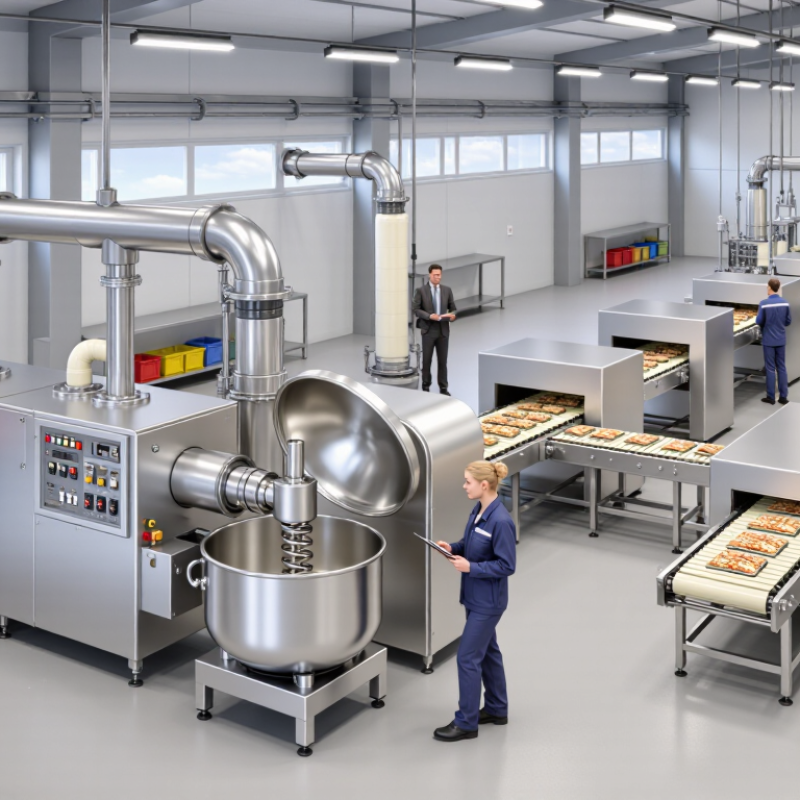
Choosing Food Processing Plant Equipment in 2026 is not simply a matter of comparing prices or chasing the newest controls. The right line must suit the product, the process, and the people who will run it. A dough mixer, a pasteurizer, and a frozen-food conveyor each place different demands on capacity, temperature control, and cleaning access. Small mismatches can become daily problems.
Food engineering scholar R. Paul Singh has written extensively about the engineering principles behind food processing. A practical paraphrase of his perspective is: “Evaluate equipment as part of the whole process, not as an isolated purchase.” This is a paraphrase, not a verbatim quotation.
For plant managers, that means checking more than rated throughput. Examine product-contact materials, changeover time, control accuracy, utility use, spare-part access, and the space around each machine. A stainless-steel surface may look suitable, but its joints and hard-to-reach corners deserve close inspection. Ask suppliers how performance claims were tested, and compare them with your actual recipes and operating shifts. Pilot trials can reveal issues that a brochure cannot.
There is no perfect shortlist. Budget limits, floor space, and staff experience can pull decisions in different directions. A faster machine may create a bottleneck downstream. That deserves a second look. This guide outlines a practical way to assess Food Processing Plant Equipment in 2026, weigh lifecycle costs, and choose systems that support consistent production without overlooking maintenance or product quality.
Define Production Requirements and Processing Goals
Before comparing equipment, define what the plant must produce and how much it must deliver per shift. List each product, target batch size, operating hours, and expected seasonal changes. A line sized for peak demand may sit idle during slower months. Start with realistic orders and a measured growth plan.
Specify product characteristics that affect handling: viscosity, particle size, temperature, and sensitivity to heat or pressure. For example, a chunky sauce may need gentler pumping than a smooth puree. Set measurable goals for yield, texture, packaging speed, and acceptable downtime. Record available floor space, drainage, electrical capacity, water use, and cleaning time. These details help teams compare equipment by process fit, not just purchase price. The first estimate is rarely perfect. Test assumptions with small production trials when possible, and document what changes.
Tips: Bring operators and maintenance staff into planning early. Ask them to map handoffs, cleaning steps, and recurring bottlenecks. Keep the notes specific.
How to Choose Food Processing Plant Equipment in 2026 - Define Production Requirements and Processing Goals
| Planning dimension | Questions to define | Example planning basis | Equipment implications |
|---|---|---|---|
| Product and process | What product forms, recipes, and process steps will the plant handle? | Washed, cut vegetables; chilled, ready-to-eat product; multiple pack sizes. | Map each operation—washing, cutting, dewatering, weighing, and packing—to compatible equipment and product-contact materials. |
| Required throughput | What saleable output is required per hour, shift, and day? | Set a target from forecast demand; for example, 1,000 kg of finished product per operating hour. | Size the line around the required rate, expected yield, changeovers, cleaning time, and planned downtime—not just a machine's nominal maximum. |
| Raw-material variation | How do size, temperature, moisture, maturity, or incoming condition vary? | Seasonal produce may vary in dimensions, firmness, and soil load. | Confirm adjustment range and run trials using representative raw materials; consider grading, inspection, or buffer capacity where needed. |
| Quality targets | Which product attributes must remain within specification? | Cut dimensions, texture, color, moisture, fill weight, and package seal integrity. | Specify measurable acceptance limits and appropriate controls, such as calibrated scales, temperature monitoring, or in-line inspection. |
| Food safety and sanitation | What hazards, cleaning procedures, and hygiene zoning apply? | Document the facility's hazard analysis, allergen controls, cleaning schedule, and applicable local food regulations. | Evaluate cleanability, drainage, access for inspection, product-contact surfaces, and whether clean-in-place or clean-out-of-place procedures are suitable. |
| Packaging and changeovers | How many formats, materials, and product changeovers are expected? | Several pack weights or container formats may share one production line. | Check format range, change-part requirements, adjustment time, coding needs, and compatibility with the chosen packaging materials. |
| Utilities and site capacity | What electrical, water, compressed-air, drainage, and ventilation capacity is available? | Compare equipment utility schedules with the facility's verified supply and wastewater capacity. | Request connected-load and consumption data; include peak demand, connection points, heat rejection, and installation requirements in the layout. |
| Labor and automation | Which tasks require operators, and what skills are available on each shift? | Assess staffing for loading, inspection, changeovers, sanitation, and routine maintenance. | Balance automation with operator access, training, guarding, fault recovery, and maintenance support. |
| Capacity and future growth | Will demand, product range, or operating hours change during the equipment's useful life? | Model current demand alongside realistic expansion scenarios and available floor space. | Compare modular additions, parallel equipment, and line-speed upgrades; verify that upstream and downstream steps can support growth. |
| Lifecycle cost and validation | What are the purchase, installation, operating, maintenance, and training costs? | Compare total cost of ownership over a defined evaluation period using consistent assumptions. | Include spare parts, service access, energy and water use, acceptance testing, operator training, and performance verification with the intended product. |
Planning note: Example figures and scenarios should be validated against the actual product, process, facility, applicable regulations, and equipment supplier specifications before purchase.
Related Posts
-
How to Choose Food Processing Industry Equipment in 2026?
-
What Is the Food Processing Equipment Industry?
-
China Top 10 Produce Processing Equipment Suppliers
-
2026 Best Food Processing Plant Equipment for Global Buyers?
-
Best Commercial Food Processing Equipment from China?
-
Comprehensive Blueprint for Selecting Food Processing Equipment