
China Best Food Processing Industry Equipment Suppliers?
Choosing China’s best Food Processing Industry Equipment suppliers takes more than comparing prices. A polished catalog may show stainless-steel mixers, filling lines, conveyors, or packaging machines, but it cannot prove how well they perform on a busy production floor. Buyers should examine product specifications, materials, automation options, cleaning access, and available technical support. Ask for drawings and operating details that match your product, output target, and facility layout.
A reliable supplier should explain what its equipment can—and cannot—do. Request relevant certificates, inspection records, customer references, and a clear warranty, then verify details where possible. If practical, arrange a factory visit or a live equipment demonstration. Watch how components are finished and assembled. Ask who handles installation, operator training, spare parts, and troubleshooting after delivery. Details matter.
This guide explores how to assess suppliers, compare equipment categories, and prepare useful questions before requesting a quotation. It also considers lead times, customization, communication, and after-sales service. These factors can be harder to judge than machine price, and they deserve careful attention. No supplier is perfect for every plant. A lower quote may suit one project, while another needs stronger support or a more tailored line. Buyers should define their requirements first and verify each claim against documents, demonstrations, and direct discussion. That takes work, but it can help prevent costly mismatches.
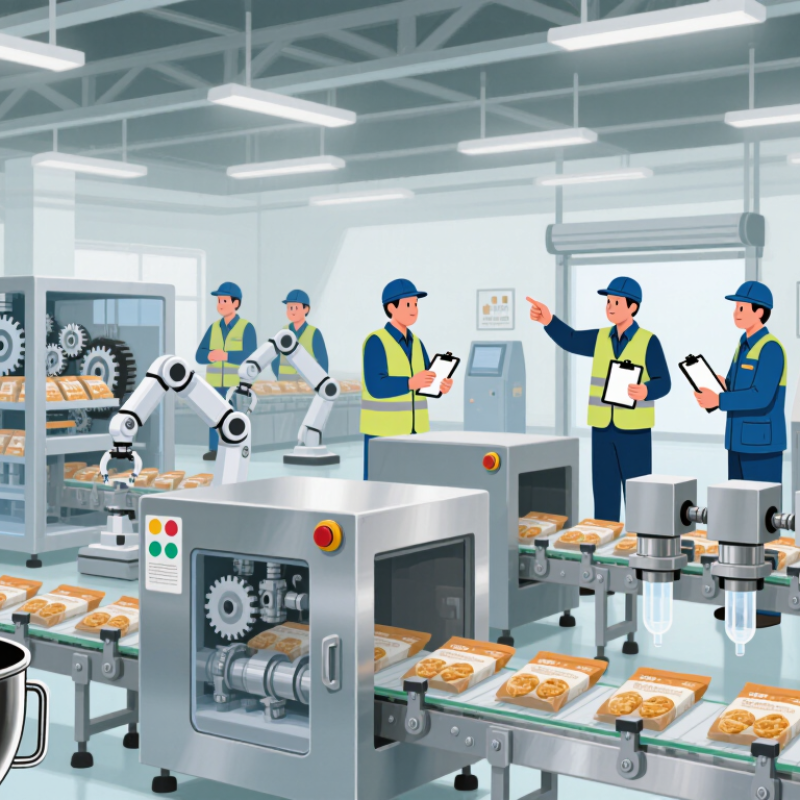
Overview of China's Food Processing Equipment Industry
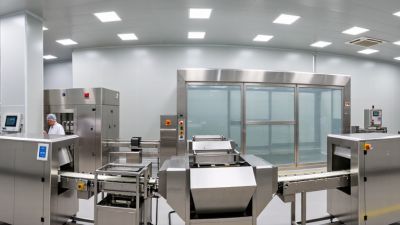
China’s food processing equipment industry covers a broad range of machinery, from washing and cutting lines to mixing, filling, and packaging systems. Suppliers serve small workshops as well as large factories, so equipment scale and automation can vary considerably. Many production lines are configured around a product’s texture, moisture level, and daily output. A line handling leafy vegetables has different cleaning and drainage needs from one processing dough or dairy products.
Details matter. Buyers comparing suppliers should look beyond price and rated capacity. Check the materials that contact food, the finish of welds, access for cleaning, and the availability of replacement parts. A plant visit can reveal practical details that a specification sheet misses, such as cramped maintenance access or uneven product flow. These differences are not always obvious from a catalogue.
Automation is expanding, but not every factory needs the most complex system. Ask how settings are changed, how faults are reported, and whether local technicians can support installation and training. Energy and water use also deserve attention, especially in washing and heating stages. The industry offers substantial manufacturing capacity, though quality and service can differ between suppliers. Careful trials help clarify what will work on a real production floor.
Main Types of Food Processing Equipment
Food plants use distinct equipment groups for washing, cutting, mixing, separating, and shaping ingredients. Washers remove soil; slicers create pieces of more even thickness. Screens, filters, and centrifuges separate solids, liquids, or oils. The right method depends on the product: delicate berries need gentler handling than firm root vegetables. Grand View Research estimated the global food processing equipment market at USD 58.7 billion in 2023, with a forecast 6.1% compound annual growth rate for 2024–2030. That projection suggests continued investment, but it does not identify the right machine for every plant.
Thermal equipment includes blanchers, ovens, pasteurizers, and chillers. These machines heat or cool products to meet process requirements, while dryers reduce moisture for longer storage. Forming equipment, such as extruders and moulders, shapes doughs, pastes, and other mixtures. Packaging machines then fill, seal, or label finished products. Details matter. When assessing a line, operators should compare capacity, cleaning access, temperature control, and product loss—not just hourly output. A fast slicer may still create uneven pieces when feed rates vary. I would also question neat capacity claims: real performance can shift with ingredient size, moisture, and operator adjustments.
China Best Food Processing Industry Equipment Suppliers? - Main Types of Food Processing Equipment
| Process Stage | Equipment Type | Primary Function | Common Applications | Key Selection Considerations |
|---|---|---|---|---|
| Preparation | Washing and cleaning equipment | Removes soil and other surface debris using water, agitation, brushes, or air, depending on the product and system. | Fruits, vegetables, root crops, and some seafood | Product fragility, water use, drainage, sanitation access, and the required cleaning method |
| Preparation | Cutting, slicing, and dicing machines | Cuts food into specified shapes or sizes with knives, blades, or other cutting assemblies. | Produce, meat, cheese, and prepared ingredients | Cut dimensions, product consistency, blade changes, guarding, and cleaning requirements |
| Size reduction | Grinders, mills, and crushers | Reduces ingredients to smaller particles or a paste through cutting, grinding, or crushing. | Grains, spices, meat, nuts, and selected vegetables | Target particle size, heat generation, throughput, material characteristics, and dust control |
| Mixing and forming | Mixers, blenders, and kneaders | Combines ingredients to achieve a more uniform mixture, dough, batter, or formulation. | Bakery dough, sauces, meat mixtures, fillings, and powdered foods | Batch or continuous operation, viscosity, mixing intensity, batch size, and cleanability |
| Thermal processing | Cookers, ovens, and fryers | Applies heat to cook, bake, roast, or fry food according to the product and process requirements. | Bakery products, ready meals, snacks, and meat products | Heating method, temperature control, residence time, energy use, and process validation |
| Thermal processing | Pasteurizers and sterilizers | Uses controlled heat treatment to reduce microorganisms; the required process depends on the food and intended storage conditions. | Milk, beverages, sauces, and shelf-stable packaged foods | Product characteristics, packaging format, target process, cooling needs, and applicable food-safety requirements |
| Separation and concentration | Filters, centrifuges, and evaporators | Separates solids from liquids, clarifies a liquid, or removes water to concentrate a product. | Juices, dairy products, edible oils, and liquid food ingredients | Feed properties, separation objective, product loss, heat sensitivity, and cleaning method |
| Packaging | Filling, sealing, and packaging machines | Portions food into containers or packages and closes them using a suitable sealing method. | Bottled beverages, canned foods, powders, snacks, and ready meals | Product form, container material, fill accuracy, seal integrity, hygiene, and line integration |
Equipment configuration and performance depend on the product, process, plant layout, and applicable food-safety requirements. Confirm technical specifications with qualified suppliers before purchase.
Leading Supplier Categories and Their Specialties
Food-processing suppliers usually specialize in one of four areas: complete-line integration, core processing, packaging, or utilities. Integrators coordinate conveyors, controls, and commissioning across a plant. Core-equipment specialists focus on tasks such as slicing, mixing, heat treatment, or separation. Packaging suppliers handle filling, sealing, labeling, and inspection. Utilities providers size refrigeration, compressed air, and water systems. Small details matter.
The right category depends on the product and the bottleneck. A pasteurizer supplier needs to understand heating profiles and cleaning access; a packaging specialist should assess container shape, fill accuracy, and changeover time. FAO’s 2023 State of Food and Agriculture estimated that 13.2% of food was lost between harvest and retail in 2021. That figure supports investment in better handling and preservation, but it does not prove that any single machine will reduce losses. UNEP’s Food Waste Index Report 2024 estimated 1.05 billion tonnes of food waste in 2022 across households, food service, and retail. These reports point to different stages, so equipment selection should match the actual source of loss. Factory labels can be misleading. A supplier may cover several categories, while installation support and spare-parts access vary widely. Ask for product-specific trial data, cleaning procedures, and measured throughput under realistic operating conditions. A polished specification sheet is not the whole story.
How to Evaluate Chinese Equipment Suppliers
When evaluating Chinese food-processing equipment suppliers, start with the production task. Share the product type, target capacity, cleaning method, and available floor space. Ask for drawings showing dimensions, utility connections, and product-contact materials. A polished catalog is useful, but it cannot prove that a machine fits your line. Request a live video walkthrough of the workshop and inspect similar equipment under operation.
Check how the supplier handles testing, documentation, and after-sales support. Ask for a written test plan covering throughput, temperature control, and cleaning access. Confirm which spare parts are stocked and how technicians respond to service requests. Contact previous buyers in comparable food sectors, with permission. Small details matter: a hard-to-reach valve can make daily sanitation slower. No checklist catches everything, and a sample test may not reflect full-scale production.
Tips: Put agreed specifications, delivery milestones, and acceptance criteria in writing. Compare quotations line by line, including installation and training. Leave time for independent inspection. Teams sometimes overlook this.
How to Evaluate Chinese Food Processing Equipment Suppliers
Suggested buyer-assigned evaluation weights (%) — an illustrative scoring framework, not market statistics.
Prioritize food safety documentation and process performance, then compare hygienic design, after-sales support, lifecycle costs, integration, and commissioning. Adjust the weights to match your product, destination-market requirements, and project priorities.
Sourcing, Compliance, and After-Sales Considerations
China Best Food Processing Industry Equipment Suppliers? Sourcing, Compliance, and After-Sales Considerations
Choosing processing equipment is not just a price comparison. Define product type, hourly capacity, cleaning method, and available floor space before requesting quotations. Ask suppliers for material specifications, electrical drawings, maintenance schedules, and references from comparable installations. Then check the details: can operators reach valves safely, and can worn seals be replaced locally? Small omissions become costly downtime.
Compliance needs written evidence, not broad assurances. Request food-contact material declarations, hygienic-design details, risk assessments, and test records relevant to your destination market. The exact requirements depend on the product and location. FAO’s 2023 report The State of Food and Agriculture estimates that 13.2% of food was lost between harvest and retail in 2021. Processing alone cannot prevent those losses, but reliable equipment and controlled operating conditions can help reduce avoidable waste.
After-sales support deserves equal scrutiny. Set response times, spare-parts availability, warranty boundaries, and training scope in the contract. During factory and site acceptance tests, record output, temperature stability, and cleaning results using agreed criteria. A video call is useful. It is not a substitute for hands-on commissioning. One uncomfortable point: supplier promises often sound stronger than the service network behind them. Verify that network before payment, and keep the evidence.
Related Posts
-
How to Choose Food Processing Industry Equipment in 2026?
-
How to Choose Food Processing Plant Equipment in 2026
-
What Is the Food Processing Equipment Industry?
-
Comprehensive Blueprint for Selecting Food Processing Equipment
-
China Top 10 Produce Processing Equipment Suppliers
-
Best Commercial Food Processing Equipment from China?